
Anal Fissure Treatment
Fellowship-trained: Mayo Clinic (USA) · United Kingdom · South Korea — Associate Professor, UAE University
Why Fissures Happen and Why They Stop Healing
An Anal fissure is a tear in the mucosa and submucosa of the anal canal below the dentate line. It can be acute or chronic if persists for > 6 weeks. Anal fissures are associated with pain and bleeding during bowel movements. Anal fissures are often seen in patients with chronic constipation or diarrhea. They are also common in women after childbirth.
Clinic pages by city: anal fissure treatment in Dubai · anal fissure treatment in Abu Dhabi.
Not all anal pain comes from a fissure. What the pattern of anal pain tells a surgeon explains how the different causes are distinguished.
Anal fissure medicine: what each treatment actually does
Medical treatment usually begins by keeping stools soft with laxatives and fibre, easing pain with a local anaesthetic when needed, and using a prescribed topical muscle-relaxing treatment. A wound-healing agent, such as a hyaluronic-acid-based preparation, may also be used when appropriate. If examination suggests high resting pressure, early botulinum toxin injection can be considered. The plan depends on the fissure and examination findings; a persistent fissure with fibrosis or a sentinel tag may need fissurectomy rather than repeated courses of the same creams.
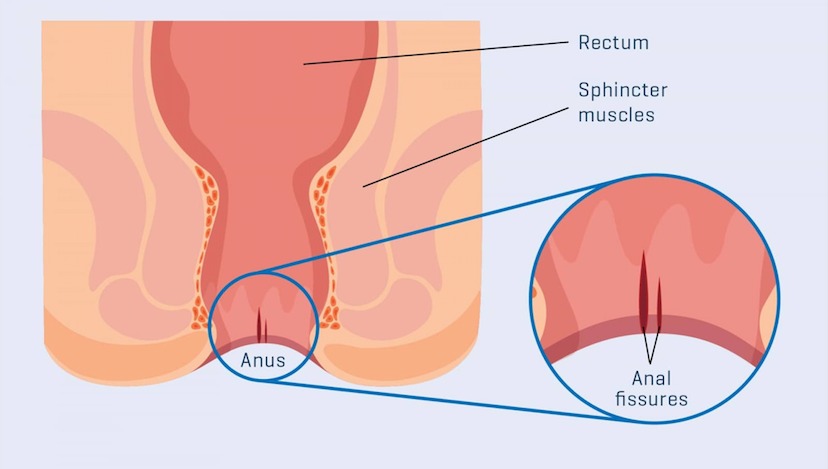
Although the mechanism of anal fissure formation is not completely understood, an imbalance between rectal and anal pressures is a key factor. Passage of hard stool, straining during defecation, and the inability of the anal sphincter to fully relax will lead to a traumatic tear of the anoderm. Studies have shown an increased anal tone in patients with an anal fissure, but it is not clear whether this is a consequence of the fissure or a pre-existing factor.
Most anal fissures (90%) are posterior and only 10% are anterior. Anterior anal fissures are more common in females. It is postulated that during defecation, the pressure is mostly exerted on the posterior side of the anal canal. Also, cadaveric studies have shown a decreased blood supply of the anal mucosa posteriorly suggesting a mechanism of ischemia as a contributing factor. Most anal fissures occur anteriorly or posteriorly in the midline.
Only 1% of fissures are located in other positions and they are referred to as ‘atypical’. Differential diagnosis includes Crohn’s disease, tuberculosis, syphilis, anal cancer, herpes, etc. As regards Crohn’s disease, the occurrence of fissures is not unusual especially in the setting of proctitis. Treatment should focus on the primary disease with biologics and immunosuppressants before contemplating surgical options.
Acute vs Chronic: When to Stop Waiting
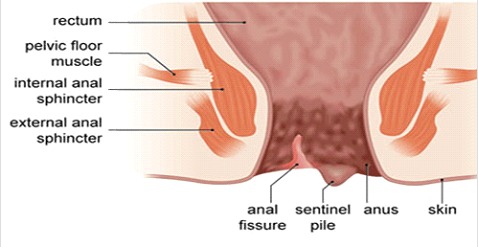
Pain is present in more than 90% of patients and typically occurs during defecation and lasts from a few minutes to several hours and is severe and sharp. Bleeding is reported > 70% of cases and is either seen on the toilet paper or dropping on top of the stool. The diagnosis is usually straightforward, however, anal fissures may not be immediately visible because of sphincter spasm. In these cases, asking the patient to push simulating a bowel movement, and gently parting the buttocks, may reveal the fissure.
Applying local anesthetic gel and waiting for a few minutes may make the examination more comfortable and accurate. A sentinel tag and a hypertrophied papilla may be seen in chronic anal fissure. Usually, finger rectal examination and anoscopy are avoided in the acute setting because of pain. Nevertheless, these need to be carried out once symptoms settle to rule out other conditions.
01. Sitz Baths
02. Topical Nitrates and Calcium Antagonist Medications
03. Fiber Supplements
04. Botulinum Toxin
The Treatment Ladder: Creams, Botox, Surgery
Treatment is tailored to the examination and symptoms. Bowel regulation with laxatives and fibre is important; local anaesthetic can ease pain, while topical muscle-relaxing treatment and a wound-healing agent such as a hyaluronic-acid-based preparation may support healing. When resting pressure is high, botulinum toxin may be considered early. If a chronic fissure has fibrotic edges or a sentinel tag, fissurectomy may be appropriate. Sphincterotomy is very rarely needed in my practice and is generally avoided because of the possible risk of incontinence.
Sitz Baths
Warm Sitz baths are recommended in anal fissure treatment to reduce pain and anal spasm. Manometric studies have shown that immersion at a temperature of 40°C for 5 minutes, significantly decrease anal pressures.
Topical Nitrates and Calcium Antagonist Medications
Glyceryl trinitrate (GTN) ointment is significantly better than a placebo in anal fissure treatment. The most commonly used dose is 0.2% that is applied over the anal verge two times a day for 8 weeks. The main side effect of this medication is a headache due to systemic absorption and vasodilatation.
Up to 20% of patients need to discontinue the medication for this reason. Anal applications of nifedipine 0.5% or diltiazem 2% ointment are a further topical option. The strength, frequency and suitability are decided by your doctor. Itching is the main side effect of this class of medications but is less likely to cause discontinuation of treatment.
Fiber Supplements
Fiber supplements have an established role in anal fissure treatment. A randomized controlled trial showed that 10 g of bran fiber two times a day and warm sitz baths after bowel movements resulted in better control of pain and faster healing at 3 weeks compared with 2% lidocaine or 2% hydrocortisone cream. Another study reported that 15 g of bran daily in 3 divided doses was associated with fewer recurrences compared with a lower intake of 7.5 g.
A fissure still present after six to eight weeks is described as chronic. Our page on a chronic anal fissure that is not healing explains why healing stalls and what is done next.
Treatment-Ladder Table
Stool softening — laxatives, fibre and fluids to reduce hard stools and straining.
Pain relief — local anaesthetic may help symptoms.
Topical treatment — prescribed muscle-relaxing ointment; a wound-healing agent such as a hyaluronic-acid-based preparation may be added when appropriate.
Botulinum toxin — consider early when resting pressure is high or when a tailored plan suggests it may help.
Fissurectomy — consider for a persistent chronic fissure with fibrotic change or a sentinel tag.
Sphincterotomy — very rarely needed in my practice and generally avoided because of the possible risk of incontinence.
Botox Injection for Anal Fissure
Botulinum Toxin
Botulinum toxin temporarily relaxes the internal anal sphincter and may be considered as part of an individualised plan, particularly when examination suggests high resting pressure. It can be used with bowel-regulating measures and prescribed topical treatment. The timing, dose and injection approach are decided by the treating surgeon after assessment. The effect is temporary, and response varies; possible temporary effects and alternatives should be discussed before treatment.
Lateral Internal Sphincterotomy
Lateral internal sphincterotomy is an established and highly effective treatment for chronic anal fissure, and offers the highest healing rates among conventional surgical treatments. Its principal disadvantage is that it requires division of part of the internal anal sphincter, which carries a risk of temporary or permanent impairment of continence, including difficulty controlling gas or minor fecal leakage. For that reason I favour a sphincter-preserving approach whenever it is clinically appropriate: stool regulation and laxatives where indicated, topical anaesthetics, topical sphincter relaxants and wound-healing preparations; early botulinum toxin injection, particularly where elevated resting sphincter pressure is contributing to a persistent fissure; and fissurectomy, particularly where chronic fibrotic change or a sentinel skin tag is present. Sphincterotomy is reserved for carefully selected cases in which the expected healing benefit justifies the potential continence risk. The aim is not to suggest that the operation is ineffective or inappropriate, but to achieve healing while avoiding irreversible division of the sphincter wherever that is possible.
Anal Dilation
Forceful anal dilatation is generally avoided because it can injure the sphincter and affect continence. Surgical options for a chronic fissure are selected individually. Although sphincterotomy is an established operation, its possible continence risk means it is very rarely needed in my practice; fissurectomy may be considered when a persistent fissure has fibrotic edges or a sentinel tag.
Lateral Internal Sphincterotomy
Lateral internal sphincterotomy divides part of the internal sphincter. It can be effective for selected chronic fissures, but it carries a possible risk of impaired continence, so it is not a routine step in my practice. It is very rarely needed and is generally avoided. Before considering it, the surgeon should assess the fissure, resting pressure, sphincter function and continence history. For persistent fissures with fibrotic change or a sentinel tag, fissurectomy may be considered instead.
Advancement Flaps
An advancement flap may be considered for selected nonhealing fissures, particularly when sphincter division is undesirable or resting pressure is low. The operation uses nearby skin and tissue to cover the fissure after preparation. Suitability, healing and risks such as infection, bleeding or flap breakdown depend on the individual case.
Fissurectomy
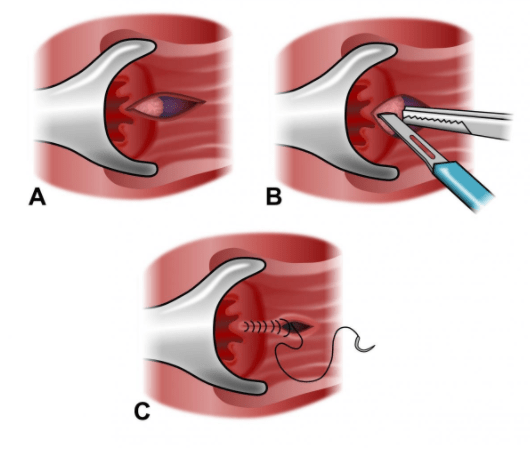
Fissurectomy removes the chronic fissure edges and fibrotic or scarred tissue, and may include removal of an associated sentinel tag or hypertrophied papilla when appropriate. I have a low threshold for considering fissurectomy when fibrosis or a sentinel tag is present. The wound may be left open or closed depending on the findings. The benefits, healing period and risks are discussed for the individual case.
Fissure vs Hemorrhoids vs Fistula
Anal Fissure — sharp pain during and after bowel movements, bright red blood on tissue paper, visible tear
Hemorrhoids — painless bleeding usually (unless thrombosed), prolapse/lump sensation, no sharp tear pain
Anal Fistula — recurring discharge/pus, intermittent swelling, history of previous abscess
Anal Fissure Treatment - Recovery
Treatment begins with bowel regulation, including laxatives and fibre, local anaesthetic for pain when needed, prescribed topical muscle-relaxing treatment and a wound-healing agent such as a hyaluronic-acid-based preparation when appropriate. If resting pressure is high, early botulinum toxin injection may be considered. If a chronic fissure persists with fibrotic change or a sentinel tag, fissurectomy may be appropriate. Sphincterotomy is very rarely needed in my practice and is generally avoided because of the possible risk of incontinence.
Cost & Insurance
The cost of anal fissure treatment in Dubai and Abu Dhabi depends on the treatment recommended after assessment. Initial care may include bowel-regulating measures, local anaesthetic, topical treatment and a wound-healing agent. Botulinum toxin or fissurectomy may be considered when indicated. Sphincterotomy is very rarely needed in my practice. You will receive a written quotation for the recommended treatment and facility fees before booking; insurance coverage depends on your policy and approval.
FAQs About Anal Fissure
Yes. Most anal fissures are treated without an operation. Treatment begins with softening the stool and relieving the muscle spasm that keeps the tear open, using a high-fibre diet, adequate fluid, a stool softener and warm sitz baths.
A prescribed ointment containing glyceryl trinitrate or diltiazem is applied to relax the internal anal sphincter and allow the tear to heal, and is usually continued for six to eight weeks. If the fissure persists, an injection of botulinum toxin into the internal sphincter relaxes the muscle for approximately three months, which is often long enough for healing to complete. Surgery is considered only when these measures have been given a fair trial and the fissure has not healed.
An acute fissure, meaning one present for less than six weeks, usually heals once the stool is soft and the sphincter spasm is treated. Pain usually improves earlier than the tear itself heals, so treatment should be continued for the full course even when symptoms settle. A fissure still present after six to eight weeks is described as chronic and is less likely to heal on medical treatment alone.
Persistent bleeding, a lump at the fissure site, or pain that returns each time treatment stops are all reasons to be reassessed rather than to repeat the same course.
A fissure can heal completely, and in many patients it never returns. Recurrence is related to the cause rather than to the tear itself, so a fissure that healed while constipation continued is likely to return. Lasting resolution depends on maintaining a soft stool and avoiding straining after healing.
When a chronic fissure has not healed on medical treatment, lateral internal sphincterotomy divides a small part of the internal sphincter to relieve spasm, and healing follows in the great majority of patients. No treatment can be described as guaranteed, and any recommendation depends on individual assessment.
Several measures that help are carried out at home: increasing dietary fibre, drinking more water, using a stool softener, sitting in warm water for ten to fifteen minutes after a bowel movement, and avoiding straining or prolonged sitting on the toilet. These measures address the cause and support healing. They do not replace assessment, because prescribed ointments require a prescription and several other conditions cause similar pain and bleeding.
Rectal bleeding warrants assessment and should not automatically be attributed to a fissure without appropriate examination. Fever, swelling or discharge around the anus also require prompt assessment, and persistent or recurrent pain warrants review.
An anal fissure is treated by a colorectal surgeon or proctologist. Dr Antonio Privitera is a Consultant General and Colorectal Surgeon.
Dr Antonio Privitera sees patients in Dubai at Medcare Royal Speciality Hospital, Medcare Medical Centre Discovery Gardens, Clemenceau Medical Center (CMC) Hospital and Aster Hospital Al Qusais, and in Abu Dhabi at Burjeel Day Surgery Centre Reem Island and Burjeel Day Surgery Centre Al Shahama. Appointments can be arranged by telephone or message on +971 55 318 8469.
Yes. Anal fissures are assessed and treated in both Dubai and Abu Dhabi. Treatment usually begins with measures to improve stool consistency and reduce trauma to the fissure, together with appropriate medical treatment. Persistent or recurrent fissures may require additional treatment such as Botox injection or surgery, depending on the examination findings and the individual case.
Prefer to read in Arabic? Read this guide in Arabic: العربية
Related reading

Selected articles on anal fissure
- Anal fissure: all you need to know
- What causes anal fissures
- Acute vs chronic fissure
- Fissure pain during bowel movements
- Fissure creams and ointments
- How long a fissure takes to heal
- Diet for anal fissure
- Chronic fissure that will not heal
- Botox vs surgery
- Fissure vs hemorrhoids
- Postpartum hemorrhoids and fissure
- Sitz baths
Why a fissure stalls, and what makes it heal
A chronic anal fissure may persist when hard stools or straining repeatedly reopen the tear. Treatment is tailored to the examination: laxatives and fibre help keep stools soft; local anaesthetic can ease pain; prescribed topical muscle-relaxing treatment and a wound-healing agent such as a hyaluronic-acid-based preparation may be used when appropriate.
If resting pressure is high, early botulinum toxin injection may be considered. A persistent fissure with fibrotic change or a sentinel tag may be better addressed with fissurectomy. Sphincterotomy is very rarely needed in my practice and is generally avoided because of the possible risk of incontinence.
Three things are worth stating plainly:
- Bright red blood on the paper or in the pan is typical of a fissure, but rectal bleeding should never simply be assumed to be one. Assessment matters, because hemorrhoids, inflammatory bowel disease and, rarely, a tumour can all bleed.
- Sharp pain on passing stool, followed by a lingering ache, is the feature that distinguishes a fissure from hemorrhoids, which more often bleed without much pain.
- Preventing constipation is part of the treatment, not advice offered afterwards. A fissure that heals while the bowel habit is unchanged tends to return.
Assessment includes the medical history — bowel pattern, previous episodes, previous anal surgery, obstetric history in women — and a gentle examination, with a female nurse present. Where pain prevents a full examination, treatment is started first and the examination completed once the spasm has eased.
A fissure sitting away from the midline, multiple fissures, or one associated with discharge or a lump may not be a simple fissure at all, and deserves a wider look rather than a repeat prescription.
Fissure treatment by city
For local assessment and treatment, see anal fissure treatment in Dubai or anal fissure treatment in Abu Dhabi. Topical treatment is covered in more detail in creams and ointments for anal fissure.
