
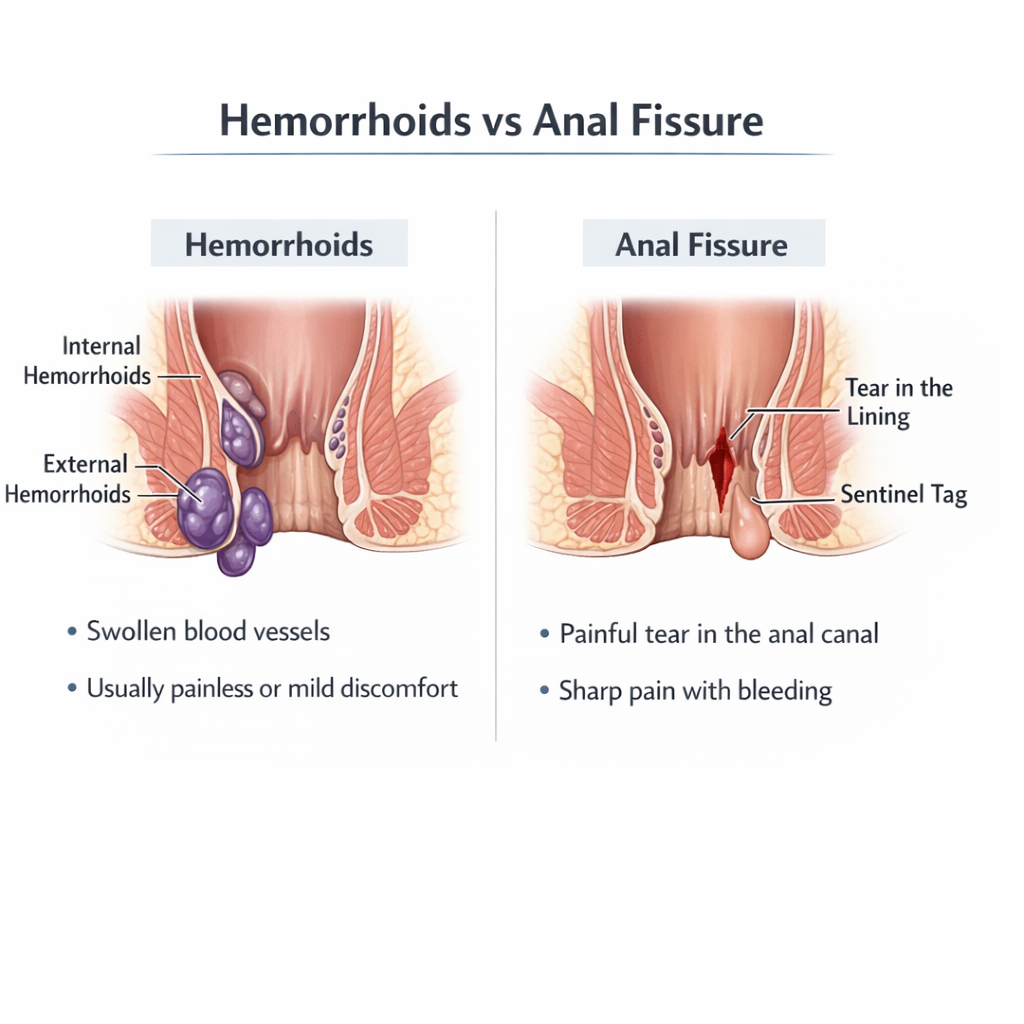
Hemorrhoids and anal fissures are often confused because both cause pain and bleeding. However, they are very different conditions with different treatments. For a complete overview of fissure management, see anal fissure treatment in Dubai.
Here is how to distinguish between the two – and why getting the diagnosis right is essential before starting any treatment.
The Key Difference: Pain Pattern
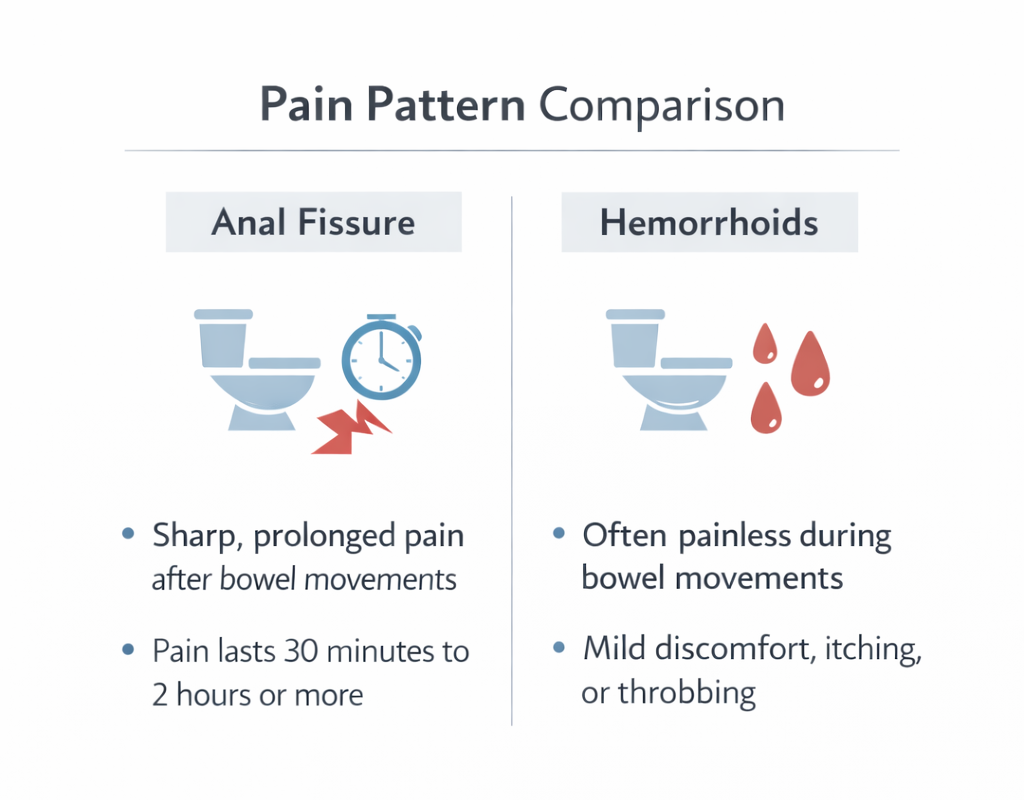
Anal Fissure Pain
- Sharp, tearing, or burning pain DURING and AFTER bowel movements
- Pain persists for 30 minutes to 2 hours after the bowel movement (sphincter spasm)
- Often severe – patients describe it as ‘passing glass’ or ‘a razor blade’
- Causes fear of the toilet – patients delay bowel movements, which worsens constipation
Hemorrhoid Pain
- Internal hemorrhoids are usually PAINLESS – they bleed without hurting
- External hemorrhoids cause discomfort, itching, or pressure – not the sharp tearing pain of a fissure
- Thrombosed external hemorrhoids cause constant throbbing pain – not linked specifically to bowel movements
Rule of thumb: If the pain is severe, tearing, and lasts more than 30 minutes after a bowel movement, think fissure first. Pain patterns differ. See why fissures hurt.
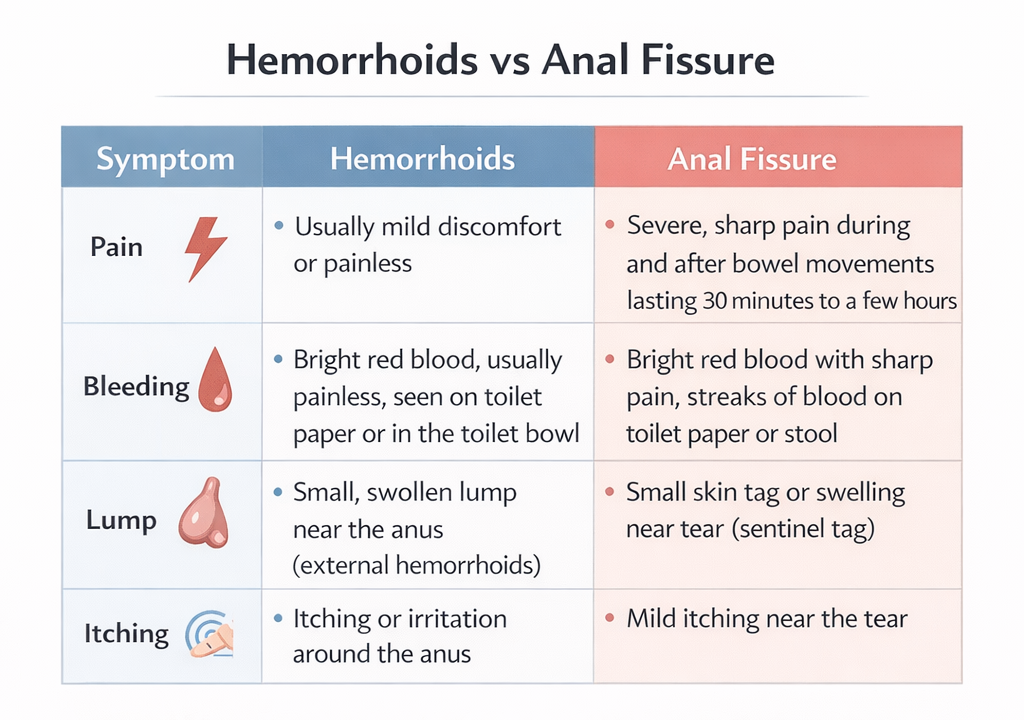
Bleeding: Similar But Different
Fissure Bleeding
- Bright red blood on toilet paper – usually a streak or small drip
- Blood is ON the stool surface or on toilet paper – not dripping or spurting
- Associated with pain
Hemorrhoid Bleeding
- Bright red blood – can drip into the toilet bowl or splash
- Can be larger amounts than fissure bleeding
- Usually PAINLESS (internal hemorrhoids)
- Blood is on the surface of stool or on toilet paper, or drips after passing stool
Other Distinguishing Features
Prolapse / Lump
- Hemorrhoids (Grade II–IV): A lump appears during or after bowel movements – may go back in spontaneously or require manual reduction. This does NOT happen with fissures.
- Fissure: No lump (unless a sentinel pile is present – a small skin tag at the outer edge of the fissure, which is a sign of chronicity).
Itching
More common with hemorrhoids (mucus discharge from prolapsing internal hemorrhoids irritates the anal skin). Fissures cause burning and pain more than itch.
Location of Discomfort
- Fissures: Very specifically pain during and after bowel movement.
- Hemorrhoids: More diffuse discomfort, heaviness, or prolapse sensation.
Can You Have Both at the Same Time?
Yes. Hemorrhoids and fissures frequently coexist – particularly in patients with chronic constipation and straining. This is another reason why an examination is essential: treating hemorrhoids will not cure a fissure, and vice versa.
When to See a Specialist
- Any anal pain or bleeding that has not resolved in 4 weeks
- Severe pain that is affecting your daily life or sleep
- Blood mixed with stool (not just on the surface) – this requires urgent investigation
- Symptoms that do not match a clear pattern – examination is the only way to be certain
References
- Lohsiriwat V. Hemorrhoids: from basic pathophysiology to clinical management. World J Gastroenterol. 2012.
Wald A et al. ACG clinical guideline: management of benign anorectal disorders. Am J Gastroenterol. 2014
Need expert treatment for hemorrhoids, anal fissure, or anal fistula? Book a consultation with Dr. Antonio Privitera in Dubai or Abu Dhabi.
📱 WhatsApp: +971 55 318 8469
📞 Phone: +971 55 318 8469
AUTHOR AUTHORITY BLOCK
Fellowship-trained at Mayo Clinic (USA) and the Royal College of Surgeons (UK). Member of the Royal College of Surgeons of Edinburgh. Certified in General Surgery by the Italian Medical Council.
About the Author