
Anal fistula surgery fails more often than people realize – particularly for complex fistulas. Recurrence rates of 20–40% are reported even for specialized centers. A second opinion for anal fistula surgery in Dubai can clarify diagnosis and treatment options. If your fistula symptoms have returned after surgery or never fully resolved – seeking a second specialist opinion is not only appropriate, it is the sensible next step. For a full overview of surgical options and what to do when they fail, see our anal fistula treatment in Dubai,

I regularly see patients in Dubai and Abu Dhabi who have had previous fistula surgery elsewhere and continue to have symptoms. In many cases, the approach needs to change: either the initial technique was not right for the anatomy, a secondary tract was missed, or the underlying cause (Crohn’s disease, for example) was not identified.
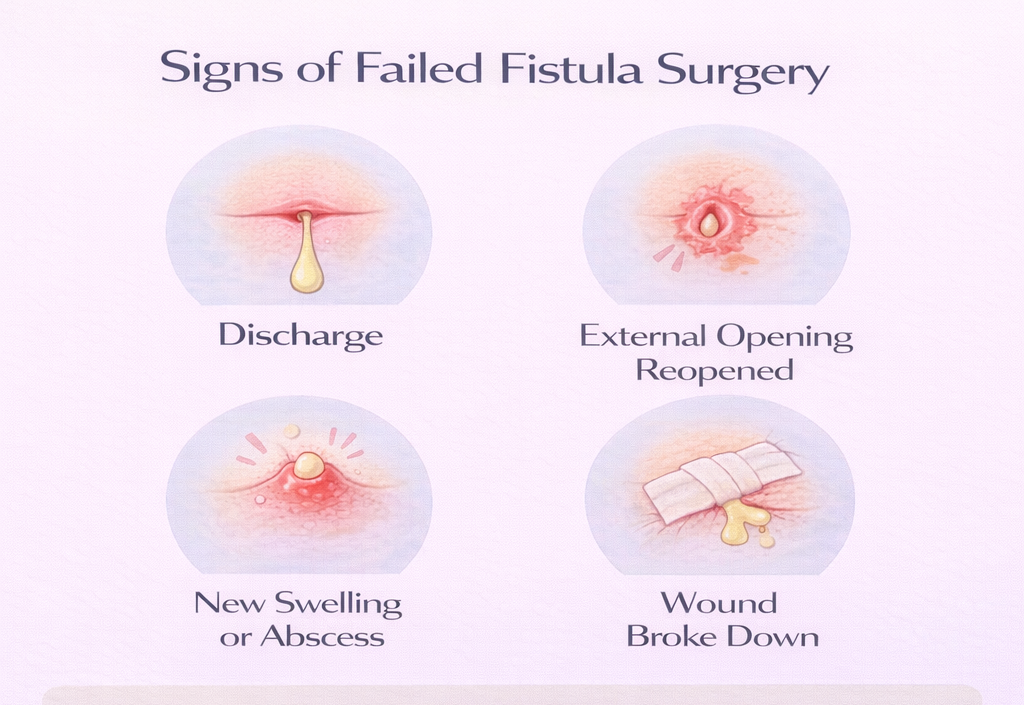
Signs That Your Fistula Surgery Has Not Worked
- Discharge from the same or nearby area has returned
- The external opening that was present before surgery has reopened
- New swelling or abscess at the same site
- Wound that was healing has broken down and started to discharge
- You are several months post-surgery and still have symptoms that were present before
Persistent or returning symptoms after surgery usually indicate that the fistula has not been fully treated. It is important to understand the recurrence. See why fistulas come back.
What a Second Opinion Involves
History and Review
I will review your previous operation notes, pathology reports, and imaging (MRI). Understanding exactly what was done and what the anatomy looked like is essential before planning anything further.
Examination
A careful examination to assess the current situation the location of any external opening, the site of any tenderness, and the overall perianal anatomy.
MRI Pelvis
MRI is almost always required for recurrent fistula assessment. The anatomy after previous surgery is different from the original and what is visible on examination may not reflect what is happening internally. Imaging is essential for recurrences. Learn about MRI for anal fistula.
Examination Under Anesthesia (EUA)
In some cases, an examination under anesthesia is the most informative step allowing careful probing of the tract and assessment of the internal anatomy in a relaxed, cooperative patient.
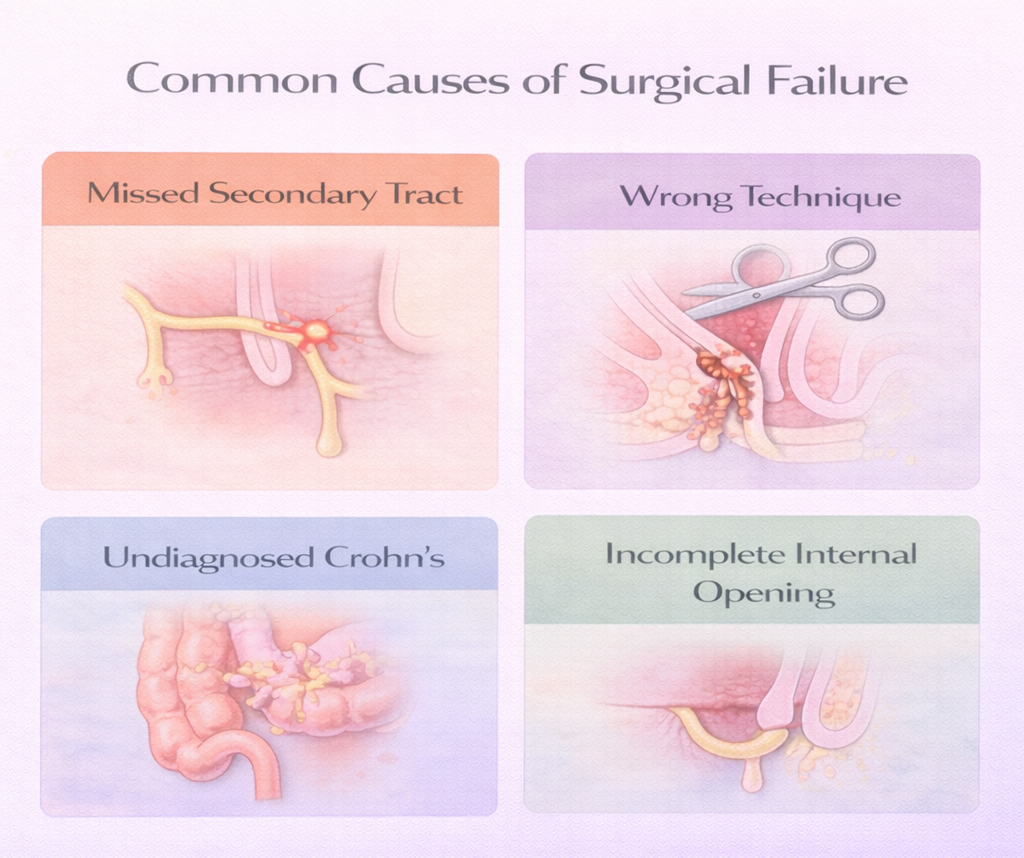
The Most Common Reasons for Failure
- Missed secondary tract or horseshoe extension – the primary tract was treated but a secondary tract remains
- Incomplete internal opening closure – the source of contamination at the anal gland was not definitively addressed
- Wrong technique for fistula type – laying open a high transsphincteric fistula, or performing a LIFT on a very long track
- Undiagnosed Crohn’s disease – fistulas in Crohn’s behave differently and require a completely different management approach
- Wound management failure – premature surface closure over an incompletely healed wound
What I Can Offer
- Honest assessment of why the previous operation failed – based on review of records, imaging, and examination
- A realistic plan for what can be achieved with further treatment
- Access to the full range of sphincter-sparing techniques – LIFT, advancement flap, FiLaC, seton
- Coordination with gastroenterology if Crohn’s disease is identified or suspected
- Transparent discussion of recurrence risk for any proposed further surgery
Complex or recurrent fistulas should always be assessed by a specialist colorectal surgeon.
Need expert treatment for hemorrhoids, anal fissure, or anal fistula? Book a consultation with Dr. Antonio Privitera in Dubai or Abu Dhabi.
📱 WhatsApp: +971 55 318 8469
📞 Phone: +971 55 318 8469
AUTHOR AUTHORITY BLOCK
Fellowship-trained at Mayo Clinic (USA) and the Royal College of Surgeons (UK). Member of the Royal College of Surgeons of Edinburgh. Certified in General Surgery by the Italian Medical Council.
About the Author