
One of the most common conversations I have in my clinic begins like this: ‘I’ve had anal pain for months. I bought hemorrhoid cream and it’s not helping. I don’t know what else to do.’ Our anal fissure treatment in Dubai explains the full range of anorectal conditions and how each is diagnosed and treated. The problem is almost always the same: the patient has a different condition, not hemorrhoids and hemorrhoid cream does nothing for any of them.
Here are the most important conditions that cause anal pain and are frequently mistaken for hemorrhoids.
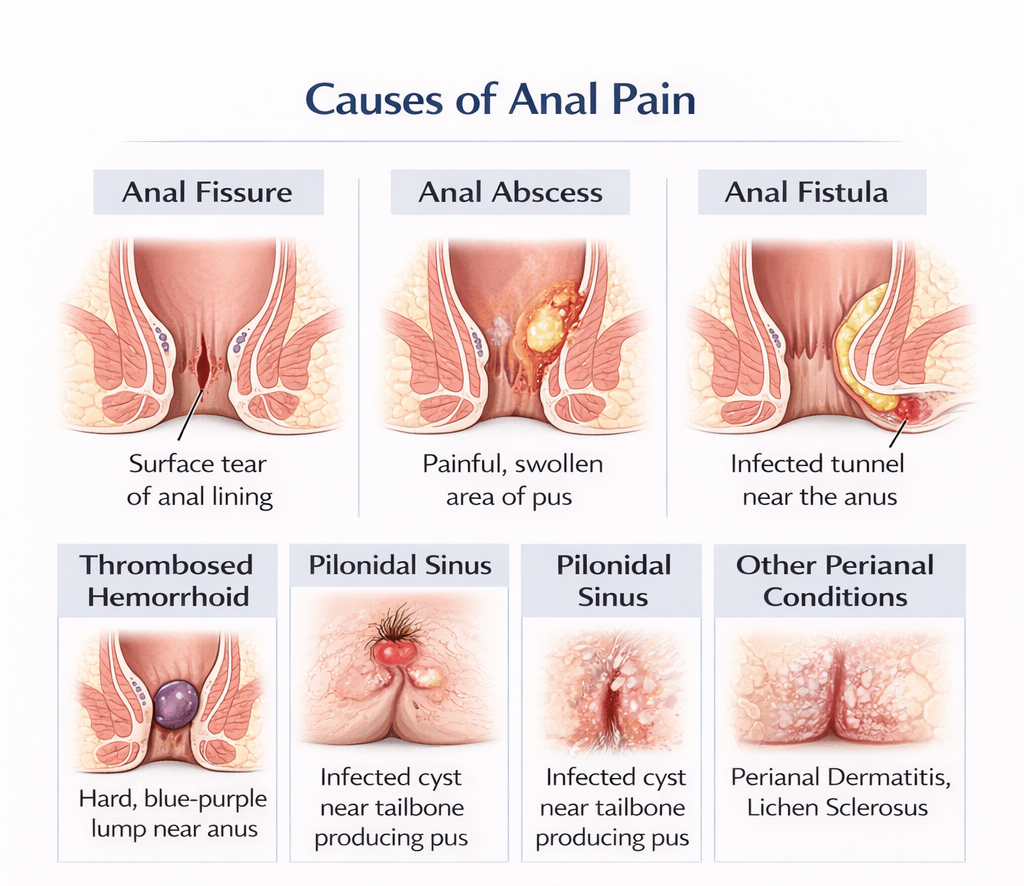
1. Anal Fissure
The most common cause is an anal fissure. Fissure is a common cause.
Key features:
- Sharp, tearing pain DURING and FOR UP TO 2 HOURS AFTER bowel movements
- Small amount of bright red blood on toilet paper
- Pain so severe that patients dread going to the toilet
Hemorrhoid cream does not relax the internal sphincter spasm that causes fissure pain. It does nothing. The correct treatment is topical GTN or diltiazem – or Botox if the fissure is chronic.
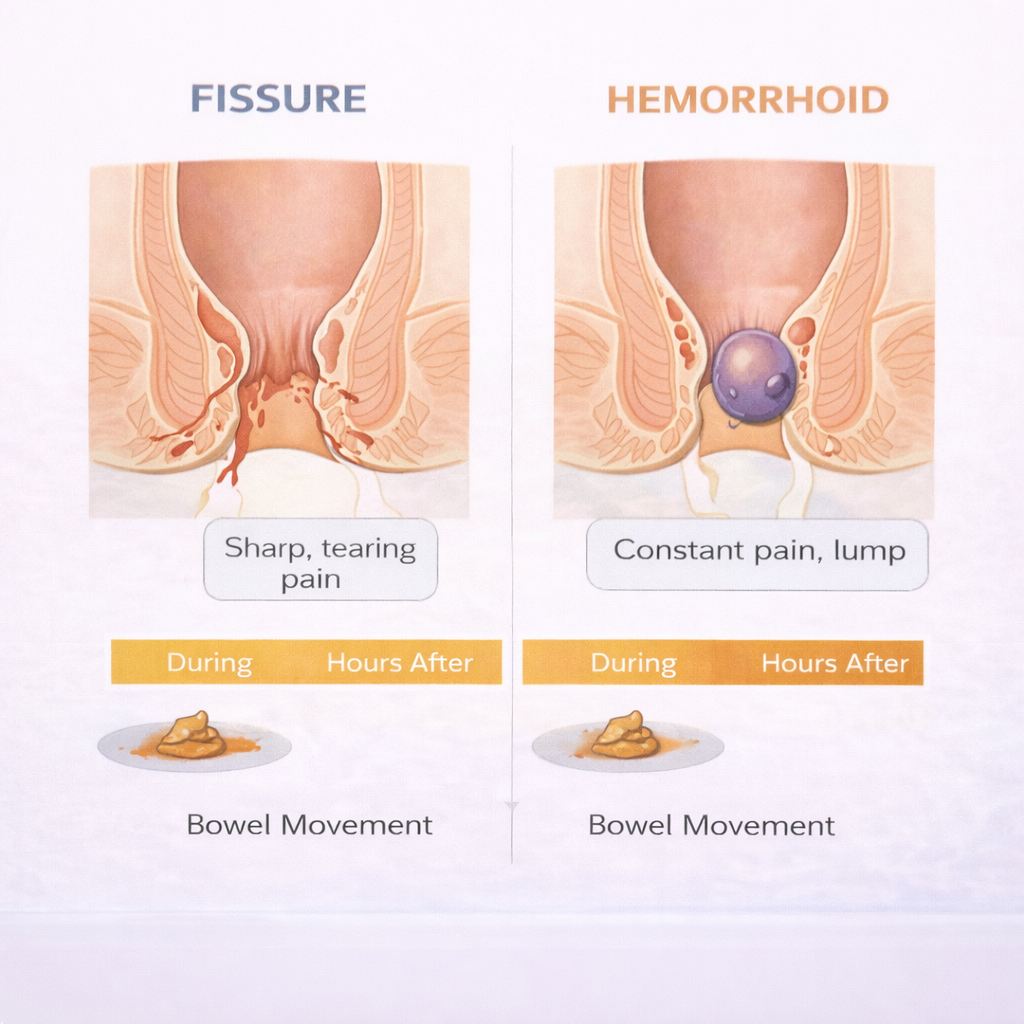
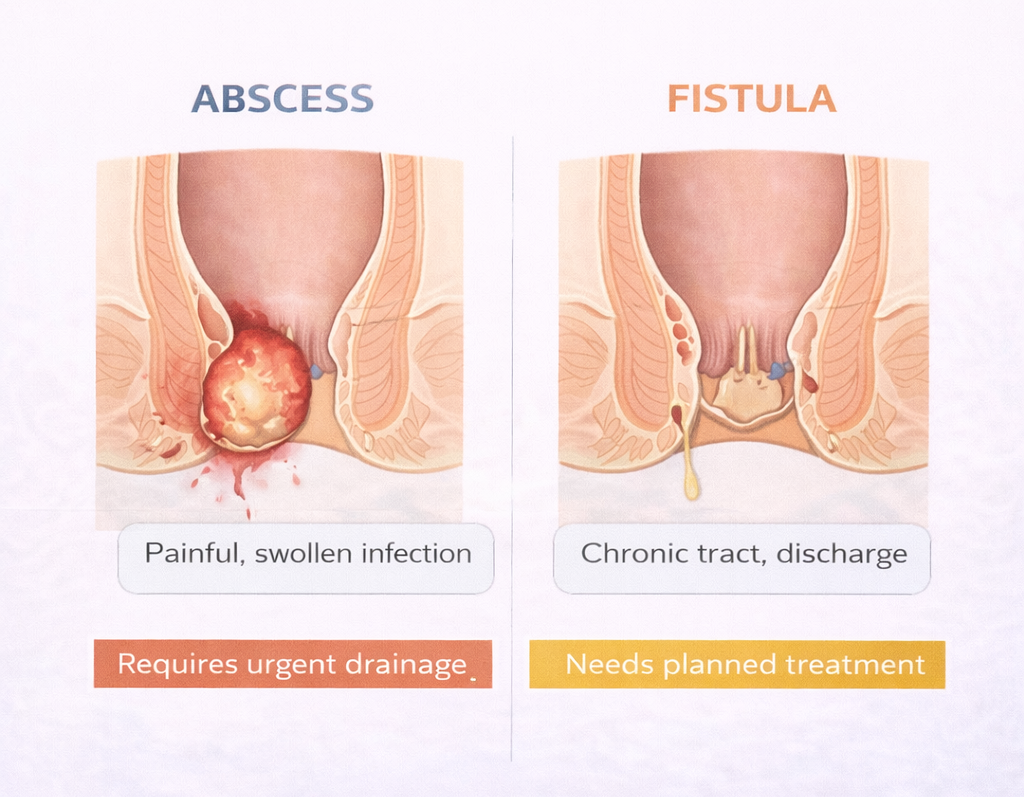
2. Anal Abscess
An anal abscess is a collection of pus in the tissues around the anus. Key features:
- Constant, throbbing, severe pain – not related specifically to bowel movements
- Swelling, redness, warmth near the anus
- Fever in some cases
- This is a SURGICAL EMERGENCY – requires incision and drainage, not cream
3. Anal Fistula
An anal fistula is another important cause. For full management, see anal fistula treatment in Dubai.
Key features:
- Persistent discharge (pus, blood, mucus) from an opening near the anus
- May cause itching, discomfort, or intermittent swelling
- Requires surgical treatment – cannot be cured with cream
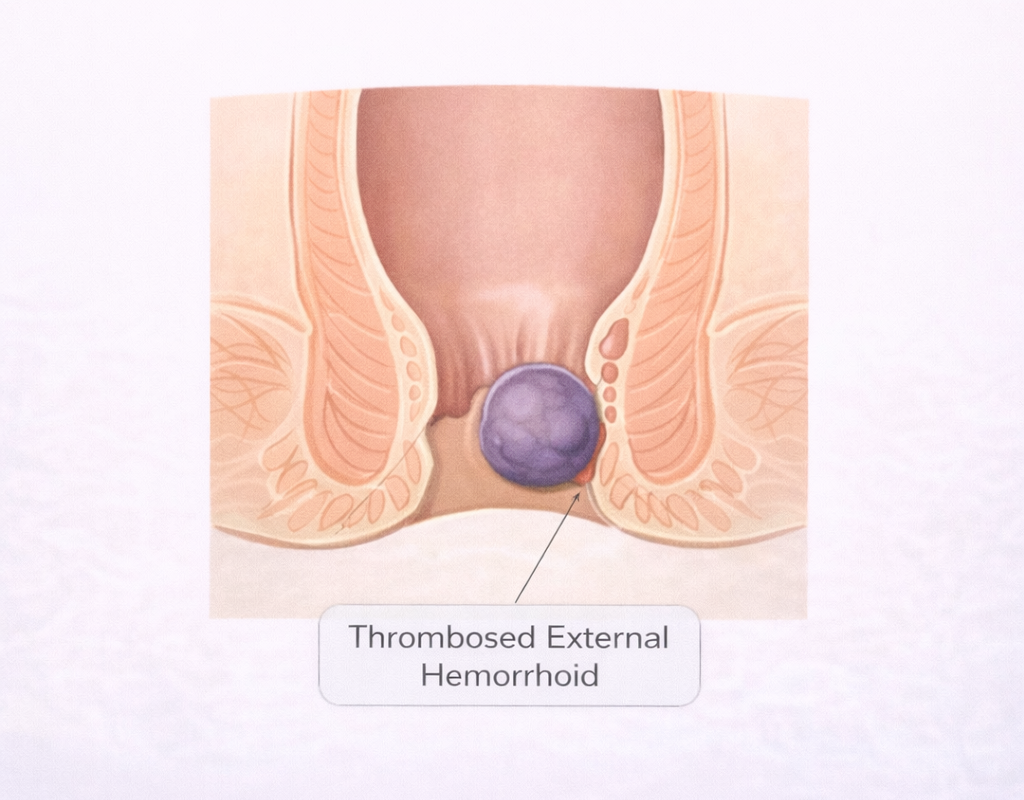
4. Thrombosed External Hemorrhoid
A blood clot inside an external hemorrhoid is a common source of sudden pain. For a detailed comparison, see our guide on fissure vs hemorrhoids in Dubai.
Key features:
- Sudden severe pain – constant, not just with bowel movements
- Hard, visible, blue-purple lump near the anus
- Pain peaks at 24-72 hours and then gradually improves
- Surgical excision within 48-72 hours provides rapid relief; after that, conservative management
5. Proctalgia Fugax
Sudden episodes of severe rectal pain, lasting seconds to minutes, with no identifiable cause. Thought to be caused by spasm of the levator ani muscle. No structural abnormality on examination. Often resolves spontaneously; management includes muscle relaxants and biofeedback.
6. Levator Ani Syndrome
Chronic dull aching pressure or pain deep in the rectum, often worse with sitting. Caused by chronic tension or spasm of the levator ani muscle. No structural lesion on examination.
7. Pilonidal Sinus
A cyst or sinus tract near the tailbone (sacrococcygeal area), not truly anal. Causes pain, swelling, and discharge in the natal cleft. More common in young men with thick hair.
8. Perianal Dermatitis / Lichen Sclerosus
Skin conditions affecting the perianal area can cause itching, burning, and pain. Requires dermatological assessment and specific treatment.
The Bottom Line
Anal pain has many causes. Hemorrhoid cream treats one specific symptom of one specific condition. If you have been using it for more than 2-4 weeks without improvement, you need examination – not more cream.
If your symptoms persist despite treatment, a specialist assessment in Dubai is recommended to confirm the diagnosis and guide treatment.
Need expert treatment for hemorrhoids, anal fissure, or anal fistula? Book a consultation with Dr. Antonio Privitera in Dubai or Abu Dhabi.
📱 WhatsApp: +971 55 318 8469
📞 Phone: +971 55 318 8469
AUTHOR AUTHORITY BLOCK
Fellowship-trained at Mayo Clinic (USA) and the Royal College of Surgeons (UK). Member of the Royal College of Surgeons of Edinburgh. Certified in General Surgery by the Italian Medical Council.
About the Author