
Anal abscess and anal fistula are two stages of the same disease process. Understanding the relationship between them and the key differences in urgency, symptoms, and treatment is essential for getting the right care at the right time. Our anal fistula treatment in Dubai explains how fistulas, abscesses and related conditions are diagnosed and treated.
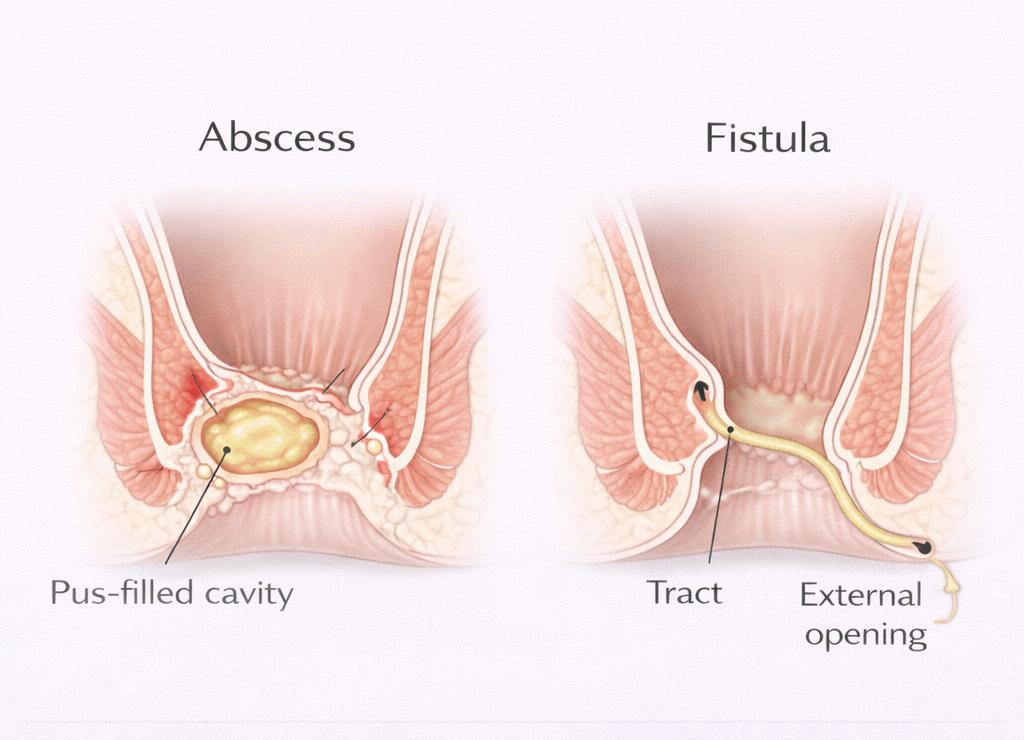
Anal Abscess: The Acute Stage
What It Is
A collection of pus in the tissue surrounding the anus and rectum, caused by infection of an anal gland. It is the ACUTE, painful, URGENT presentation.
Symptoms
- Constant, severe, throbbing pain near the anus
- Swelling, redness, and warmth
- Fever – often present in deeper abscesses
- Difficulty sitting
- The pain is constant – not specifically related to bowel movements
Types of Abscess
- Perianal (most common): Near the anal margin often visible as a tender swelling
- Ischiorectal: In the ischiorectal fossa larger, deeper, more serious
- Intersphincteric: Between the sphincters pain, minimal external swelling
- Supralevator: Above the levator muscle deep, often with pelvic pain and fever
Treatment
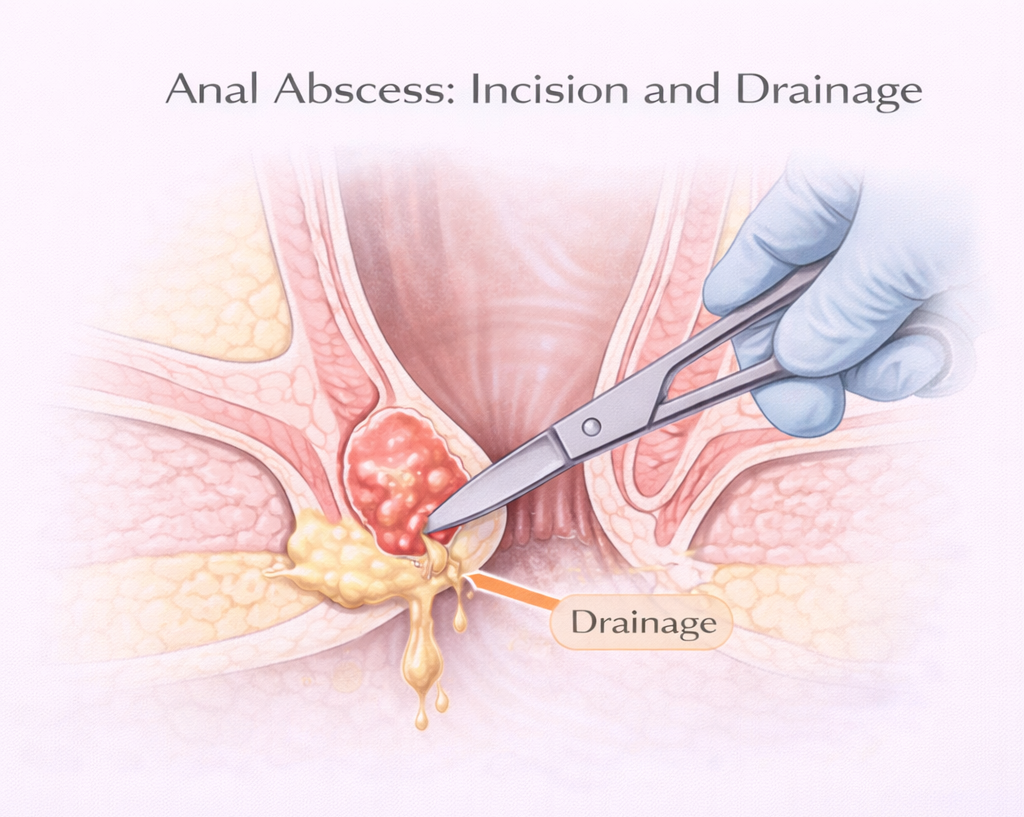
Incision and drainage (I&D) – SURGICAL EMERGENCY. Do not wait. An anal abscess is a surgical emergency and requires immediate drainage. An abscess will not resolve with antibiotics alone. If untreated, it can spread to involve the entire perineum (Fournier’s gangrene life-threatening).
Important: In UAE, patients sometimes present to GPs who prescribe antibiotics alone for perianal abscess. This is inadequate. Drainage is required.
Anal Fistula: The Chronic Stage
What It Is
A persistent tract (tunnel) from the site of the original anal gland infection to the perianal skin. It is the CHRONIC, persistent, non-urgent presentation but still requires definitive treatment.
Symptoms
- Persistent or intermittent discharge (pus, blood, mucus) from an opening near the anus
- Itching and skin irritation
- Intermittent pain when the tract fills with pus and the external opening seals
- History of previous abscess – either surgical drainage or spontaneous discharge
Treatment
Surgical – fistulotomy, seton placement, LIFT, laser, or other sphincter-sparing technique depending on the type and complexity of the fistula. For full management, see anal fistula treatment in Dubai. No cream or antibiotic will close a fistula.
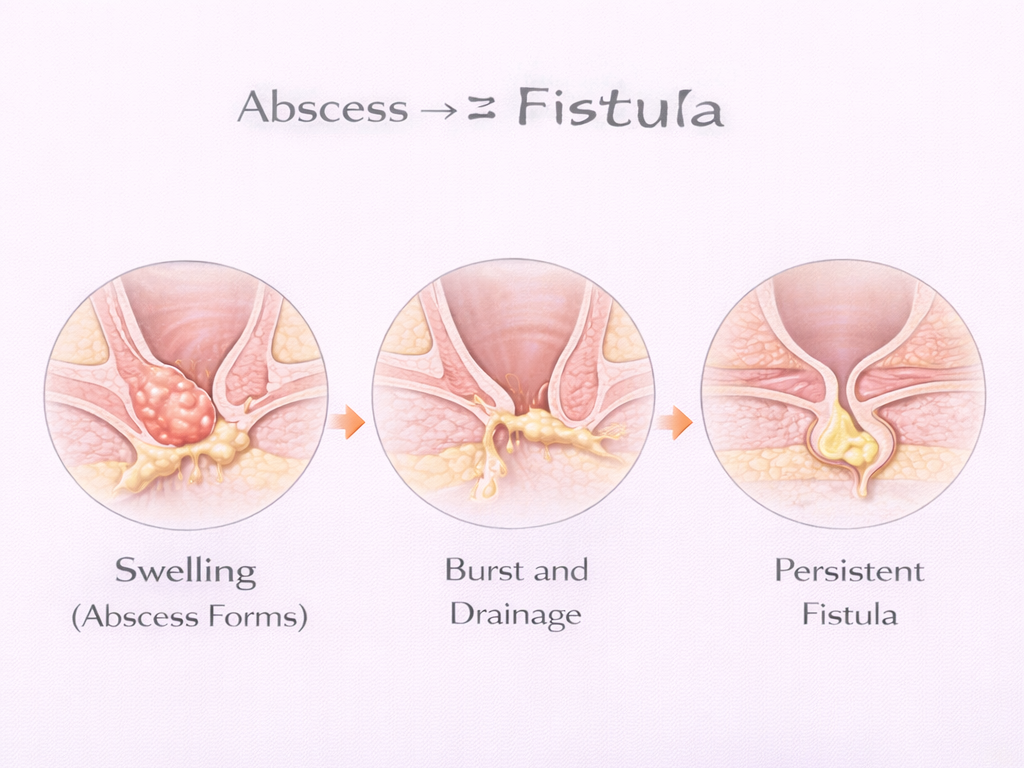
The Relationship Between Abscess and Fistula
Think of them as two stages of the same disease: Abscess = active infection stage → Drain → 50% chance of fistula remaining → Fistula = chronic tract that persists.
Not all abscesses lead to fistulas. But approximately 50% do and patients who have had a perianal abscess drained should be aware of fistula symptoms.
Key Differences at a Glance
- Abscess: Acute, severe pain, swelling, fever. No external opening (or just the abscess itself).
- Treatment: URGENT surgical drainage.
- Fistula: Chronic, persistent discharge, itching, intermittent discomfort. External opening on perianal skin.
- Treatment: Elective surgery.
Need expert treatment for hemorrhoids, anal fissure, or anal fistula? Book a consultation with Dr. Antonio Privitera in Dubai or Abu Dhabi.
📱 WhatsApp: +971 55 318 8469
📞 Phone: +971 55 318 8469
AUTHOR AUTHORITY BLOCK
Fellowship-trained at Mayo Clinic (USA) and the Royal College of Surgeons (UK). Member of the Royal College of Surgeons of Edinburgh. Certified in General Surgery by the Italian Medical Council.
About the Author