
Every guide to hemorrhoids and constipation says the same two words — more fiber — and stops there. The stopping is the problem. Patients increase fiber, feel more bloated, strain just as much, and conclude fiber “doesn’t work for them.” Usually what failed was the method, not the fiber. This is the practical version: how much, which kind, from food or supplements, and the mistakes that undo the benefit.
What fiber does for the anorectum
Soluble fiber absorbs water and forms a soft, bulky, formed stool that passes with minimal straining. That single mechanical change is why fiber has evidence behind it for bleeding hemorrhoids, for preventing recurrence after treatment, and for letting an anal fissure heal — a hard stool re-tears a healing fissure with every bowel movement.
How much you actually need
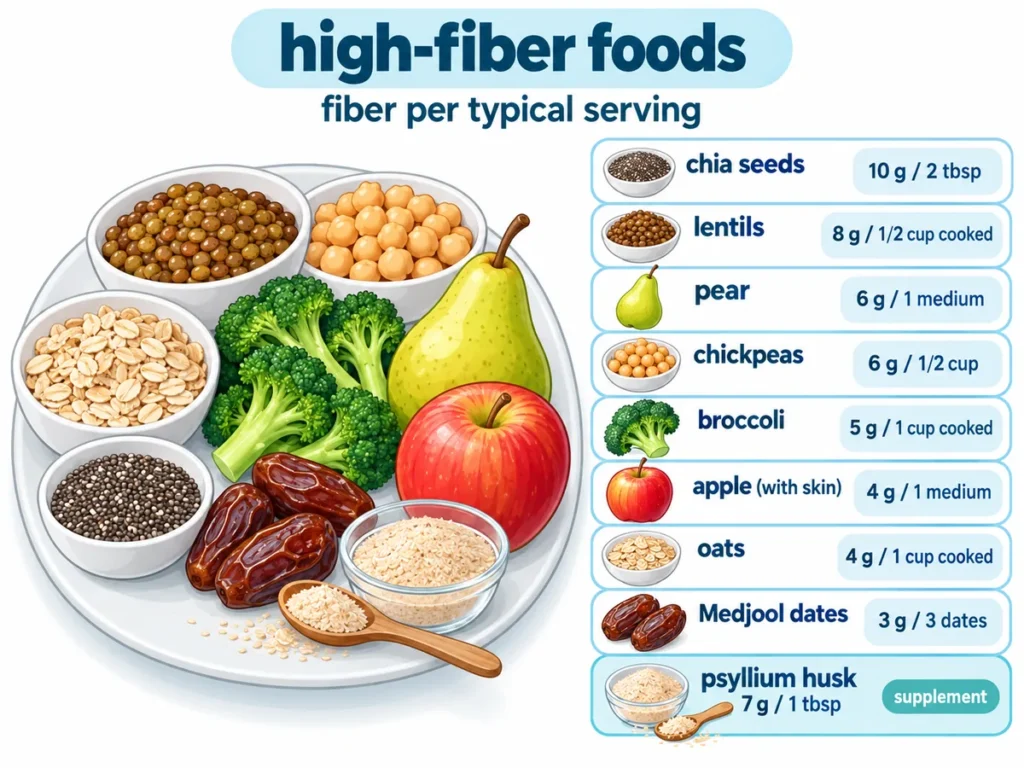
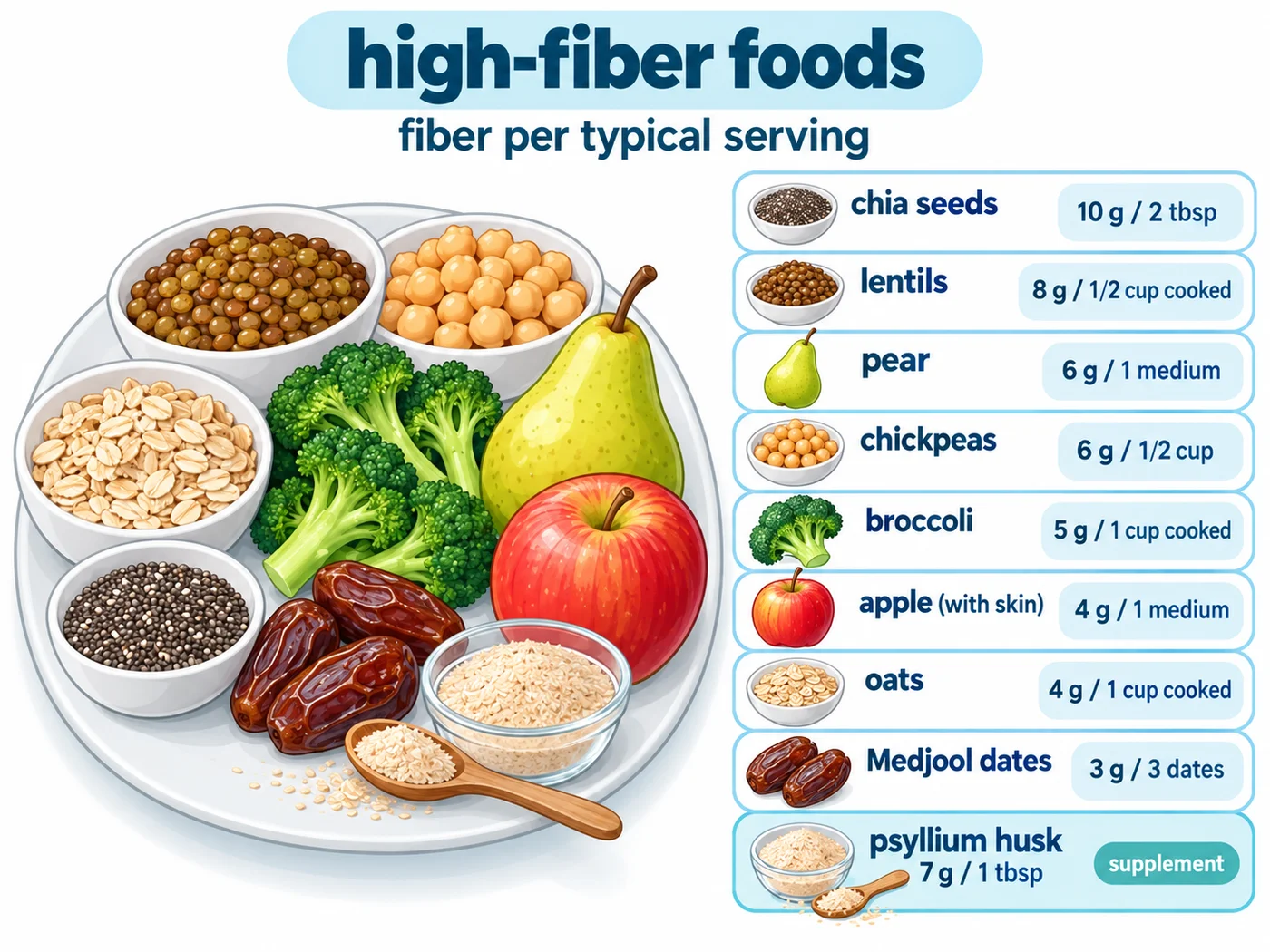
The target is roughly 25 to 35 grams per day. Most people eating a typical urban UAE diet — white rice, white bread, delivery meals — take in half that or less. The gap matters more than the exact number: moving from 12 grams to 25 makes a noticeable difference to stool form within one to two weeks.
Food first: where the grams are
Useful, realistic sources: oats and barley; lentils, chickpeas and beans, which carry more fiber per serving than most vegetables; fruit eaten whole rather than juiced — juicing removes the fiber; vegetables, particularly with skins; chia and flaxseed stirred into anything; and whole-grain versions of bread and rice. Dates, a regional staple, are a genuinely good fiber source in moderate numbers. I have written a fuller food-level guide in best foods for hemorrhoids.
Supplements: psyllium leads the evidence
When diet alone cannot reach the target — common with busy schedules — psyllium husk (ispaghula) is the supplement with the most consistent evidence for hemorrhoid symptoms and stool normalization. It is gel-forming: it softens hard stool and, usefully, firms loose stool. Methylcellulose and sterculia are alternatives; wheat bran is cheap and effective for some but more bloating. Start low — a teaspoon or one sachet daily — and increase every few days as tolerated.
The four mistakes that make fiber fail
Too fast. Jumping to a full dose overnight guarantees bloating and abandonment. Build over two weeks.
Too dry. Fiber without water is a plug, not a remedy. Each supplement dose needs a full glass, plus adequate fluids across the day — particularly relevant through a Gulf summer spent between air-conditioned rooms, where thirst underestimates real fluid loss.
Wrong expectation. Fiber normalizes stool over days to weeks. It is not a laxative for tonight; that role belongs to other agents.
Wrong diagnosis. When stool is already soft and the problem is getting it out — straining, incomplete emptying — more fiber adds volume to a queue that is not moving. That pattern suggests pelvic floor dysfunction, and fiber alone will disappoint.
Frequently asked questions
Is psyllium safe to take permanently?
Yes, with adequate fluid. It is a food-derived bulking agent, not a stimulant, and does not create dependence.
Does fiber help bleeding hemorrhoids?
Yes — fiber supplementation reduces bleeding and symptomatic episodes and is a standard part of treatment at every grade, alongside whatever procedure is indicated.
Can fiber make constipation worse?
It can, when fluid intake is low or when the underlying problem is an evacuation disorder rather than slow transit. Both are identifiable — and fixable — with assessment.
Persistent symptoms despite a genuine fiber effort deserve examination rather than another dietary reshuffle. I assess hemorrhoids, fissures and chronic constipation in Dubai and Abu Dhabi — the proctology page explains where to start.
Chronic straining is also a risk factor for rectal prolapse and how it is treated.
About the Author