

Consultant Colorectal Surgeon · Dubai and Abu Dhabi · DHA and DoH licensed · Associate Professor, UAE University
About · Google Scholar · LinkedIn
- Outlet obstruction means stool arrives in the rectum normally but cannot be evacuated.
- Causes split into functional (the pelvic floor does not relax) and mechanical (rectocele, internal prolapse, enterocele).
- Oral laxatives treat the colon and cannot fix an outlet problem; suppositories and enemas act where the problem is.
- Identifying which type you have determines whether the treatment is retraining or surgery.
This is the group of patients most often treated for the wrong thing. The colon is working, the stool arrives, the urge is there — and nothing comes out, or only a fraction does. Every laxative prescribed for this picture adds volume and pressure to a system whose exit is blocked.
Functional causes: the pelvic floor does not relax
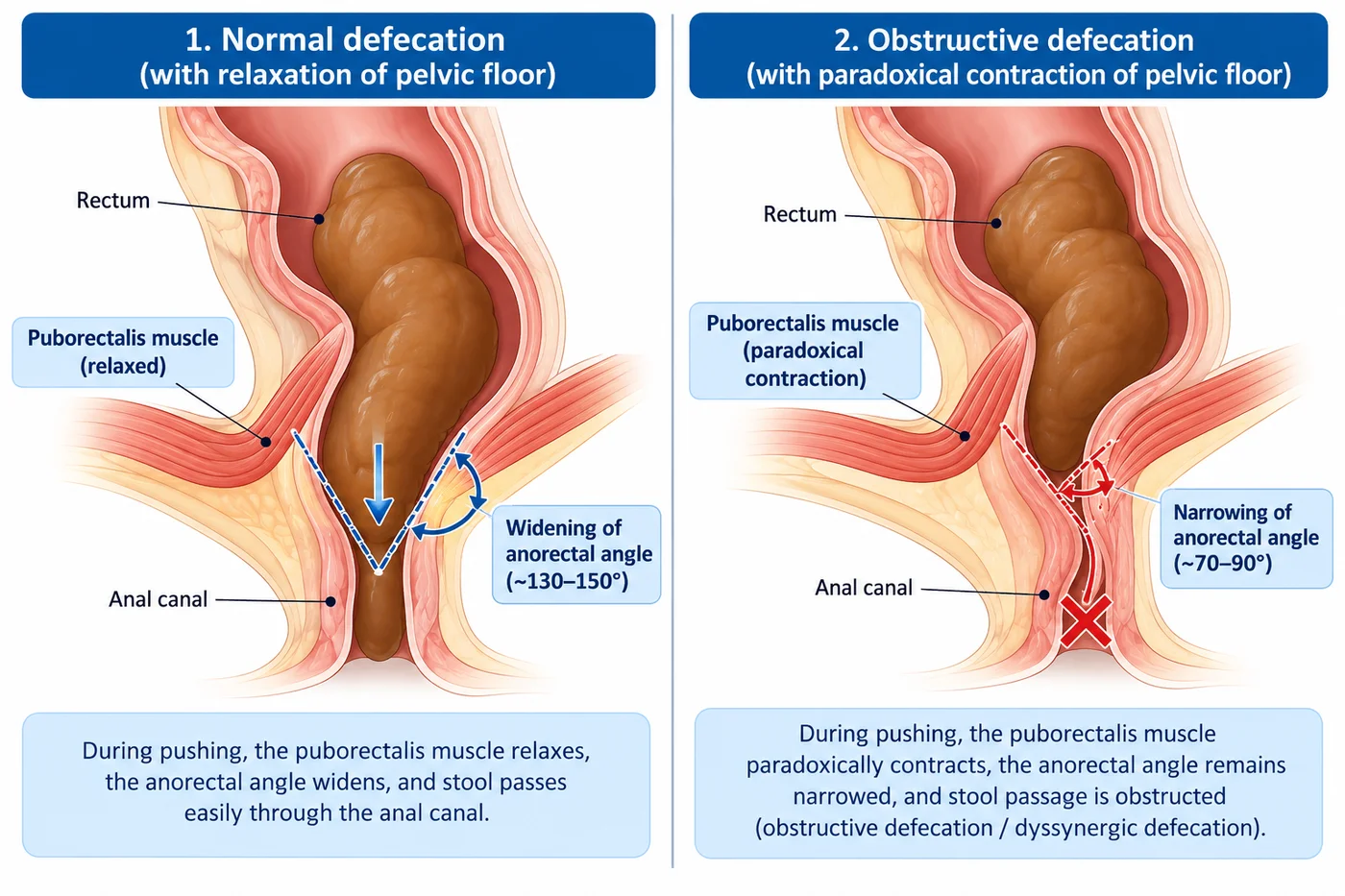
Normal evacuation requires the puborectalis muscle and anal sphincter to relax at the same moment the rectum contracts. In dyssynergic defecation that coordination is lost: pushing produces contraction instead of relaxation. It is a learned pattern rather than a disease, which is why it responds to retraining rather than drugs, and it accounts for a large share of these patients.
Mechanical causes: something is in the way
Rectocele. A bulge of the anterior rectal wall into the vagina, typically after childbirth. Stool collects in it. Splinting with a finger to empty is the giveaway symptom.
Internal rectal prolapse (intussusception). The rectal wall folds into itself on straining and plugs the outlet. Often accompanied by mucus and a persistent urge. Covered in internal rectal prolapse.
Enterocele. Small bowel descends between rectum and vagina and compresses the rectum during evacuation.
Anal stenosis or a tight sphincter. Narrowing after previous anal surgery, or the high resting tone that accompanies a chronic anal fissure.
Mechanical and functional causes coexist frequently, which is why assessing both before treating either is the whole point.
Symptoms that fit this pattern
- Prolonged straining, including with soft stool.
- A sense of blockage at the anus rather than higher in the abdomen.
- Splinting — pressing on the perineum, the vagina, or the buttocks — to evacuate.
- Incomplete evacuation and repeated toilet visits.
- Needing suppositories or enemas to get any result.
- Mucus discharge or minor bleeding from the strain.
How it is diagnosed
Clinical examination comes first and is more informative than most people expect: I can feel whether the pelvic floor relaxes or tightens when you bear down, and whether there is a rectocele. Then anorectal manometry for pressures and coordination, the balloon expulsion test as a direct functional answer, and defecography to demonstrate a rectocele, intussusception or enterocele when surgery is being considered. The full assessment pathway is here.
Treatment that matches the cause
Functional: biofeedback retraining, toilet technique, rectal emptying with suppositories or small enemas while retraining takes effect. This is first line for nearly everyone.
Mechanical, with normal pelvic floor function: repair of a significant rectocele, or surgery for internal prolapse in carefully selected patients.
Mixed: retraining first, then reassess. Operating before the functional element is treated is the most common reason these operations disappoint.
Frequently asked questions
Why do enemas work when tablets do not?
Because they act in the rectum, which is where the problem is. Oral laxatives act on the colon, which is already doing its job.
Is this related to hemorrhoids?
The straining that outlet obstruction produces is a direct cause of hemorrhoids and fissures, and treating the outlet problem is part of stopping them from returning.
Does childbirth cause this?
Vaginal delivery is the commonest cause of a rectocele and can weaken pelvic floor coordination. Symptoms often appear years later.
About the Author