The good news about anal fissures is that the majority including many chronic ones can be healed without surgery. Surgery is effective and safe, but it carries a small risk of incontinence, and for most patients there is a clear non-surgical pathway that works. For a complete overview of treatment options, see anal fissure treatment in Dubai.
In UAE, where there is a strong cultural preference for non-surgical treatment, understanding what non-surgical options exist and how effective they are is essential.
Step 1: Dietary and Lifestyle Changes (Everyone)
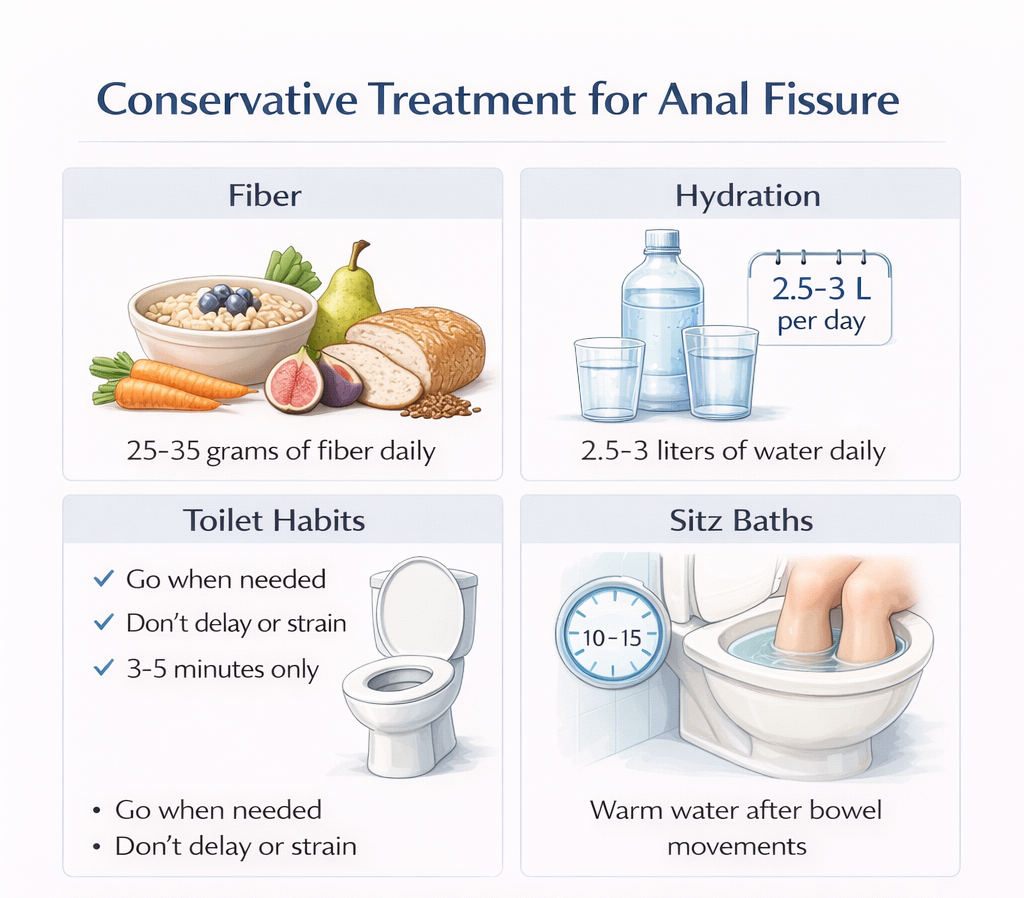
These should be implemented regardless of whether you pursue other treatment. They reduce the mechanical stimulus that causes fissures and support healing for any treatment to work.
- Fiber: 25-35 grams daily. Sources: fruits (figs, prunes, pears), vegetables, legumes, whole grains. Fiber supplements: psyllium husk (Fybogel, Metamucil) if diet alone is insufficient.
- Hydration: 2.5-3 liters of water daily in Dubai\’s climate more in summer or if you exercise. Dehydration is the most common modifiable cause of hard stools.
- Toilet habits: Go when you feel the urge do not delay. Do not strain. Do not sit on the toilet for more than 3-5 minutes.
- Sitz baths: Warm (not hot) water for 10-15 minutes after each bowel movement. Relaxes the sphincter, soothes the area, improves local blood supply.
Step 2: Topical Creams
Glyceryl Trinitrate (GTN) 0.2-0.4% Cream
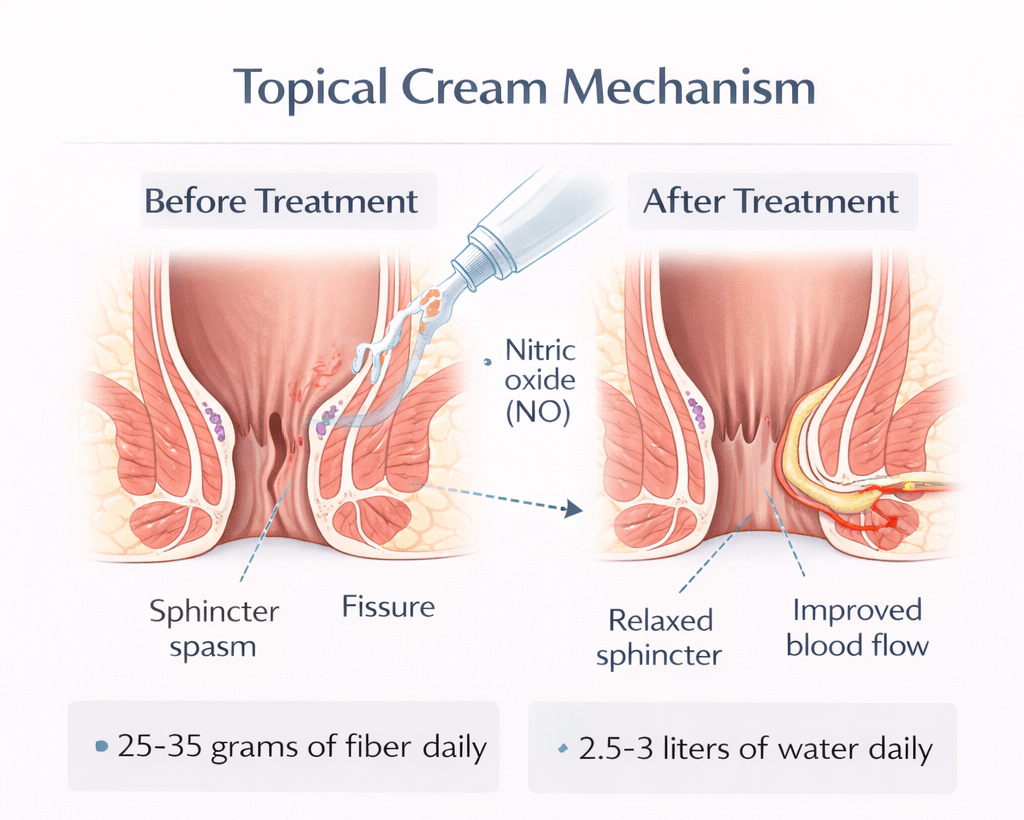
First-line pharmacological treatment. GTN releases nitric oxide, which relaxes the internal sphincter, reduces pressure, and improves blood supply.
- Applied 2-3 times daily, including after bowel movements
- Treatment course: 6-8 weeks
- Healing rate: 60-70% for acute fissures; lower for chronic ones
- Main side effect: Headache common, dose-dependent. Use a pea-sized amount only.
Diltiazem 2% Cream
Calcium channel blocker works similarly to GTN. Fewer headaches. Often preferred for patients who cannot tolerate GTN.
- Applied twice daily
- Treatment course: 6-8 weeks
- Healing rate: Similar to GTN approximately 65% for appropriate patients
Nifedipine 0.3% Cream
Another calcium channel blocker. Less commonly used. Evidence base is smaller than GTN or diltiazem.
Step 3: Botox Injection
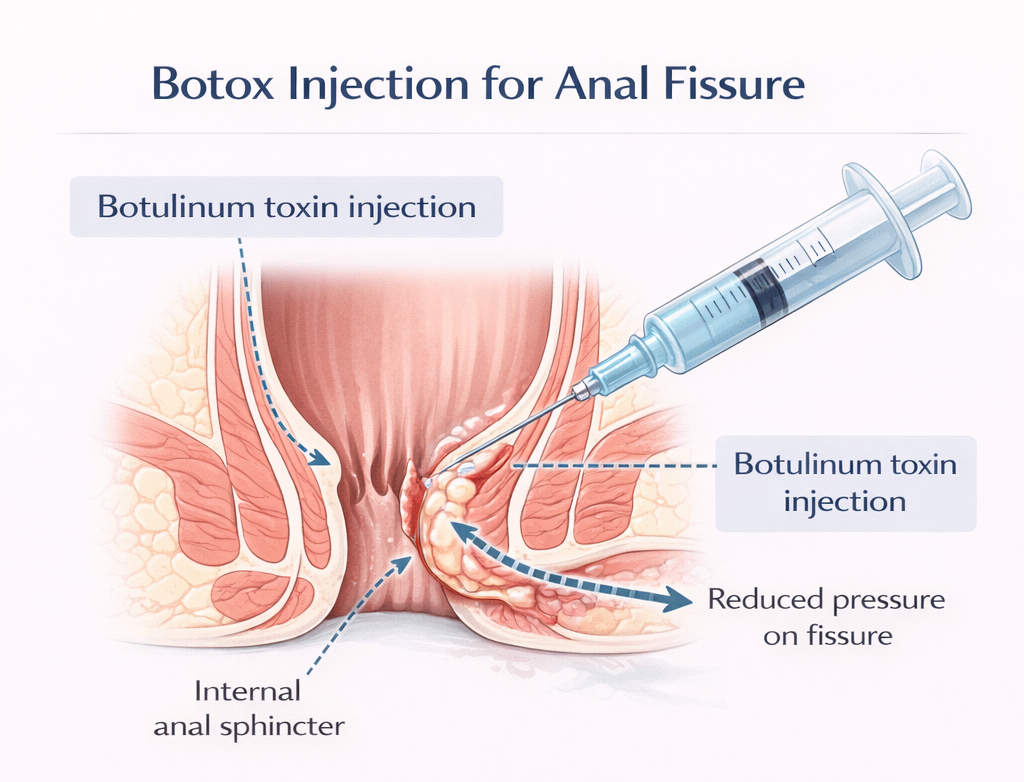
Botox injection for anal fissure in Dubai is used when topical treatments fail. It is the preferred next step, especially for chronic fissures.
- Botulinum toxin is injected directly into the internal anal sphincter in clinic or under brief sedation
- Temporarily paralyses the sphincter for 2-4 months eliminating spasm and allowing blood supply and healing to recover
- Healing rate: 60-70% of chronic fissures heal after a single Botox injection
- The procedure takes approximately 10 minutes
- Recovery: Minimal. Most patients return to normal activities the same or next day.
- A second injection can be performed if the first is partially effective
Important: In UAE, Botox is the preferred bridge between topical treatment and surgery. It avoids surgery altogether in the majority of chronic fissure patients.
When Non-Surgical Treatment Is Not Enough
Surgery lateral internal sphincterotomy (LIS) is recommended when:
- Two courses of topical creams have failed
- One or two Botox injections have failed
- The fissure is very deep, has been present for years, or is associated with very high sphincter pressure
Lateral internal sphincterotomy in Dubai has a healing rate exceeding 95% and is a day-case procedure. The risk of minor incontinence exists but is low in experienced hands.
Need expert treatment for hemorrhoids, anal fissure, or anal fistula? Book a consultation with Dr. Antonio Privitera in Dubai or Abu Dhabi.
📱 WhatsApp: +971 55 318 8469
📞 Phone: +971 55 318 8469
AUTHOR AUTHORITY BLOCK
Fellowship-trained at Mayo Clinic (USA) and the Royal College of Surgeons (UK). Member of the Royal College of Surgeons of Edinburgh. Certified in General Surgery by the Italian Medical Council.
About the Author