
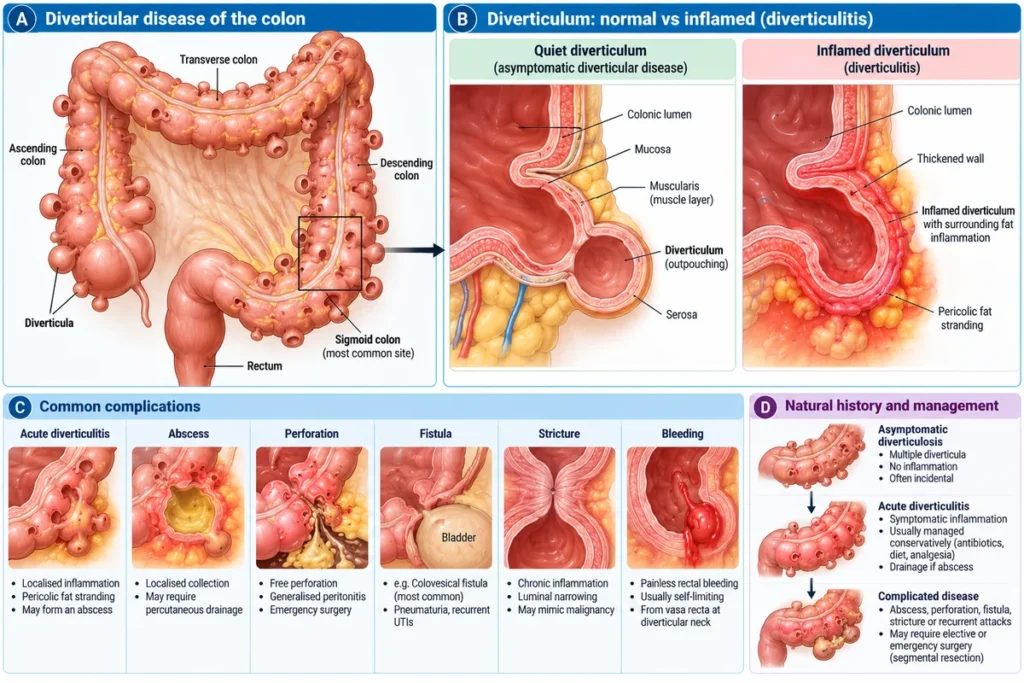
Diverticular disease is the condition most of my patients have heard of only at the moment a CT scan finds it. Small pouches — diverticula — form in the wall of the colon, usually the sigmoid, and in most people never cause a single symptom. The task is knowing which situations are harmless, which need treatment, and which belong in hospital.
Diverticulosis: the finding
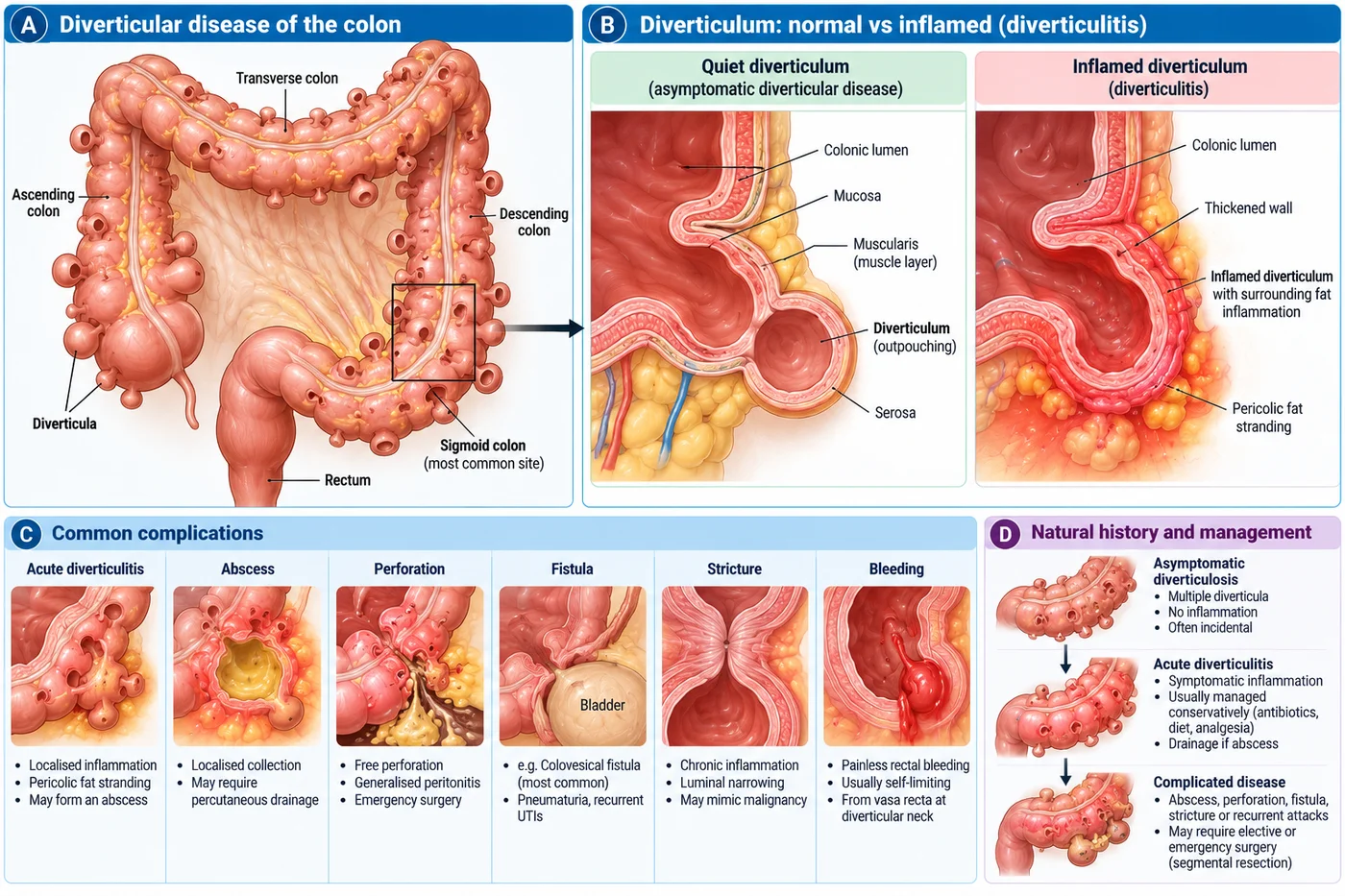
Diverticulosis means the pouches exist — a structural finding, increasingly common with age and strongly linked to low-fiber diets, chronic constipation and straining, which raise the pressure inside the colon. Found incidentally on colonoscopy or CT, uncomplicated diverticulosis needs no treatment beyond the same advice that protects the rest of the colon: adequate fiber, fluids, and not straining. It is not a precancerous condition.
Diverticulitis: the inflammation
When a pouch becomes inflamed or infected, the picture changes: constant pain, typically in the left lower abdomen, fever, and a change in bowel habit. Severity spans a wide range. Uncomplicated diverticulitis — inflammation without abscess or perforation — is increasingly managed conservatively; selected mild cases may not even need antibiotics, a genuine shift in the evidence over the past decade. Complicated diverticulitis — abscess, perforation, obstruction, or a fistula to the bladder or vagina — is a different disease requiring urgent imaging-guided or surgical management.
Bleeding
Diverticula are also a leading cause of significant painless rectal bleeding in older adults. Most diverticular bleeds stop on their own, but fresh bleeding of any volume is never something to self-diagnose — the assessment pathway is the same one I describe for rectal bleeding, because attributing bleeding to a known condition without examination is how serious diagnoses get missed.
When surgery enters the conversation
Emergency surgery is reserved for perforation with peritonitis and for complications that cannot be controlled otherwise. Planned (elective) surgery — laparoscopic removal of the diseased sigmoid — is considered after complicated disease, after attacks that keep recurring and eroding quality of life, and for fistulas or narrowing.
The modern approach counts more than the attack count: age, severity on imaging, immune status and impact on life decide, patient by patient. A colonoscopy after an episode of complicated diverticulitis, once the inflammation settles, is standard — to confirm the diagnosis and exclude other pathology.
Living with diverticulosis
Two reassurances the evidence now supports: nuts, seeds and popcorn do not need to be avoided — the old prohibition has been retired — and most people with diverticulosis never develop diverticulitis. The habits that genuinely lower risk are the unglamorous ones: fiber, fluids, activity, healthy weight, and treating constipation properly rather than living with it.
Frequently asked questions
My colonoscopy report says diverticulosis — do I need follow-up?
Not for the diverticula themselves. Follow-up is driven by symptoms or by the usual screening schedule, not the finding alone.
Can diverticulitis be treated at home?
Mild, uncomplicated episodes in otherwise well patients often can, with review. Fever that persists, worsening pain, or inability to tolerate fluids means hospital assessment.
Does diverticular disease cause cancer?
No — but its symptoms can mimic and mask other conditions, which is why new symptoms are investigated rather than assumed.
If you have been told you have diverticular disease, or left-sided abdominal pain keeps returning, I assess and treat the full spectrum — from advice to laparoscopic surgery — in Dubai and Abu Dhabi. Request a consultation.
About the Author