
Anal Pain That Is Not Hemorrhoids: What the Pattern of Pain Tells a Surgeon
Fellowship-trained: Mayo Clinic (USA) · United Kingdom · South Korea — Associate Professor, UAE University
A large proportion of patients who come to clinic in pain arrive with a diagnosis they have already made: hemorrhoids. Often they have been using a cream for weeks. In many of those patients, hemorrhoids are not what is causing the pain.
This matters because the conditions that do cause anal pain are treated in completely different ways, and several of them get worse while they are being treated as something else. What follows is how the pain itself is read in clinic, and what each pattern usually means.
Why hemorrhoids are blamed for pain they rarely cause
Internal hemorrhoids sit above the dentate line, in a part of the anal canal supplied by nerves that do not register the kind of sharp pain patients describe. That is why the classic symptoms of internal hemorrhoids are bleeding, a feeling of fullness, or a lump that comes down and goes back, rather than pain.
There are two genuine exceptions. A thrombosed external hemorrhoid — a clot in a vein under the skin at the anal verge — appears as a firm tender lump over a few hours and is painful. And an internal hemorrhoid that prolapses and becomes strangulated is acutely painful and needs to be seen promptly. Outside those two situations, persistent anal pain deserves another explanation, and hemorrhoid treatment is unlikely to resolve it.
The pattern of the pain usually gives the diagnosis
Before any examination, how the pain behaves narrows things considerably.
Sharp, tearing pain during a bowel movement that continues afterward, often with a small amount of bright blood on the paper, is the pattern of an anal fissure. Patients frequently describe dreading the next bowel movement, and the spasm that follows is part of why fissures persist.
Constant, throbbing pain that builds over days, with swelling, warmth, difficulty sitting, and sometimes fever, is the pattern of an anorectal abscess. This does not settle with creams or antibiotics alone and needs drainage.
Pain that settles and returns, with intermittent discharge or staining, suggests an anal fistula, often following an abscess that drained. The cycle of settling and recurring is characteristic.
A firm painful lump appearing over hours at the anal verge is usually a thrombosed external hemorrhoid.
Pain and swelling over the natal cleft, above the anus rather than at it, with one or more small midline pits, points to pilonidal disease rather than anything within the anal canal.
Brief, severe pain, often at night, lasting seconds to minutes and then gone completely, with a normal examination between episodes, fits proctalgia fugax. It is uncomfortable and alarming but benign.
A deep, aching, pressure-like discomfort, worse with prolonged sitting, present for weeks or months, is more typical of levator ani syndrome and related pelvic floor muscle pain. It is managed with pelvic floor physiotherapy and related measures, not surgery.
Symptoms that need assessment rather than another cream
Some features change the priority of the appointment. Bleeding accompanied by a change in bowel habit, unexplained weight loss, a palpable lump, pain with a persistent ulcer that does not behave like a fissure, or symptoms in a patient with a family history of colorectal cancer, all warrant examination rather than continued self-treatment. Anal and rectal cancers are less common than the conditions above, but they are seen, and they are frequently treated as hemorrhoids first.
A patient with diabetes, on immunosuppression, or with rapidly increasing pain and fever should be assessed urgently, because perianal infection in those groups can progress quickly.
What self-treatment actually costs
Creams containing local anesthetic and steroid can reduce discomfort temporarily, and that is the problem: they blunt the symptom without changing the cause. A fissure that might have settled with early treatment becomes chronic. An abscess that needed drainage advances. A fistula continues to track. Prolonged use of steroid preparations also thins perianal skin, which makes both examination and healing more difficult.
There is nothing wrong with trying a short course of a simple treatment for mild symptoms. The issue is continuing it for weeks while the pain persists or worsens.
How the cause is established in clinic
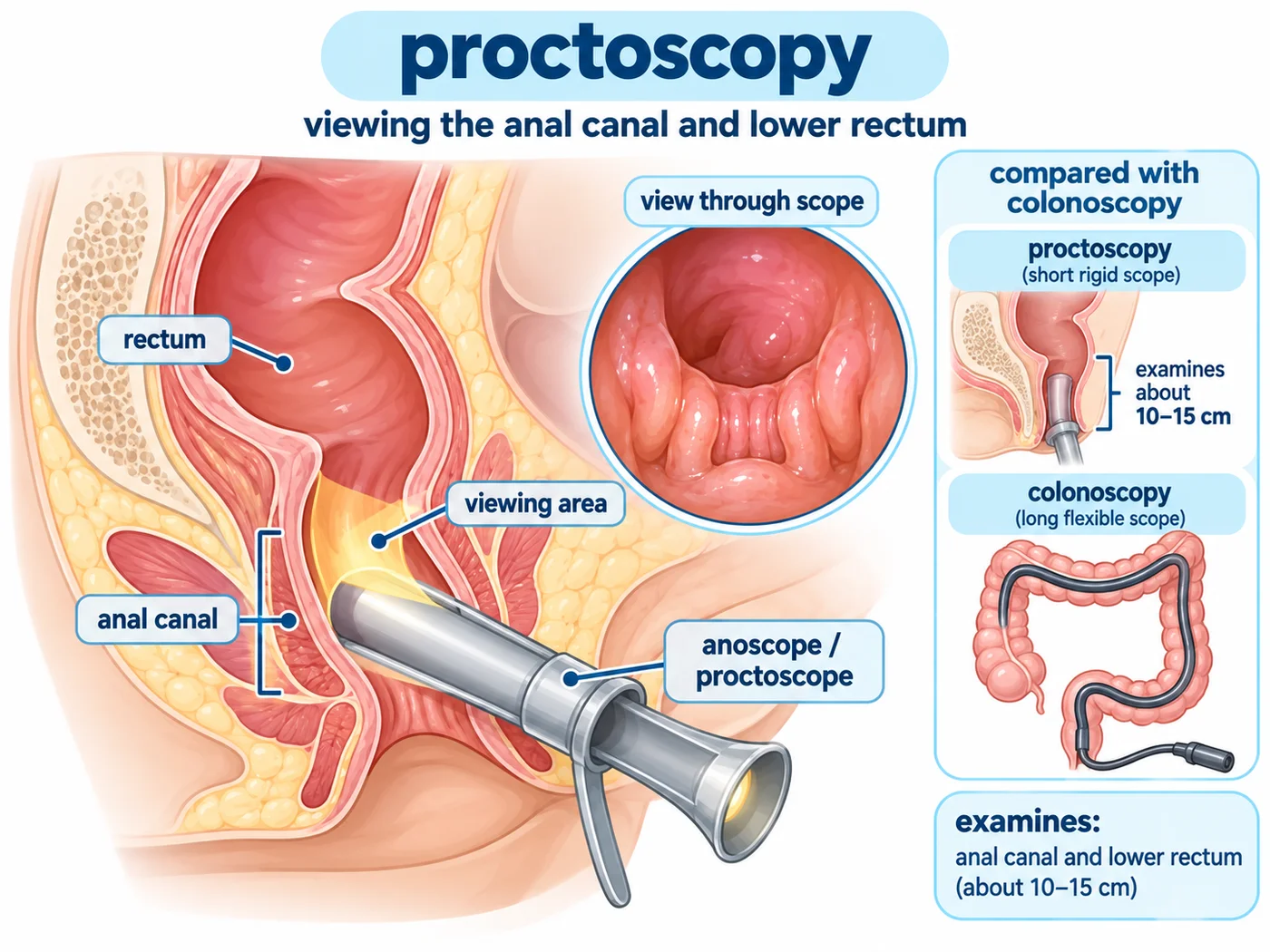
The history does most of the work, as above. Examination begins with inspection, which alone identifies a fissure, an external thrombosis, a fistula opening or pilonidal pits in most patients. A gentle digital examination follows where it can be tolerated, and anoscopy where it adds information.
If pain prevents an adequate examination, that is itself a finding, and the examination is completed under anesthesia rather than forced. Imaging is used selectively: MRI for suspected or recurrent fistula and for complex perianal disease, and further investigation of the colon where the history raises the question of inflammatory bowel disease or malignancy rather than a purely anal problem. Endoscopy answers a different question from an anal examination, and both are sometimes needed.
Treatment follows the diagnosis, not the symptom
A fissure is managed first by addressing stool consistency and sphincter spasm, and surgery is reserved for fissures that do not settle. An abscess is drained. A fistula is assessed for its relationship to the sphincter before any operation is chosen, which is discussed in detail in choosing the right anal fistula operation. A thrombosed external hemorrhoid is managed according to how long the symptoms have been present. Pilonidal disease is treated according to the extent of the sinus. Muscle-related pelvic pain is managed with physiotherapy and related measures.
None of these is helped by treating the wrong condition well.
FAQs About Anal Pain
Usually not. Internal hemorrhoids typically cause bleeding, fullness or prolapse rather than pain. The exceptions are a thrombosed external hemorrhoid, which causes a firm tender lump appearing over hours, and a strangulated prolapsed internal hemorrhoid, which is acutely painful and needs prompt assessment.
That pattern, particularly with a small amount of bright red blood, most often indicates an anal fissure. The pain continues after the bowel movement because of spasm in the internal sphincter, which also reduces blood flow to the fissure and is part of why fissures become chronic.
An abscess causes constant throbbing pain that builds over days, with swelling, warmth and difficulty sitting, sometimes with fever. It does not fluctuate with bowel movements in the way a fissure does, and it requires drainage rather than creams or antibiotics alone.
Topical preparations reduce discomfort without changing the underlying cause. If pain persists beyond a short trial, the working diagnosis is likely wrong. Prolonged use of steroid-containing preparations also thins perianal skin, which can make healing and examination more difficult.
Brief episodes of severe anal pain, often at night, lasting seconds to minutes and then resolving completely, with a normal examination in between. It is a benign muscle spasm phenomenon. The diagnosis is made after excluding fissure, abscess and fistula rather than assumed at the outset.
Pain with fever, rapidly increasing swelling, or spreading redness suggests infection needing prompt drainage, particularly in patients with diabetes or on immunosuppression. Pain with unexplained weight loss, a change in bowel habit or a palpable lump also warrants prompt examination.
Dr Antonio Privitera is a Consultant General and Colorectal Surgeon with a particular interest in complex and recurrent anal fistula and sphincter-preserving treatment.
Consultations are available in Dubai and Abu Dhabi.
To arrange an appointment, call +971 55 318 8469, message us on WhatsApp or request a consultation online.
Patients often arrive having been treated for hemorrhoids for some time without improvement. Our page on choosing the right anal fistula operation explains how anatomy guides treatment once a fistula is confirmed.
Assessment of Anal Pain in Dubai and Abu Dhabi
Persistent anal pain deserves an examination rather than a longer course of cream. A proctology service covering fissure, fistula, abscess, pilonidal disease and hemorrhoids is currently consulting in Dubai and Abu Dhabi, and specialist consultation is available by appointment.
Book an Appointment