
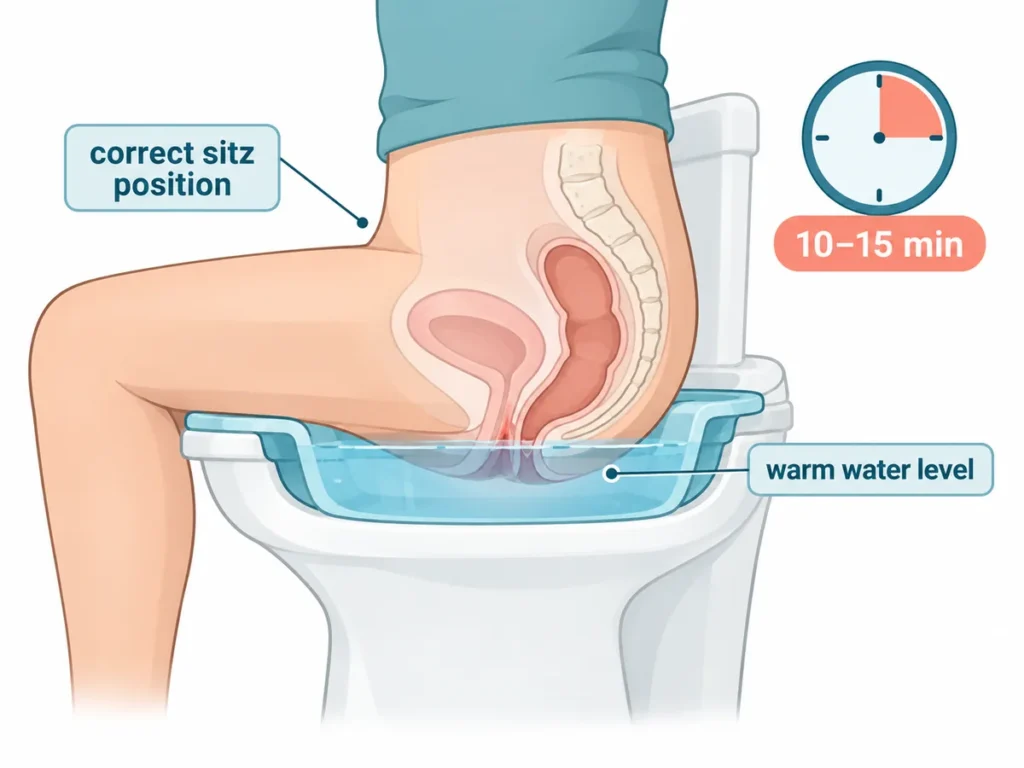
A sitz bath is the simplest treatment I prescribe, and the one done incorrectly most often. Patients with hemorrhoids, anal fissure, or a healing surgical wound are told to “take warm baths” and left to improvise — too hot, too long, with additives that irritate the skin they are meant to soothe. Done properly, a sitz bath relaxes the internal anal sphincter, improves blood flow to the anal skin, and relieves pain within minutes. Here is how to do it right.
What a sitz bath actually does
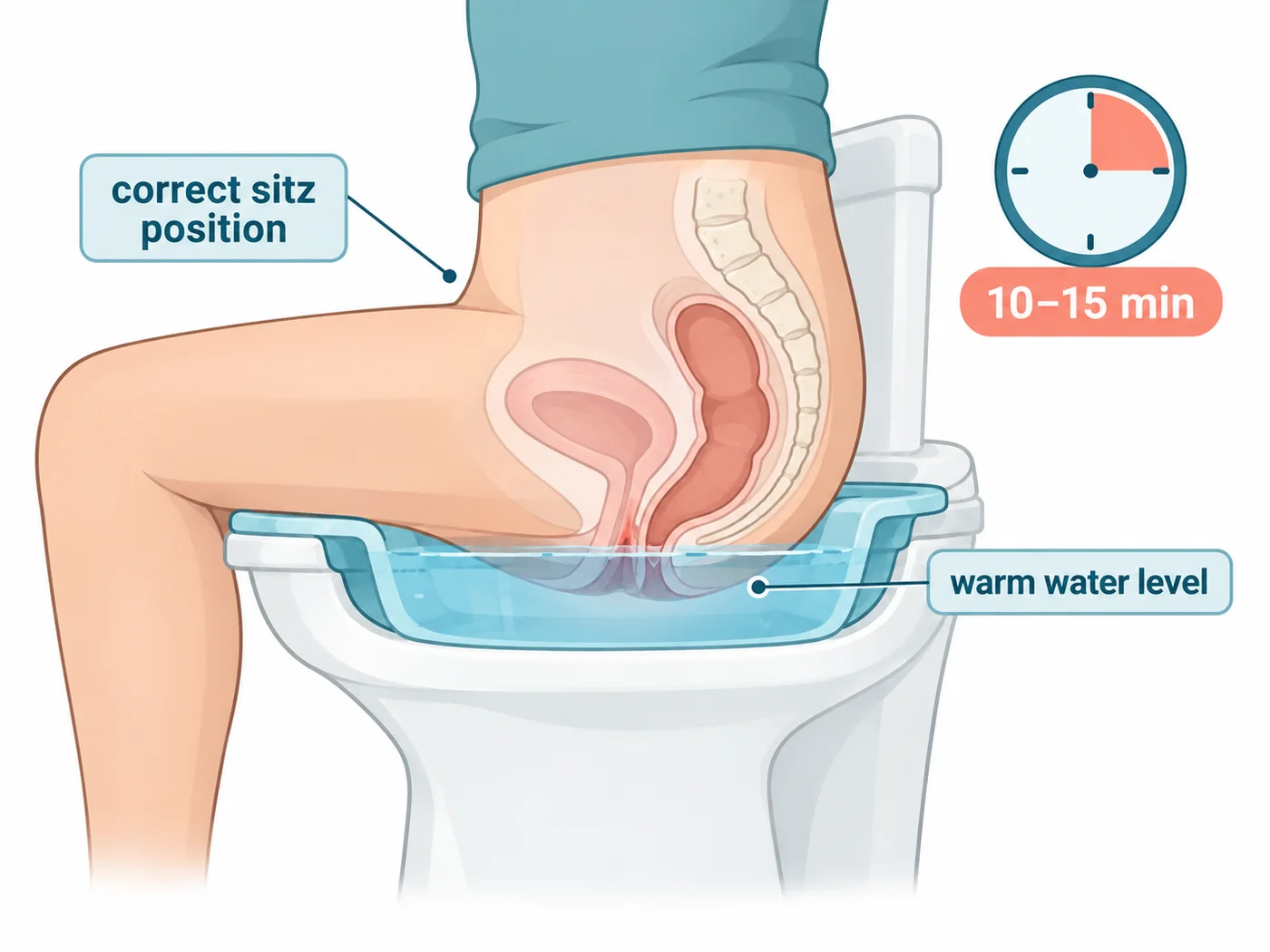
Warm water applied to the perineum does two useful things. It relaxes the internal anal sphincter — the muscle whose spasm causes much of the pain in anal fissure and after hemorrhoid procedures — and it increases local blood flow, which supports healing. The relief is real but temporary, which is why sitz baths are repeated through the day rather than taken once.
The correct technique
Use plain warm water — comfortably warm to the touch, not hot. Water that makes you wince tightens the sphincter you are trying to relax and can scald skin that is already inflamed. Sit in enough water to cover the anal area, either in a few centimeters of water in the bathtub or in a purpose-made sitz basin that fits over the toilet, available at pharmacies across the UAE.
Ten to fifteen minutes is enough. Longer soaking macerates the perianal skin — it turns white, soggy and fragile, which worsens itching and delays healing. Afterwards, pat the area dry gently or use a hairdryer on a cool setting; do not rub.
The most effective times are after bowel movements, when sphincter spasm peaks, and before bed. Two to four baths a day is a sensible rhythm for fissure pain or after surgery.
What to put in the water: usually nothing
Plain water works. Salt is a common addition and is acceptable in small amounts, though evidence that it adds benefit is thin. What I ask patients to avoid is everything else: antiseptics such as Dettol, iodine solutions, herbal mixtures, bubble bath and scented oils. These are frequent causes of contact dermatitis, and a patient who arrives with a fissure and leaves with a fissure plus chemically irritated skin has been made worse by their own bathroom.
Who benefits most
Sitz baths help in four situations: anal fissure, where sphincter relaxation directly reduces pain; flared or thrombosed hemorrhoids, where warmth eases the throbbing; after anorectal surgery, where they clean the wound and relieve spasm; and pruritus ani, where a short plain-water bath can calm irritated skin — provided it is kept brief and the skin is dried properly.
When a sitz bath is not enough
A sitz bath treats symptoms, not causes. Bleeding that recurs, pain lasting beyond a few days, a lump that does not settle, or fissure pain that returns with every bowel movement are reasons for examination, not for more baths. Rectal bleeding in particular should always be properly assessed rather than attributed to hemorrhoids by guesswork.
Frequently asked questions
How many days should I continue sitz baths?
For as long as they relieve symptoms — typically while a fissure or flare is painful. They are safe to continue through recovery; the constraint is skin condition, not a calendar.
Warm or cold water?
Warm, for sphincter relaxation. Cold compresses have a separate, briefer role in the first day of a thrombosed hemorrhoid, but cold sitz baths are not the standard approach.
Can I take sitz baths during pregnancy?
Yes — plain warm water sitz baths are one of the safest measures for pregnancy-related hemorrhoids.
If symptoms persist despite correct home care, I see patients for assessment in Dubai and Abu Dhabi — you can start with the proctology service page or request a consultation.
About the Author