Diet is not just supportive treatment for anal fissures – it is the foundation of treatment. For a complete overview of treatment, see anal fissure treatment in Dubai. Every patient I see with a fissure, regardless of severity or chronicity, receives dietary guidance as part of their management plan. Without dietary change, other treatments – creams, Botox, even surgery – are more likely to fail or result in recurrence.
In Dubai and Abu Dhabi, I see specific dietary patterns that directly cause and perpetuate fissures. This guide addresses them.
Why Diet Matters for Anal Fissures
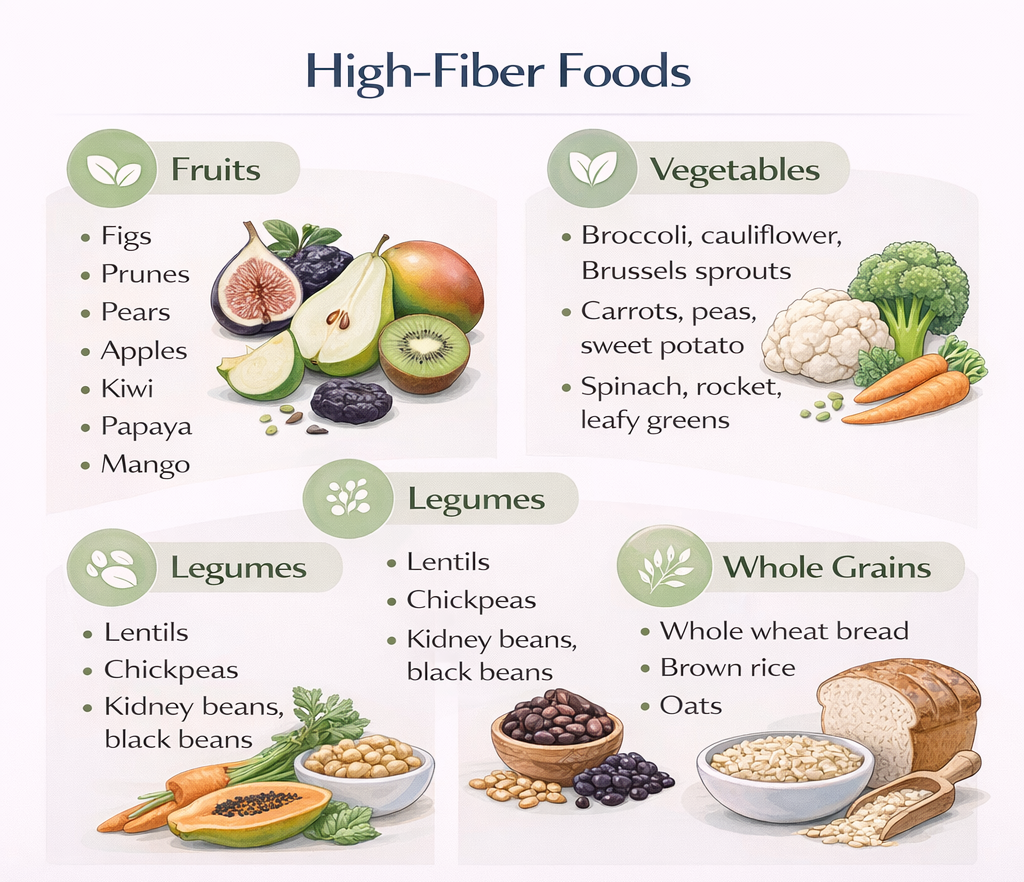
Anal fissures are caused by trauma to the anal canal lining most commonly by hard, large, or poorly lubricated stools. Diet determines stool consistency. A high-fiber, well-hydrated diet produces soft, bulky stools that pass easily without straining. A low-fiber, dehydrated diet produces hard, small stools that require straining and can tear the anal lining.
Chronic fissures require more than diet. See chronic fissure explanation.
What to Eat
High-Fiber Foods
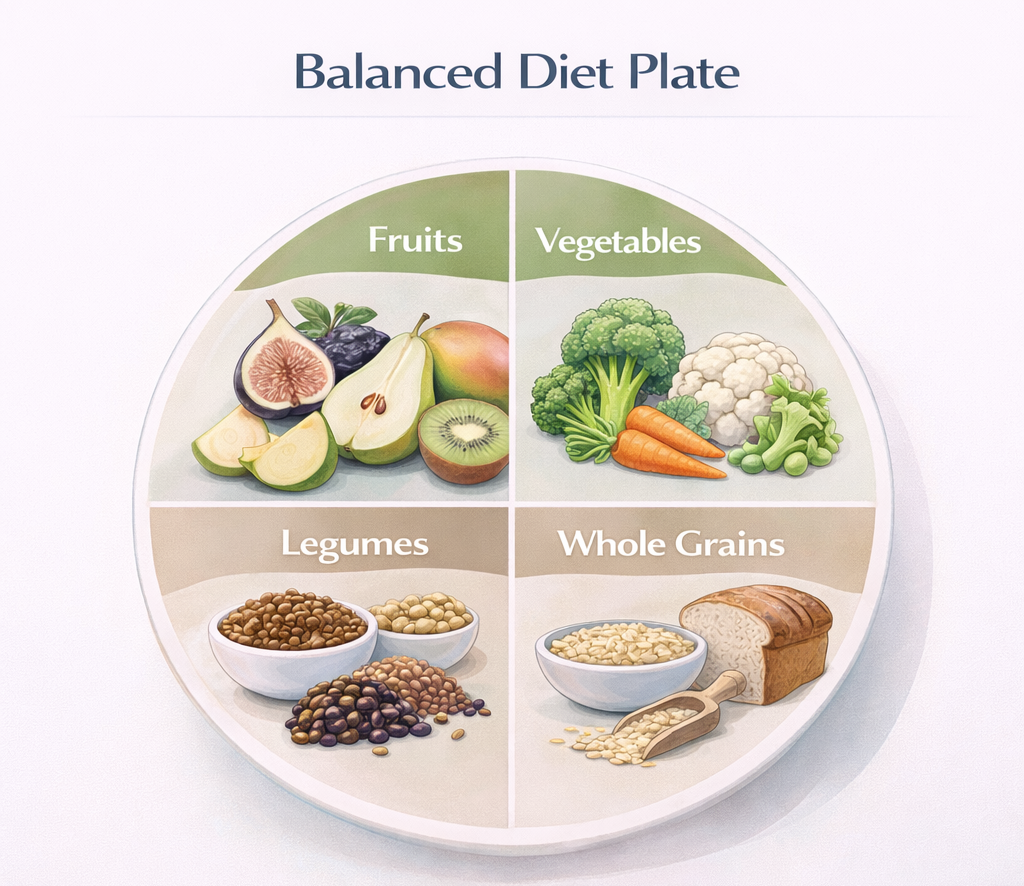
Target: 25-35 grams of fiber daily. Most people eat 10-15 grams.
Fruits (excellent sources):
- Figs: One of the highest-fiber fruits widely available in UAE. Fresh or dried.
- Prunes: Natural laxative effect in addition to fiber. Very effective for constipation.
- Pears (with skin): 5-6 grams fiber per pear
- Apples (with skin): 4-5 grams fiber
- Kiwi: 2-3 grams fiber; also has mild laxative effect
- Papaya: Widely available in UAE, good fiber, also contains papain enzyme that aids digestion
- Mango: Popular in UAE; moderate fiber
Vegetables:
- Broccoli, cauliflower, Brussels sprouts: 4-5 grams fiber per cup
- Carrots, peas, sweet potato: Good fiber sources, easy to incorporate
- Spinach, rocket, leafy greens: Moderate fiber, widely available
Legumes (highest fiber density):
- Lentils: 15 grams fiber per cup (cooked) the most efficient fiber source
- Chickpeas: 12 grams per cup – widely consumed in the UAE diet.
- Kidney beans, black beans: 13-15 grams per cup
Whole grains:
- Whole wheat bread (not white bread)
- Brown rice (not white rice)
- Oats: Excellent fiber source also helps with cholesterol
Fiber Supplements
- Psyllium husk (Metamucil / Fybogel): Best evidence base. Absorbs water and forms a gel that bulks stool. Take with a full glass of water.
- Methylcellulose (Citrucel): Good alternative
Hydration: The Most Overlooked Factor
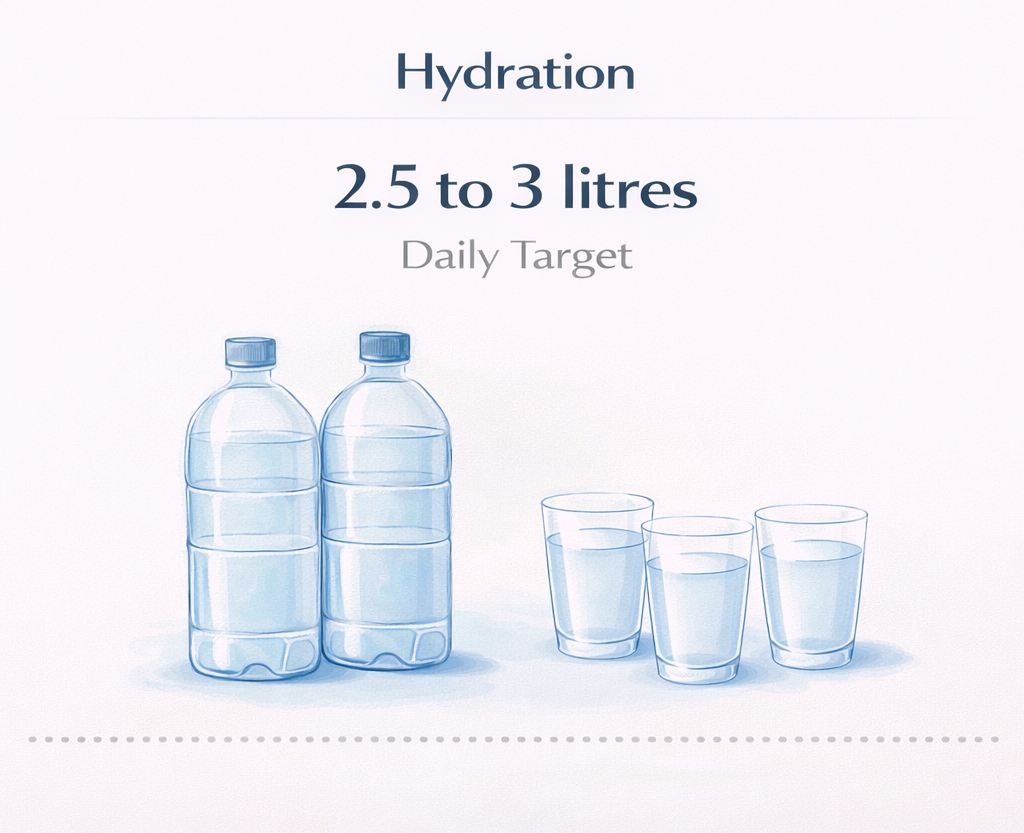
Fiber without hydration can make constipation worse fiber needs water to work. In Dubai’s climate:
- Daily water target: 2.5-3 liters minimum. More in summer, if you exercise, or if you work outdoors.
- Coffee and tea do not count toward your water target they are mildly dehydrating
- Practical tip: Keep a 1-liter bottle at your desk and refill it 2-3 times daily
Foods to Avoid
Foods That Worsen Constipation
- White bread, white rice, pasta low fiber, slow transit
- Processed and fast food low fiber, high fat
- Dairy in large amounts (cheese, full-fat milk) can slow bowel transit in some people
- Bananas (unripe): Constipating. Ripe bananas are fine and provide moderate fiber.
- Red meat in large amounts: Low fiber, high fat, slow transit
Foods That Irritate the Anal Canal
- Very spicy food: Capsaicin passes through the GI tract and can
irritate the anal lining during defecation worsening fissure pain
- Alcohol: Dehydrating and irritating to the bowel
- Coffee in excess: Dehydrating; can also cause urgency and loose stools in some patients, increasing fissure irritation
UAE-Specific Advice
- Eating out frequently: Most restaurant meals in UAE are low in fiber. Order salads, add legumes, choose whole grain where available.
- Ramadan: Fasting can concentrate stools and lead to dehydration. Break the fast with prunes or high-fiber foods. Drink 2+ liters between iftar and suhoor.
- Air conditioning: Increases insensible water loss. Drink more water than you think you need.
Need expert treatment for hemorrhoids, anal fissure, or anal fistula? Book a consultation with Dr. Antonio Privitera in Dubai or Abu Dhabi.
📱 WhatsApp: +971 55 318 8469
📞 Phone: +971 55 318 8469
AUTHOR AUTHORITY BLOCK
Fellowship-trained at Mayo Clinic (USA) and the Royal College of Surgeons (UK). Member of the Royal College of Surgeons of Edinburgh. Certified in General Surgery by the Italian Medical Council.
About the Author