
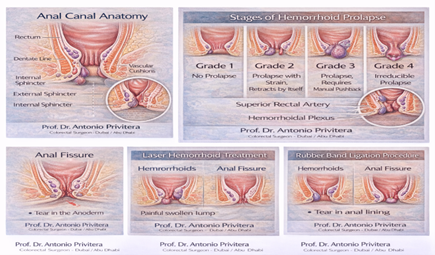
Common Marketing Claims vs Clinical Reality
Laser hemorrhoid treatment in Dubai is a minimally invasive option for selected patients and can offer less pain and faster recovery than traditional surgery. The key is choosing the right procedure for the right hemorrhoid grade.
hemorrhoid advertising:
Claim #1: “100% Painless Treatment”
Reality: Laser is LESS painful than traditional hemorrhoidectomy (surgical excision), but it’s not painless. You will experience:
- Moderate discomfort for 3-7 days after the procedure
- Pain with bowel movements (especially first few days)
- Need for oral pain medication
- Requirement for stool softeners
The term “painless” is technically referring to the procedure itself (you’re under sedation or spinal anesthesia, so you feel nothing during it). But that’s true for ANY surgery—you don’t feel pain during operation. The question is recovery pain, and there IS recovery pain with laser.
Claim #2: “No Downtime—Back to Work Same Day”
Reality: Most patients need 3-7 days off work, depending on:
- Physical nature of your job (desk work vs manual labor)
- Your pain tolerance
- Number of hemorrhoids treated
Yes, you walk out the same day (it’s day-surgery), but “walking out” doesn’t mean “back to normal activities.” You’ll be on pain medication, using stool softeners, and taking sitz baths multiple times daily. What “no downtime” actually means: No hospital stay. But that’s also true for banding, which genuinely has minimal downtime (1-2 days).
Claim #3: “Works for All Types and Grades of Hemorrhoids”
Reality: Laser hemorrhoidoplasty is effective for:
- Grade II internal hemorrhoids (especially if banding has failed)
- Grade III internal hemorrhoids (without large external component)
Laser does NOT work well for:
- Grade I hemorrhoids (banding is simpler, equally effective, and much cheaper)
- Grade IV hemorrhoids (too prolapsed—surgery needed)
- Large external hemorrhoids (laser targets internal tissue only)
If a clinic recommends laser for your Grade I hemorrhoids, they’re overselling. If they recommend laser for Grade IV, they’re setting you up for failure.
Claim #4: “Latest European/American Technology”
Reality: Laser for hemorrhoids has been used since the 1990s. It’s not cutting-edge—it’s an established option among several. What’s “latest” is the marketing strategy, not the technology itself.
Moreover, “European technology” is a marketing phrase. Germany, France, Italy, and UK all have different approaches to hemorrhoid treatment, and laser isn’t universally preferred in any of them. Traditional methods (banding for Grade I-II, hemorrhoidectomy for Grade IV) remain standard in most European colorectal surgery units.
Claim #5: “No Anesthesia Required”
Reality: Laser hemorrhoid procedures require either:
- Conscious sedation (you’re sleepy but breathing on your own),
- Spinal anesthesia (numbs lower body), or
- General anesthesia (fully asleep)
The procedure is done in an operating room precisely because anesthesia is required. Office procedures like banding don’t need anesthesia (internal hemorrhoids have no pain receptors). Laser does.
Claim #6: “Permanent Cure—Hemorrhoids Never Come Back”
Reality: No hemorrhoid treatment (including surgery) is 100% guaranteed permanent. Recurrence depends on:
- Hemorrhoid grade treated
- Whether underlying causes are addressed (constipation, straining, diet)
- Technique quality
- Individual anatomy
Studies show laser has moderate recurrence rates—better than banding for Grade III, but not as low as THD or hemorrhoidectomy. Claiming “permanent cure” is dishonest regardless of the procedure.
Experiencing symptoms like these? A discreet same-day specialist assessment is available across Dubai.
WhatsApp: +971 55 318 8469 | Phone: +971 55 318 8469
Medcare Discovery Gardens (Dubai)
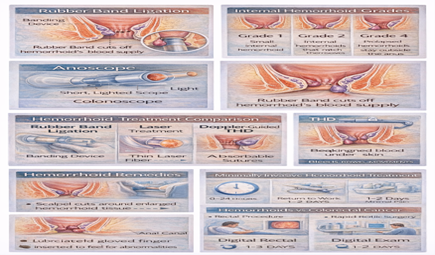
How Laser Hemorrhoid Treatment Actually Works
Let me explain what actually happens during laser hemorrhoid treatment (beyond marketing buzzwords):
The Procedure: Step by Step
Pre-procedure:
- You arrive at the surgical facility/hospital
- Change into a gown
- IV line is placed
- Anesthesiologist administers sedation or spinal anesthesia
During procedure (20-30 minutes):
1. You’re positioned (usually on your back or left side)
2. A specialized proctoscope (lighted viewing tube) is inserted into the rectum
3. I identify each internal hemorrhoid
4. A thin laser fiber (connected to a diode laser machine) is inserted directly into the hemorrhoid tissue through a small puncture
5. Laser energy is delivered for several seconds per hemorrhoid (this shrinks the hemorrhoid by:
- Coagulating blood vessels (cutting off blood supply)
- Causing controlled thermal damage that leads to fibrosis/scarring
- Reducing hemorrhoid volume over following weeks)
6. The laser fiber is withdrawn
7. Process is repeated for each hemorrhoid (usually 2-4 hemorrhoids treated)
No tissue is cut away. The laser shrinks the hemorrhoid from inside. Over the next 4-6 weeks, the treated hemorrhoid tissue scarifies and reduces in size.
Different Laser Techniques:
Several brand names exist:
- FiLaC (Fistula Laser Closure—adapted for hemorrhoids)
- HeLP (Hemorrhoidal Laser Procedure)
- LHP (Laser Hemorrhoidoplasty)
They’re all variations of the same concept: delivering laser energy into hemorrhoid tissue to shrink it. The specific brand is less important than the surgeon’s skill and patient selection. What Makes It “Minimally Invasive”:
Compared to traditional hemorrhoidectomy (where hemorrhoid tissue is surgically cut away and the wound heals over weeks), laser leaves no open wounds. The small punctures where the laser fiber entered heal within days. This is why recovery is faster than hemorrhoidectomy.
However, “minimally invasive” doesn’t mean “no recovery”—it means LESS invasive than surgery.
Who Actually Benefits from Laser Treatment?
Laser hemorrhoid treatment is a legitimate option for the right patient.
Here’s who genuinely benefits:
✅ IDEAL CANDIDATES:
1. Grade II-III Internal Hemorrhoids
- You’ve tried conservative treatment (fiber, hydration) without lasting success
- You’ve tried banding but symptoms returned or you want single-session treatment
- You have primarily internal hemorrhoids without large external component
2. Patients Who Prefer OR-Based Treatment Over Banding
- You want to avoid multiple banding sessions (banding often requires 2-3 sessions spaced weeks apart)
- You prefer one definitive procedure under anesthesia
3. Patients Who Understand Realistic Expectations
- You know you’ll have 3-7 days of discomfort and need time off work
- You’re not expecting “zero pain, zero downtime”
- You understand recurrence is possible
4. Patients for Whom Cost Isn’t Prohibitive
- You can afford AED 15,000-25,000, or your insurance covers it
- You’ve verified insurance coverage before proceeding
❌ POOR CANDIDATES (Laser Will Disappoint You):
1. Grade I Hemorrhoids
- Banding achieves the same result for 1/5 to 1/10 the cost
- Laser is unnecessarily invasive and expensive for Grade I
2. Grade IV Hemorrhoids
- Too prolapsed for laser alone to be effective
- These need hemorrhoidectomy (surgical excision)
- Laser will fail, and you’ll need surgery anyway
3. Large External Hemorrhoids or Skin Tags
- Laser targets internal hemorrhoids only
- If your main complaint is external bulging, laser won’t address it
4. Patients Expecting “Painless, No Downtime”
- If you believe marketing claims literally, you’ll be disappointed when you have pain and need a week off work
5. Budget-Conscious Patients
- If AED 15,000-25,000 is a financial stretch, consider banding first (AED 1,500-3,000 per session)
- Banding might work just as well for Grade II
Real Recovery Timeline: What to Actually Expect Forget “back to work same day.” Here’s the honest hemorrhoidectomy recovery in Dubai timeline:
Day of Procedure:
- You’re discharged 1-3 hours after procedure (once anesthesia wears off)
- You’ll need someone to drive you home
- You’re on pain medication
- First bowel movement hasn’t happened yet (this is when you’ll know the real pain level)
Days 1-3: Most Uncomfortable Period
- Pain level: Moderate (most patients rate 4-6 out of 10 with medication)
- Pain triggers: Bowel movements (especially first one), sitting, walking
- Medications: Oral pain medication (usually tramadol or codeine + paracetamol), stool softeners
- Activities: Rest at home, sitz baths 3-4 times daily, avoid prolonged sitting
Most patients take these days off work
Days 4-7: Gradual Improvement
- Pain level: Mild to moderate (3-5 out of 10)
- Bowel movements: Still uncomfortable but improving
- Return to desk work: Many patients return by day 5-7
- Physical work: Not yet—still need to avoid heavy lifting and straining
Week 2-3: Continued Healing
- Pain level: Minimal (1-3 out of 10)
- Most patients: Back to all activities, though still avoiding gym/heavy lifting
- Hemorrhoids: Still shrinking (process continues for 4-6 weeks)
Week 4-6: Full Recovery
- Pain: Resolved
- Activities: Unrestricted
- Hemorrhoids: Maximum shrinkage achieved
Bottom line: Plan for 3-7 days off work (desk jobs) or 7-10 days (physical jobs). You’ll have moderate discomfort for the first week managed with medication.
Success Rates and Recurrence: The Evidence
Let’s look at what clinical studies actually show:
Success Rates:
Studies show laser hemorrhoidoplasty has:
- Good symptom relief for Grade II-III hemorrhoids in the short term (1-2 years)
- Lower success rates for Grade I (where banding works just as well) and Grade IV (where it’s insufficient)
- Patient satisfaction ranging from 70-85% for appropriate candidates
Reference: Maloku H, Gashi Z, Lazovic R, Islami H, Juniku-Shkololli
A . Laser Hemorrhoidoplasty Procedure vs Open SurgicalHemorrhoidectomy. JAMA Surg. 2015;150(10):931-936. PubMed
Recurrence Rates:
- Better than banding for Grade III hemorrhoids
- Similar to banding for Grade II
- Worse than THD or hemorrhoidectomy for long-term recurrence
The key factor is lifestyle: patients who maintain high-fiber diet, hydration, and avoid straining have lower recurrence regardless of treatment method.
If symptoms persist or are not improving, a specialist assessment in Dubai can help determine the most appropriate treatment.
Compared to Other Treatments:
Quick Comparison:
- Banding: Best for Grade I-II, low recurrence for these grades but higher for Grade III
- Laser: Best for Grade II-III, moderate recurrence
- THD: Best for Grade II-III-IV, low recurrence
- Hemorrhoidectomy: Best for Grade III-IV, lowest recurrence overall
Laser sits in the middle: better than banding for advanced grades, but not as definitive as THD or surgery.
The Cost Question: Is Laser Worth AED 15,000-25,000?
Typical Laser Costs in Dubai:
- Single procedure: AED 15,000-25,000
- Includes: Surgeon fee, anesthesiologist, facility fee, follow-up visits
- Insurance: Variable coverage (some insurers cover for Grade II-III, others consider it elective)
Cost-Benefit Analysis by Grade:
For Grade I Hemorrhoids:
- Laser cost: AED 15,000-25,000
- Banding cost: AED 1,500-3,000 per session (1-2 sessions usually sufficient)
- Verdict: Laser is NOT cost-effective for Grade I. You’re paying 5-10x more for the same result.
For Grade II Hemorrhoids:
- Laser cost: AED 15,000-25,000 (single session)
- Banding cost: AED 3,000-9,000 (2-3 sessions over several weeks)
- Verdict: Laser makes sense IF you prefer single session and can afford it, OR if banding has failed. Otherwise, try banding first.
For Grade III Hemorrhoids:
- Laser cost: AED 15,000-25,000
- THD cost: AED 18,000-30,000
- Verdict: THD is only slightly more expensive but has better long-term results. If you’re spending this much, THD is usually the better investment.
When Laser Makes Financial Sense:
- You have Grade II-III hemorrhoids
- You’ve tried banding but it failed or you prefer single-session treatment
- Your insurance covers laser (verify first!)
- You understand realistic recovery and aren’t expecting “painless, no downtime”
When Laser Is a Waste of Money:
- You have Grade I hemorrhoids (banding is equally effective at 1/5 the cost)
- You have Grade IV hemorrhoids (laser won’t work—you’re throwing away AED 20,000 before eventually needing surgery anyway)
- You’re expecting marketing promises to be true
- You haven’t tried conservative treatment or banding first
How to Spot Overselling and Make a Smart Decision
🚩 Red Flags That a Clinic Is Overselling Laser:
1. “Laser is the best treatment for everyone”
- Reality: No single treatment is best for all grades
- Best treatment depends on your specific hemorrhoid grade and anatomy
2. “Completely painless with zero recovery”
- Reality: You’ll have 3-7 days of moderate discomfort and need time off work
3. Recommends laser for Grade I hemorrhoids without trying banding first
- Reality: This is financially motivated, not clinically justified
4. Claims laser is “more advanced” than THD or surgery
- Reality: “Advanced” doesn’t mean “better”—it’s about matching treatment to grade
5. Only offers laser (doesn’t perform banding or THD)
- Reality: If a surgeon only has one tool, everything looks like a nail. Choose a surgeon who offers multiple options.
6. Quotes very low price (AED 5,000-8,000) for laser
- Reality: Either it’s not actually comprehensive laser treatment, or
quality/experience is questionable
7. Won’t perform examination before recommending laser
- Reality: You cannot determine treatment without anoscopy to grade the hemorrhoids
✅ Green Flags of Honest Practice:
1. Surgeon performs examination (anoscopy) and tells you your grade
- They’re matching treatment to anatomy
2. Surgeon offers multiple options (banding, laser, THD, surgery)
- They’re not financially motivated to push one specific procedure
3. Surgeon recommends banding for Grade I-II before jumping to laser
- They’re prioritizing simpler, less expensive options when appropriate
4. Surgeon explains realistic recovery: “You’ll have discomfort for 3-7 days”
- They’re being honest, not making unrealistic promises
5. Cost is transparent upfront, insurance coverage verified
- No surprise bills later
My Clinical Approach: When I Recommend Laser (and When I Don’t)
In my practice, here’s when I recommend laser:
I RECOMMEND Laser When:
1. Grade II-III internal hemorrhoids
- Tried conservative treatment without lasting success
- Prefer single session over multiple banding appointments
- No large external component
- Understand realistic recovery
2. Banding has failed or is not suitable
- Some Grade II-III hemorrhoids don’t respond well to banding
- Laser is a reasonable next step before considering THD or surgery
3. Patient preference after informed discussion
- I’ve explained all options (banding, laser, THD)
- Patient understands pros/cons of each
- Chooses laser for valid reasons (single session, moderate cost/recovery balance)
I DON’T Recommend Laser When:
1. Grade I hemorrhoids
- Banding is equally effective at 1/5 the cost
- No reason to use laser
2. Grade IV hemorrhoids
- Laser won’t work—tissue is too prolapsed
- These need hemorrhoidectomy
3. Patient expects “painless, no downtime”
- If expectations are unrealistic, I correct them before proceeding
- Better to disappoint someone in consultation than after they’ve paid AED 20,000
4. Large external hemorrhoids are the main complaint
- Laser targets internal tissue only
- External components need different treatment
5. Patient is budget-constrained
- If AED 15,000-25,000 is a financial hardship, I recommend trying banding first (AED 1,500-3,000)
- Can always do laser later if banding doesn’t work
This article is written and reviewed by Prof. Dr Antonio Privitera, consultant colorectal surgeon with fellowship training at Mayo Clinic (USA) and the Royal College of Surgeons (UK), specializing in hemorrhoid diagnosis and minimally invasive treatment.
Frequently Asked Questions
1. Is laser hemorrhoid treatment FDA/CE approved?
Yes. Laser devices used for hemorrhoids are approved medical devices. However, “approved” doesn’t mean “best for everyone”—it means the technology is safe when used appropriately.
2. How does laser compare to THD?
Both are minimally invasive OR-based procedures for Grade II-III. THD has:
Better long-term results (lower recurrence)
Slightly longer recovery (5-10 days vs 3-7 days)
Slightly higher cost (AED 18,000-30,000 vs AED 15,000-25,000)
If you’re spending this much, THD is often the better investment for
Grade III.
3. Can laser treat external hemorrhoids?
No. Laser hemorrhoidoplasty targets internal hemorrhoid tissue. If you have large external hemorrhoids or skin tags, they won’t be addressed by laser alone.
4. What if laser doesn’t work?
If symptoms persist or recur after laser, options include:
Repeat laser (though this suggests wrong grade or technique issue) THD Hemorrhoidectomy (surgery) This is why proper patient selection matters—doing laser on Grade IV sets you up for failure and eventual surgery anyway.
5. Is laser covered by Dubai health insurance?
Variable. Some insurers cover laser for Grade II-III as medically necessary. Others consider it elective or experimental. Always verify coverage before proceeding. THD is more consistently covered.
6. Can I have laser if I’m on blood thinners?
Usually yes, but you’ll need to discuss with your surgeon and cardiologist. Blood thinners may need to be temporarily stopped or bridged with injectable anticoagulants around the procedure.
7. Will laser prevent me from having surgery later if needed?
No. Laser doesn’t preclude future hemorrhoidectomy if needed. However, if you have Grade IV, you’re wasting time and money on laser before inevitably needing surgery.
8. How long do laser results last?
Variable. With good bowel habits (high fiber, hydration, no straining): Many patients have good results for years
Some experience recurrence after 1-3 years No hemorrhoid treatment is guaranteed permanent—underlying causes must be addressed.
9. Can I have laser and banding at the same time?
Usually no. These are different procedures done in different settings. If some hemorrhoids are Grade I-II and others are Grade III, I might band the smaller ones in office and recommend laser or THD for the larger ones later.
10. What’s the difference between FiLaC and HeLP and LHP?
These are brand names for similar laser techniques. The specific device brand matters less than:
Surgeon skill and experience
Appropriate patient selection (Grade II-III)
Realistic expectations
Don’t choose a surgeon based on their laser brand—choose based on their comprehensive expertise and honesty.
The Bottom Line: When Laser Makes Sense
Laser hemorrhoid treatment is:
✅ A legitimate option for Grade II-III internal hemorrhoids
✅ Less painful than hemorrhoidectomy (but not painless)
✅ Faster recovery than surgery (but not “no downtime”)
✅ Good middle-ground between banding and surgery
Laser is NOT:
❌ “The best treatment for everyone”
❌ Painless or zero downtime
❌ Necessary for Grade I hemorrhoids
❌ Effective for Grade IV hemorrhoids
❌ Able to treat external hemorrhoids
Choose laser if:
You have Grade II-III internal hemorrhoids
You’ve tried banding or prefer single session
You understand realistic recovery (3-7 days discomfort, time off work)
Cost is reasonable for you (AED 15,000-25,000)
You’ve verified insurance coverage
Choose something else if:
Grade I → Try banding first (much cheaper, equally effective)
Grade IV → You need hemorrhoidectomy, not laser
Budget-constrained → Try conservative treatment and banding first
Expecting “painless, no downtime” → Adjust expectations or you’ll be disappointed
References and Medical Sources
This article is based on current medical evidence:
1. Laser Hemorrhoidoplasty Comparative Study – Outcomes versus traditional surgery. Maloku H, Gashi Z, Lazovic R, Islami H, Juniku-Shkololli A. Laser Hemorrhoidoplasty Procedure vs Open Surgical Hemorrhoidectomy: a Trial Comparing 2 Treatments. JAMA Surg. 2015;150(10):931-936. PubMed
2. American Society of Colon and Rectal Surgeons Guidelines –
Evidence-based hemorrhoid treatment recommendations. Davis BR, Lee-Kong SA, Migaly J, Feingold DL, Steele SR. The American Society of Colon and Rectal Surgeons Clinical Practice Guidelines for the Management of Hemorrhoids. Dis Colon Rectum. 2018;61(3):284-292. PubMed
3. Systematic Review of Laser for Hemorrhoids – Analysis ofoutcomes and complications. Genova P, Pantalone F, Marchesi F, et al. Transanal Hemorrhoidal Laser Procedure for Hemorrhoidal Disease: A Systematic Review. Medicina (Kaunas). 2021;57(7):713. PubMed
Medical Review: This content was written and reviewed by Professor training at the Mayo Clinic and Royal College of Surgeons (UK), and European Board Certification in Colorectal Surgery.
Get Honest Assessment: Is Laser Right for Your Grade?
No sales pitch. I perform banding, laser, THD, and surgery—so I recommend based on your anatomy, not my equipment.
📱 WhatsApp: +971 55 318 8469
📞 Phone: +971 55 318 8469
🌐 Book Online:
Dubai Locations:
- Medcare Medical Centre, Discovery Gardens
- Medcare Women and Children Hospital
- Medcare Royal Specialty Hospital
- Clemenceau Medical Centre
- Aster Hospital, Qusais
I’ll tell you if laser is right for you—or if something simpler (and cheaper) will work just as well.
Professor Dr. Antonio Privitera
Fellowship Training: Mayo Clinic | Royal College of Surgeons (UK)
European Board Certified in Colorectal Surgery
About the Author