
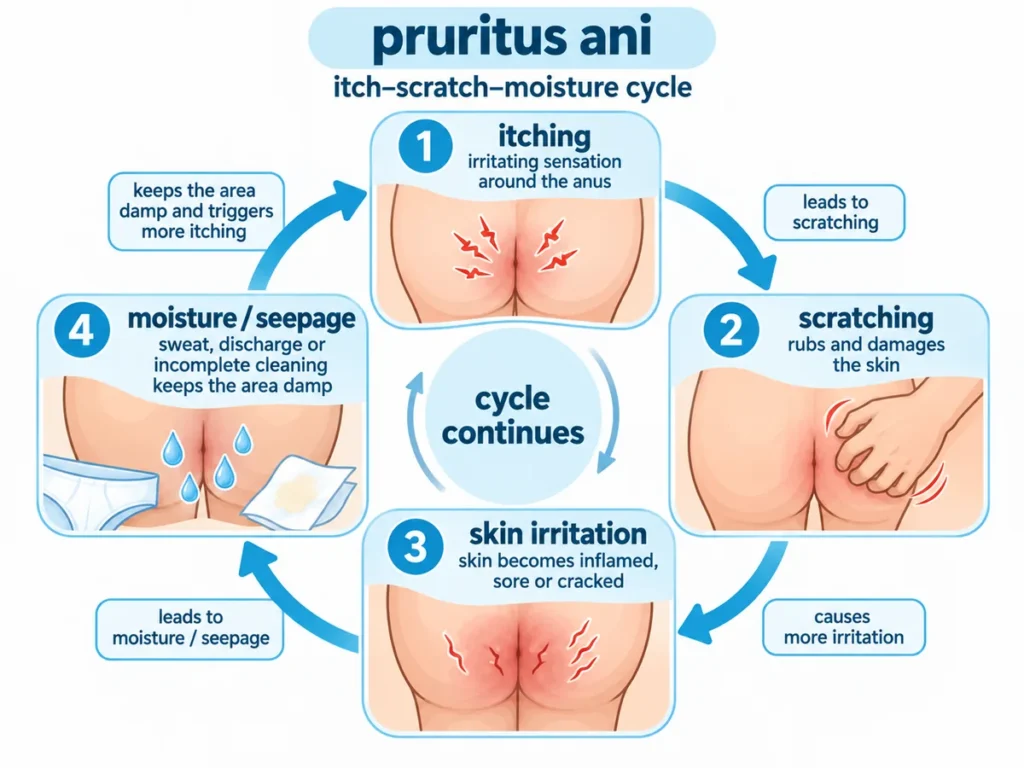
Anal itching — pruritus ani — is the anorectal symptom patients are least willing to mention and among the most common I see. It is maddening, worst at night, and almost always made worse by the very things people do to relieve it: scrubbing, wet wipes, creams borrowed from other body parts. The good news is that most cases are fixable once the cycle driving them is understood.
The itch–scratch–moisture cycle
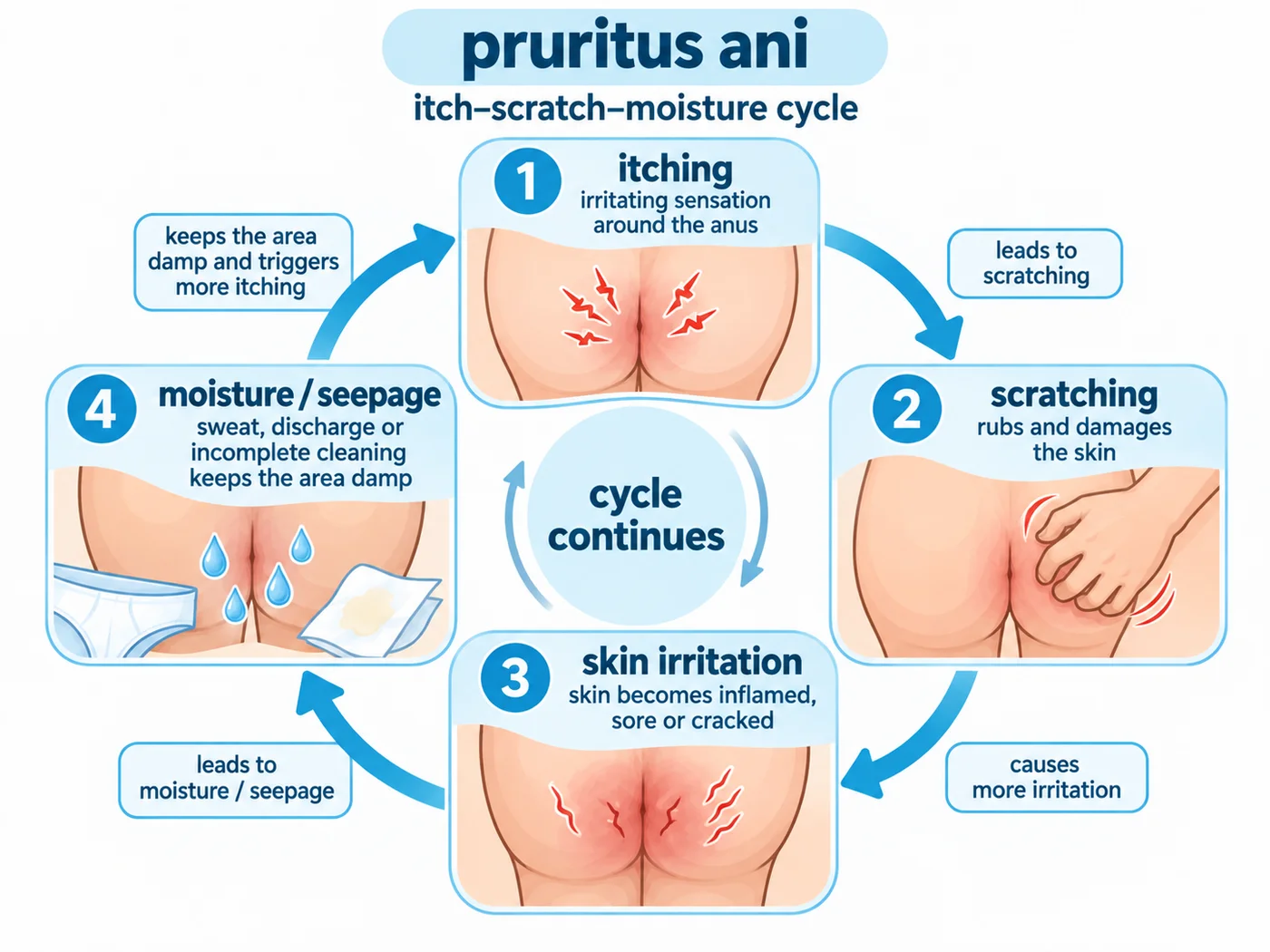
Perianal skin is thin and easily sensitized. Something starts the irritation; scratching damages the skin barrier; damaged skin weeps and itches more; more cleaning and more creams follow, each adding chemical irritation. Within weeks the original trigger barely matters — the cycle sustains itself. Treatment therefore has two halves: find the trigger, and break the cycle.
Common causes worth finding
Moisture and leakage is the leading mechanism: sweat — no small matter through a Gulf summer — plus minor mucus or stool leakage from hemorrhoids, skin tags that trap residue, or a weakened sphincter.
Overwashing and wipes. Perfumed soaps, antiseptics and “hygienic” wet wipes are the most common single aggravator I identify. Preservatives in wipes are well-documented causes of allergic contact dermatitis exactly where they are used.
Diet. In susceptible people: coffee, tea, cola, chocolate, citrus, tomatoes, spicy food and beer are the classic list. Not everyone reacts to everything; a structured two-week elimination identifies the guilty items.
Skin conditions — eczema, psoriasis (often missed here), fungal infection, and in children threadworms.
Anorectal disease. Fissures, fistulas, warts (condyloma), and occasionally something more serious. Persistent itching with a lump, bleeding or skin change needs examination, not another cream.
Treatment: less is more
The counterintuitive core of treatment is subtraction. Wash once daily with plain water — a brief sitz bath works well — and after bowel movements rinse with water rather than scrubbing with paper or wipes, then pat or air-dry completely. Stop all scented products, wipes and antiseptics. Keep the area dry: cotton underwear, and a small square of cotton gauze against the skin when sweating or leakage is an issue.
A plain barrier such as zinc oxide protects healing skin. Where inflammation is established, I may prescribe a short, defined course of a mild corticosteroid — short because prolonged steroid use thins perianal skin and eventually worsens the itch, which is why unsupervised steroid creams from the pharmacy so often backfire. Underlying causes get their own treatment: hemorrhoids treated, tags removed when they trap moisture, fungal infection confirmed and treated, fiber corrected so stool leaves cleanly.
When to be examined
See a specialist when itching persists beyond two to three weeks of proper skin care, when it wakes you at night repeatedly, or when it comes with bleeding, discharge, pain, a lump, or visible skin change. Examination is quick — inspection and proctoscopy — and it distinguishes an irritated skin problem from an anorectal condition masquerading as one.
Frequently asked questions
Why is the itching worse at night?
Warmth under bedding, fewer distractions, and unconscious scratching during sleep. An evening rinse, thorough drying and loose cotton nightwear help more than any cream applied over damp skin.
Are wet wipes really a problem if they say “sensitive”?
Often, yes. Even “sensitive” wipes carry preservatives that sensitize damaged skin. Water is cheaper and safer.
Is anal itching a sign of poor hygiene?
More often the opposite — the most severe cases I see are the most aggressively cleaned. The skin is punished for a problem that cleaning cannot solve.
Persistent pruritus ani is diagnosable and treatable. I see patients with anal itching in Dubai and Abu Dhabi — begin with the proctology service page or request a consultation.
About the Author