
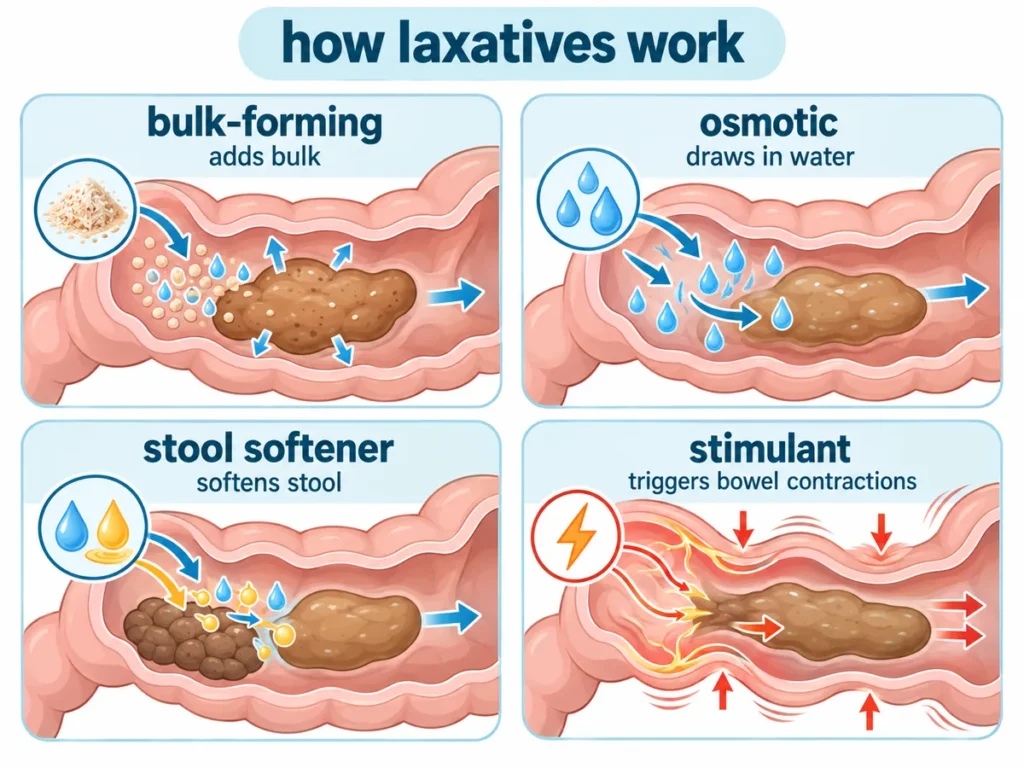
Pharmacies in the UAE stock a wall of constipation remedies, and most patients pick one at random. The differences matter: laxatives work in fundamentally different ways, some are safe for years while others should not run beyond days, and the wrong choice can worsen the problem it was bought to solve. As a colorectal surgeon, I spend a surprising amount of clinic time untangling laxative habits — this guide is the explanation I give in clinic.
Bulk-forming agents: the foundation
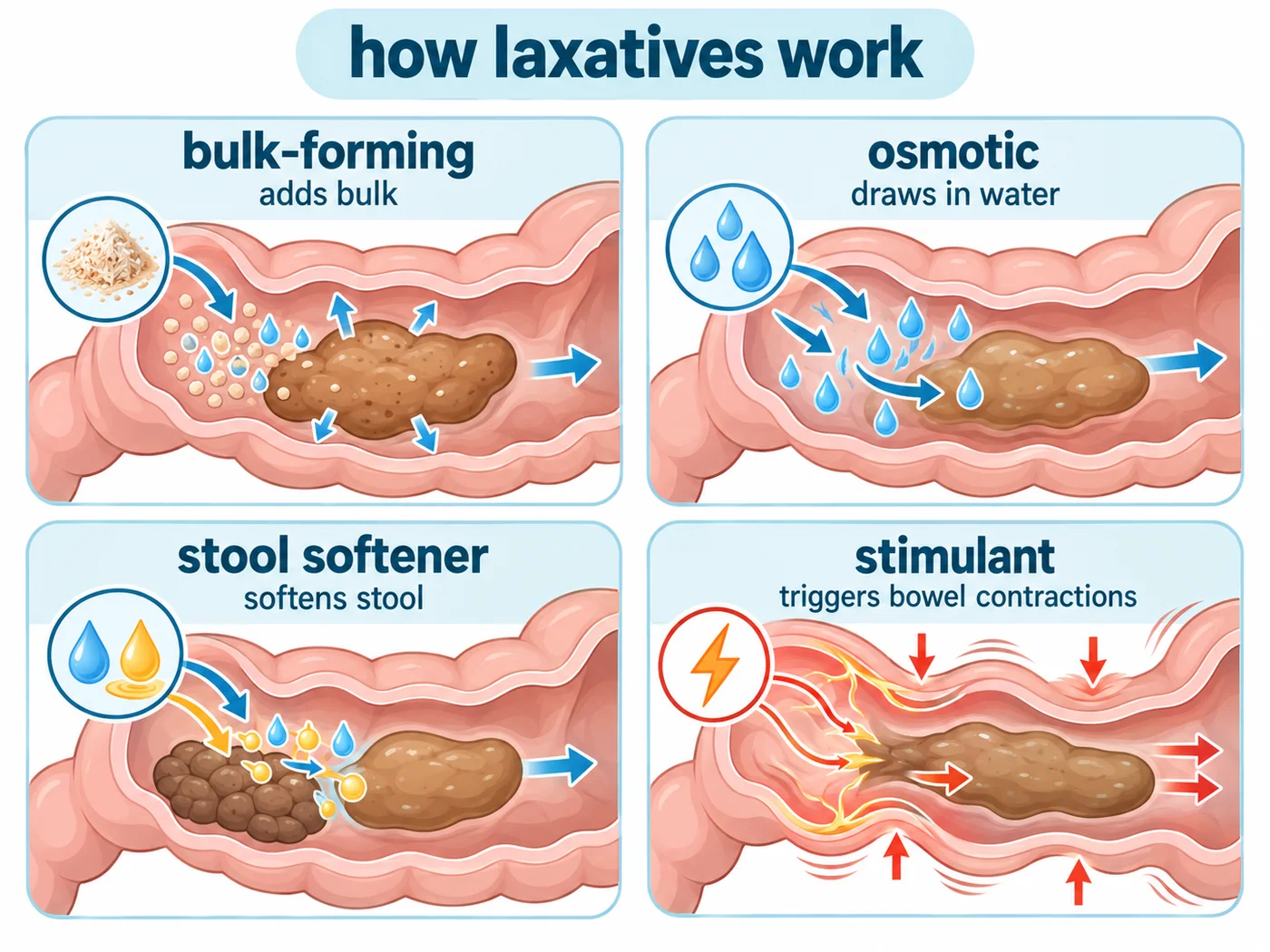
Psyllium (ispaghula) and similar fiber preparations absorb water and enlarge the stool, giving the colon something to push against. They are the physiological option — closest to how a high-fiber diet works — and safe for long-term daily use. Their two rules: build the dose gradually to limit bloating, and drink enough water, because fiber without fluid hardens stool instead of softening it. They suit most chronic constipation and are the mainstay for patients with hemorrhoids or anal fissure, where straining is the enemy.
Osmotic laxatives: the workhorses
Macrogol (polyethylene glycol) and lactulose draw water into the bowel and keep the stool soft. Macrogol is effective, well tolerated, and appropriate for extended use under medical guidance; lactulose is gentler but causes more bloating and gas. Osmotics are my usual second step when fiber alone is not enough, and the standard choice after anorectal surgery, when a soft first stool matters more than anything else.
Stool softeners: weaker than their reputation
Docusate makes stool slightly easier to pass by helping water mix into it. Its effect is modest — studies repeatedly show it underperforms psyllium and macrogol — and it is best reserved as a short-term adjunct, not a strategy. Many patients taking a daily “softener” for months would do better on a properly dosed bulk or osmotic agent.
Stimulant laxatives: useful, and misused
Senna and bisacodyl trigger colonic contractions directly. They work, often within hours, and they have a legitimate place: occasional rescue use, and short courses when other measures fail. The problem is habitual daily use without assessment — cramping, dependence on ever-larger doses, and, more importantly, a masked diagnosis. Constipation that needs a daily stimulant to produce a stool needs an explanation, not just a stronger tablet.
Suppositories and mini-enemas
Glycerin suppositories act mechanically and chemically within minutes and are useful when stool sits in the rectum but will not come out — a pattern that often points to an evacuation problem rather than slow bowels. If that description sounds familiar, the underlying issue may be pelvic floor dysfunction, which no oral laxative fixes.
When laxatives are the wrong answer
Three situations should end the pharmacy experiment and start an assessment. First, constipation with alarm features — bleeding, weight loss, anemia, a family history of colorectal cancer, or new constipation after 45. Second, laxatives that used to work and no longer do. Third, the feeling of incomplete emptying or the need to strain even when stool is soft — the signature of an outlet problem such as obstructed defecation syndrome, where stimulants often make symptoms worse.
Frequently asked questions
Which laxative is safest for daily long-term use?
Bulk-forming fiber first, macrogol second. Both are appropriate for extended use; stimulants are not a default daily plan without medical review.
Can laxatives cause dependence?
Bulk and osmotic agents, no. Chronic daily stimulant use can lead to a bowel that performs poorly without them — one of several reasons long-term stimulant use deserves assessment.
What should I take after hemorrhoid or fissure surgery?
A soft, formed stool without straining is the goal: fiber plus fluid, commonly with macrogol in the first weeks. Specific advice is given at surgery, since it depends on the procedure.
If constipation persists despite sensible laxative use, the next step is a structured assessment rather than a stronger product. I evaluate chronic constipation in Dubai and Abu Dhabi, including the functional testing that identifies why laxatives fail.
About the Author