
Hemorrhoid treatment success rates in Dubai depend on choosing the right treatment and specialist. Most patients achieve excellent results with modern, minimally invasive procedures when treatment is properly tailored. For a full overview of all available treatments, our hemorrhoid treatment in Dubai covers each option in clinical detail.
actually work? What are realistic outcomes? What will recovery really be like? Will symptoms truly resolve?
I’m Professor Dr. Antonio Privitera, Fellow of the American Society of Colon and Rectal Surgery and Fellow of the Royal College of Surgeons, the only surgeon in the world with both a Mayo Clinic and University of London Colorectal Surgery Fellowship, practicing across Dubai.
After treating thousands of hemorrhoid patients, I can share:
- Evidence-based success rates
- Real patient experiences (anonymized)
- What determines successful outcomes
- Realistic expectations for each treatment
- Long-term satisfaction data
Success is defined as:
- Symptom resolution (bleeding stops, pain resolves, prolapse corrected)
- Return to normal activities
- Patient satisfaction with outcome
- Minimal or no recurrence
This article covers:
- Success rates by treatment type
- Patient experience patterns
- Factors affecting outcomes
- What “success” really means
- When retreatment is needed
To achieve successful treatment:
Understanding Success Metrics
How Success Is Measured:
Clinical success:
- Symptom resolution (bleeding, pain, prolapse eliminated)
- Objective improvement on examination
- No complications
Patient-reported success:
- Quality of life improvement
- Satisfaction with decision to have treatment
- Would recommend to others
- Regret level (very low for appropriate treatment)
Long-term success:
- Symptom-free at 1, 3, 5 years
- Low recurrence rate
- No need for additional treatment
These metrics align when:
- Treatment matches hemorrhoid grade
- Patient follows post-treatment care
- Prevention strategies maintained
Success Rates by Treatment: Evidence-Based Data
Rubber Band Ligation (Grade I-II):
Clinical outcomes:
- Symptom improvement: 80-90% of patients
- Complete resolution: 70-80%
- Recurrence at 5 years: 10-30% (higher for Grade II than Grade I)
Patient experience:
- Minimal discomfort during procedure
- 1-2 days until normal activities
- High satisfaction when appropriate grade
- Frustration if used for Grade III (often fails)
The key: Works excellently for Grade I-II, less effective for Grade
Laser Hemorrhoidoplasty (Grade II-III):
Clinical outcomes:
- Symptom improvement: 80-90%
- Complete resolution: 75-85%
- Recurrence at 5 years: 15-25%
Patient experience:
- Moderate discomfort first week
- 5-7 days to normal activities
- High satisfaction for Grade II-III
- Appreciation for avoiding “full surgery”
Common feedback: “Recovery was uncomfortable but manageable. Glad I didn’t wait for surgery.”
THD (Grade II-III-IV):
Clinical outcomes:
- Symptom improvement: 85-90%
- Complete resolution: 80-85%
- Recurrence at 5 years: 10-15%
- Especially good for Grade III
Patient experience:
- First week challenging
- Week 2 significantly better
- 7-10 days to normal activities
- Very high satisfaction for Grade III
- “Wish I’d known about this sooner”
Common feedback: “First week was tough, but by week 2 I felt like a new person.”
Hemorrhoidectomy (Grade III-IV):
Clinical outcomes:
- Symptom improvement: 90-95%
- Complete resolution: 85-90%
- Recurrence at 5 years: 5-10% (lowest of all treatments)
Patient experience:
- First week very uncomfortable (pain 7-8/10 even with meds)
- Week 2 turning point (pain drops to 3-5/10)
- Weeks 3-4 steady improvement
- 2-4 weeks to normal activities
- Very high long-term satisfaction
Common feedback: “Recovery was hard, but I’m so glad I did it. I suffered for years when I could have had this done.”
Real Patient Patterns: What We See
Pattern 1: The “I Waited Too Long” Patient
Profile:
- Symptoms for 2-5 years
- Tried over-the-counter treatments
- Finally sought care when Grade III-IV
Experience:
- Wishes they’d come sooner
- Needs more invasive treatment due to delay
- Recovery harder than it would have been with earlier treatment
Quote (typical): “I can’t believe I suffered for 3 years. I thought it would go away. I should have seen a doctor after the first few months.”
Lesson: Early treatment is simpler treatment
Pattern 2: The “Quick Fix” Patient
Profile:
- Grade II hemorrhoids
- Banding performed
- Back to work next day
- Symptoms resolved
Experience:
- Surprised how easy it was
- Relieved didn’t need “surgery”
- Minimal disruption to life
Quote (typical): “I built it up in my head. The procedure took 10 minutes, and I was back at work the next day. Why did I wait?”
Lesson: Grade I-II responds beautifully to simple treatment
Pattern 3: The “Pregnancy/Postpartum” Patient
Profile:
- Developed hemorrhoids during pregnancy or delivery
- Managed conservatively postpartum
- Symptoms improved but didn’t fully resolve
- Sought treatment 6-12 months postpartum
Experience:
- Glad waited until after breastfeeding
- Wished had addressed before next pregnancy
- Good outcomes with banding or laser
Quote (typical): “I thought I’d just have to live with it. I’m so glad I finally got treatment. I’m planning another baby and wanted this resolved first.”
Lesson: Postpartum hemorrhoids often need treatment, not just waiting
Pattern 4: The “Fitness Enthusiast”
Profile:
- Active gym-goer, especially weightlifting
- Developed hemorrhoids from heavy lifting with poor form
- Grade II-III at presentation
Experience:
- Treatment successful
- Had to modify gym routine
- Learned proper breathing technique
- No recurrence with better form
Quote (typical): “My trainer never taught me proper breathing during lifts. Now I exhale during exertion, and my hemorrhoids haven’t come back.”
Lesson: Treatment + addressing cause = lasting success
Pattern 5: The “Office Worker”
Profile:
- Sedentary job, 10+ hours sitting daily
- Low-fiber diet, inadequate hydration
- Gradually progressive symptoms
Experience:
- Treatment resolves symptoms
- Returns to same habits → recurrence
- OR maintains prevention → stays symptom-free
Quote (typical—success): “I changed my diet, I walk during lunch,
I drink 3 liters of water daily. The hemorrhoids are gone and haven’t come back.”
Quote (typical—recurrence): “They came back after about a year. I went back to my old habits. This time I’m taking prevention seriously.”
Lesson: Long-term success requires lifestyle maintenance
If symptoms persist or are not improving, a specialist assessment in Dubai can help determine the most appropriate treatment.
What Makes Treatment Successful
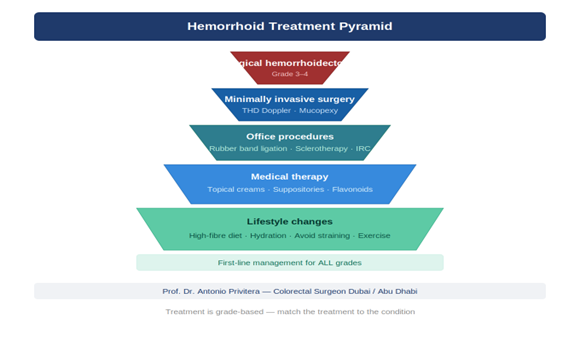
Factor 1: Appropriate Treatment Selection
Matching treatment to grade:
- Grade I → Banding or conservative
- Grade II → Banding
- Grade III → Laser, THD, or banding (depending on specifics)
- Grade IV → Hemorrhoidectomy
Mismatch leads to failure:
- Banding for Grade IV → Doesn’t work
- Surgery for Grade I → Overkill, unnecessary risk
The key: Proper diagnosis determines appropriate treatment
Factor 2: Surgeon Experience
Fellowship training matters:
- Thousands of procedures performed
- Experience with full range of techniques
- Ability to choose right treatment for each patient
Outcomes differ with experience:
- Complication rates lower
- Recurrence rates lower
- Patient satisfaction higher
Factor 3: Patient Adherence
Post-treatment care:
- Following recovery instructions
- Taking stool softeners as prescribed
- Attending follow-up
- Reporting concerns early
Long-term prevention:
- Maintaining high-fiber diet
- Adequate hydration
- Good bathroom habits
- Regular exercise
Success requires partnership: Surgeon provides treatment, patient maintains results
Factor 4: Realistic Expectations
Understanding:
- Recovery timelines
- Discomfort levels
- Activity restrictions
- Long-term maintenance needs
Satisfied patients:
- Knew what to expect
- Prepared mentally and logistically
- Weren’t surprised by recovery experience
Dissatisfied patients:
- Expected “painless, no downtime” (unrealistic marketing)
- Returned to work too soon
- Didn’t maintain prevention
Long-Term Satisfaction: The 1-Year Mark
What We See at 1 Year:
Successful outcomes (85-90% of patients):
- Symptom-free or minimal symptoms
- Quality of life significantly improved
- No regrets about treatment
- Would recommend to others
- Glad they didn’t wait longer
Recurrence (10-15% depending on treatment):
- Some symptom return
- Usually related to lifestyle factors
- Often treatable with less invasive intervention
- Rarely full recurrence to original severity
Neutral outcomes (5-10%):
- Symptoms improved but not eliminated
- May need additional treatment
- Satisfied with improvement even if not perfect
Patient Quotes at 1 Year:
After banding: “I’ve had no bleeding, no pain, nothing. It’s like
I never had hemorrhoids. I eat fiber every day and drink plenty of water. Best decision.”
After laser: “The first week was rough, but by month 2 I forgot
I’d even had it done. No issues since.”
After THD: “I was scared of surgery, so THD was perfect middle ground. A year later, still doing great.”
After hemorrhoidectomy: “Recovery was tough—I won’t lie. But it’s been a year and I have zero symptoms. For the first time in 5 years, I don’t think about my hemorrhoids every day. Worth it.”
When Retreatment Is Needed
Recurrence Scenarios:
Early recurrence (within 6 months):
- Usually indicates:
- Incomplete initial treatment
- Wrong treatment for grade
- Poor post-treatment care
- Approach: Re-evaluate grade, consider more definitive treatment
Late recurrence (1-5 years):
- Usually indicates:
- New hemorrhoid formation
- Return to causative habits
- Genetic predisposition
- Approach: Treat recurrence, reinforce prevention
Retreatment Outcomes:
Good news:
- Retreatment usually successful
- Often simpler procedure than feared
- Patients more compliant second time (learned from experience)
Example patterns:
- Banding initially → recurrence Grade III → THD successfully
- Laser initially → small recurrence → banding successfully
- Hemorrhoidectomy → rare recurrence → usually minor, easily treated
Success in Special Populations
Dubai Expatriate Community:
Unique factors:
- Traveling home for treatment sometimes
- Insurance coordination
- Different cultural expectations
Success factors:
- Access to world-class care locally in UAE
- Multilingual care available
- Insurance coverage generally good
- Can schedule around work visas, home leave
Women During Childbearing Years:
Success patterns:
- Treatment before pregnancy: High success, reduces risk during pregnancy
- Treatment after pregnancy: Often needed, good outcomes
- Timing with family planning: Important consideration
Athletes and Fitness Enthusiasts:
Success requires:
- Treatment to resolve symptoms
- Education on proper form
- Modified training approach
- Gradual return to full activity
Outcomes:
- Can return to all activities including heavy lifting
- Key is proper breathing technique
- Prevention education crucial
What “Success” Really Means to Patients
Beyond Symptom Resolution:
Life quality improvements:
- Can sit through meetings without discomfort
- Can play with children without pain
- Can exercise without fear
- Can travel without anxiety
- Don’t think about hemorrhoids daily
Emotional benefits:
- Relief from embarrassment
- Confidence restored
- No longer avoiding social situations
- Peace of mind
Professional impact:
- Can focus at work
- Not distracted by symptoms
- No more emergency bathroom trips
- Productivity improved
Quote: “I didn’t realize how much hemorrhoids were affecting my
life until they were gone. I have my life back.”
The Bottom Line: Treatment Works
Evidence-Based Reality:
Success rates are high:
- 80-95% symptom improvement across all treatments
- When treatment matches grade, outcomes excellent
- Complications rare with experienced surgeon
- Long-term satisfaction very high
Keys to success:
1. Proper diagnosis (know your grade)
2. Appropriate treatment selection
3. Experienced surgeon
4. Patient compliance with recovery
5. Long-term prevention maintenance
The investment is worth it:
- Short-term discomfort for long-term relief
- Quality of life improvement significant
- Most patients: “I wish I’d done this sooner”
This article is written and reviewed by Prof. Dr Antonio Privitera, consultant colorectal surgeon with fellowship training at Mayo Clinic (USA) and the Royal College of Surgeons (UK), specializing in hemorrhoid diagnosis and minimally invasive treatment.
Frequently Asked Questions
1. What percentage of patients are satisfied with treatment?
85-95% depending on treatment type and appropriate selection. Satisfaction highest when treatment matches hemorrhoid grade and expectations are realistic.
2. How many patients need retreatment?
10-30% may need retreatment over 5-10 years, depending on initial treatment. Hemorrhoidectomy has lowest retreatment rate (5-10%).
3. Do results differ by age?
Outcomes similar across ages. Younger patients may have faster recovery. Older patients may have more comorbidities but still good outcomes.
4. What’s the most common regret?
“I waited too long.” Early treatment is simpler. Very few patients regret getting treatment.
5. Do men and women have different success rates?
No significant difference when treatment appropriate. Women may present earlier (better outcomes due to earlier grade at treatment).
6. Can I see before/after photos?
Due to sensitivity and privacy, before/after photos not typically shared. Outcomes measured by symptom resolution and patient satisfaction rather than appearance.
7. How long until I feel “normal” again?
Banding: days. Laser/THD: 2-3 weeks. Hemorrhoidectomy: 4-6 weeks. “Normal” means no symptoms, not thinking about hemorrhoids.
8. What if treatment doesn’t work for me?
Rare with appropriate treatment. If occurs, options include: repeating procedure, trying different treatment, or addressing underlying causes.
9. Will insurance cover retreatment if needed?
Usually yes if medically necessary. Recurrence is recognized complication, not patient error.
10. Is success permanent?
Treatment addresses current hemorrhoids. New hemorrhoids can form if causative factors continue. Maintenance prevents recurrence in most cases.
References and Medical Sources
1. Treatment Outcomes Meta-Analysis – Comprehensive review. Simillis C, Thoukididou SN, Slesser AA, Rasheed S, Tan E, Tekkis PP. Systematic review and network meta-analysis comparing clinical outcomes and effectiveness of surgical treatments for haemorrhoids. Br J Surg. 2015;102(13):1603-18. PubMed
2. Long-Term Success Rates – THD outcomes. Ratto C, Giordano P, Donisi L, et al. Transanal haemorrhoidal dearterialisation (THD) for haemorrhoidal disease: a single-centre study on 1000 consecutive cases. Colorectal Dis. 2017;19(8):750-756. PubMed
3. Patient Satisfaction Studies – Quality of life after treatment. Van Tol RR, Kleijnen J, Watson AJM, et al. European Society of ColoProctology: guideline for haemorrhoidal disease. Colorectal Dis. 2020;22(6):650-662. PubMed
Medical Review: This content was written and reviewed by Professor Dr. Antonio Privitera, Fellow of the American Society of Colon and Rectal Surgery and Fellow of the Royal College of Surgeons, the only Colorectal Surgery Fellowship.
Need expert treatment for hemorrhoids, anal fissure, or anal fistula? Book a consultation with Dr. Antonio Privitera in Abu Dhabi.
Book Your Appointment
WhatsApp / Phone: +971 55 318 8469
About the Author