
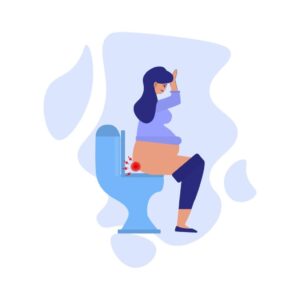
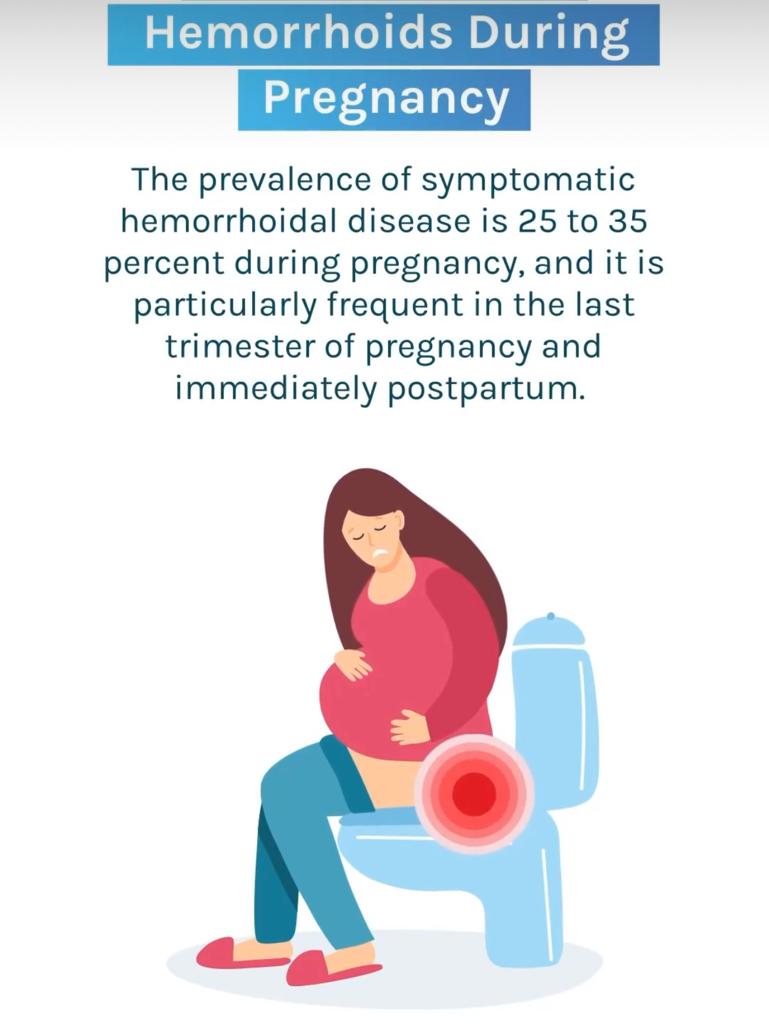
The prevalence of symptomatic hemorrhoidal disease is 25 to 35 percent during pregnancy, and it is particularly frequent in the last trimester of pregnancy and immediately postpartum.
Symptoms :
Symptoms range from mild:
(eg, pruritus, discomfort) to severe (eg, intractable bleeding).
Management & Treatment
Since symptoms generally improve after delivery, treatments during pregnancy are:
- primarily conservative.
- Emphasis on high fiber diet and lifestyle modification.
- Kegel exercises and Maintain Good Posture as Sitting or standing for extended periods can put pressure on the rectal area and worsen hemorrhoid symptoms.
- Use of mild laxatives and stool softeners to avoid constipation and straining.
- Sitz Baths: Soaking in warm water can provide temporary relief for hemorrhoid discomfort. Take regular sitz baths for 10-15 minutes, several times a day.
- Topical Treatments: Over-the-counter creams or ointments can help relieve some hemorrhoidal symptoms. However, always consult your healthcare provider before using any medication or topical treatments during pregnancy.
In summary:
If home remedies and lifestyle changes do not provide relief or if your symptoms worsen, consult your healthcare provider. They can provide further guidance and recommend safe and appropriate treatment options.
About the Author

Dr. Privitera is the only surgeon in the world with both a Mayo Clinic (Rochester, USA) and University of London Colorectal Surgery Fellowship. He completed an advanced laparoscopic and robotic fellowship in Seoul, South Korea.
He previously served as Lead Colorectal Surgeon at Tawam Hospital–Johns Hopkins Abu Dhabi and Associate Professor at UAE University.
He is a Fellow of the American Society of Colon and Rectal Surgery (FASCRS), Fellow of the Royal College of Surgeons of England (FRCS), and author of over 70 peer-reviewed publications. He also served as General Secretary of the Emirates Society of Colon and Rectal Surgery (2021–2024).
He practices across Dubai and Abu Dhabi.