The Office Work-Hemorrhoid Connection
Dubai office workers develop hemorrhoids more often because prolonged sitting, low activity, constipation, and delayed bathroom habits increase pressure on the anal veins. Identifying these factors is essential for both prevention and treatment. The full clinical picture of hemorrhoid causes, grades, and treatments is in our hemorrhoid treatment in Dubai .
- When you sit, especially for hours, pressure on the veins in your pelvis and anus increases
- Blood pools in hemorrhoidal veins
- Over time, these veins stretch and swell
- This is literally how hemorrhoids form
Reduced Circulation:
- Prolonged sitting reduces blood flow to the pelvic area
- Poor circulation means poor vein health
- Veins become more prone to swelling and inflammation
Bowel Function Impact:
- Sedentary lifestyle slows intestinal transit time
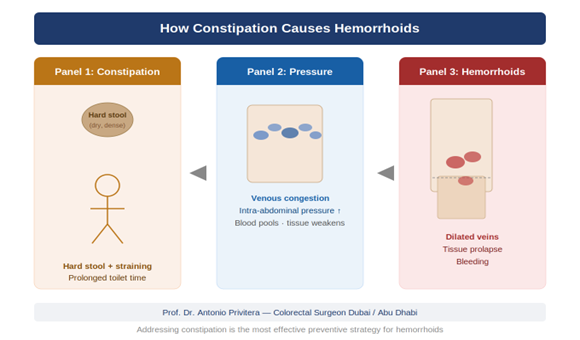
- Slower transit = harder stools = more straining
- Straining = increased pressure on hemorrhoidal veins
The Data: Studies show sedentary workers have 1.5-2x higher risk o symptomatic hemorrhoids compared to workers with active jobs. In my Dubai practice, I see this consistently: finance professionals, IT workers, lawyers, and executives disproportionately affected.
Experiencing symptoms like these? A discreet same-day specialist assessment is available across Dubai .
WhatsApp: +971 55 318 8469 | Phone: +971 55 318 8469
Medcare Discovery Gardens (Dubai)
Dubai-Specific Risk Factors
1. Extreme Air Conditioning = Chronic Dehydration
The Problem:
- Dubai offices are often 18-22°C (very cold)
- You don’t feel thirsty in cold AC
- You forget to drink water
- Coffee becomes your primary fluid (dehydrating)
How This Causes Hemorrhoids:
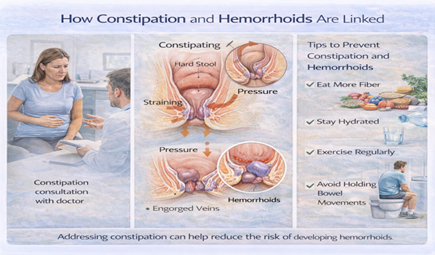
- Dehydration → hard stools
- Hard stools → straining during bowel movements
- Straining → hemorrhoid development
The Fix:
- 2.5-3 liters of water daily (regardless of thirst)
- Set phone reminders every hour to drink
- For every cup of coffee, drink a glass of water
2. Low-Fiber “Business Lunch” Diet
The Problem:
- Lunch at desk: sandwich, shawarma, pasta, rice dishes
- Dinner meetings: steaks, grilled meats, minimal vegetables
- Breakfast skipped or quick (croissant, muffin)
- Snacking: biscuits, chips, chocolate
Average fiber intake of Dubai office workers: 10-15g daily
Recommended intake: 25-35g daily
Result: Chronic constipation, hard stools, straining
The Fix:
- Add fruit to breakfast (berries, apple, pear)
- Choose salad-heavy lunch options
- Snack on nuts, dates (high fiber)
- Add vegetables to dinner
3. “Toilet = Phone Time” Culture
The Problem:
- You sit on toilet scrolling social media, reading news
- 10-15 minutes on toilet becomes normal
- This prolonged sitting on toilet is one of the WORST things for hemorrhoid development
Why It’s Harmful:
- Sitting on toilet puts maximum pressure on hemorrhoidal veins
- The open toilet seat concentrates pressure precisely where hemorrhoids for 5 minutes maximum should be your rule
The Fix:
- Leave phone outside bathroom
- Go when you feel urge, don’t delay
- Don’t sit longer than 5 minutes
- If you can’t go in 5 minutes, get up and try later
4. No Movement Breaks
The Problem:
- Back-to-back meetings, deadlines, focus time
- You sit 3-4 hours straight without standing
- Even lunch is at desk
Why It’s Harmful:
- Continuous sitting = continuous pressure on hemorrhoidal veins
- No chance for circulation to recover
The Fix:
- Stand and walk 5 minutes every hour
- Take phone calls standing or walking
- Use bathroom break as movement break
- Walk to colleague’s desk instead of emailing
5. Delayed Bathroom Breaks
The Problem:
- You’re in a meeting, you feel the urge, you hold it
- You’re on a deadline, you postpone bathroom break
- This becomes habitual
Why It’s Harmful:
- Delaying bowel movements makes stool harder (colon absorbs more water)
- Hard stool = more straining when you finally go
- Chronic pattern of holding leads to constipation
The Fix:
- Go when you feel the urge (even if inconvenient)
- Excuse yourself from meetings if needed
- Prioritize bathroom breaks over work tasks
6. Stress and Irregular Eating
The Problem:
- Work stress affects digestion
- Irregular meal timing disrupts bowel patterns
- Eating at desk while working impairs digestion
The Fix:
- Take proper lunch break (step away from desk)
- Eat at consistent times
- Practice stress management (even 5-minute breathing exercises help)
The Typical Dubai Office Worker Hemorrhoid Story
Let me tell you about “Ahmed” (not his real name, but a composit of dozens of patients I see):
Profile:
- 35-year-old finance professional
- Works in Dubai Marina, lives in JLT
- 10-hour desk days, 6 days per week
- Eats lunch at desk (usually shawarma or sandwich)
- Drinks 3-4 espressos daily, minimal water
- Constipated most of the time
- Spends 15 minutes on toilet scrolling phone
Progression:
- Age 30: First noticed occasional bright red blood on toilet paper, ignored it
- Age 32: Bleeding more frequent, sometimes feels a small lump after bowel movements (prolapsed Grade II hemorrhoid)
- Age 34: Now bleeding every bowel movement, occasional pain, lump needs to be pushed back in (Grade III)
- Age 35: Finally comes to see me, embarrassed he waited so long
What I told Ahmed:
- His lifestyle created perfect conditions for hemorrhoids
- Needs THD or hemorrhoidectomy (too advanced for banding)
- BUT: Even after treatment, if lifestyle doesn’t change, hemorrhoids
will likely recur
Ahmed’s prevention plan (after treatment):
- 2.5 liters water daily (bottle on desk, refill 3x daily)
- High-fiber breakfast (oats with berries)
- Salad-based lunches
- Walk 5 minutes every hour (uses phone timer)
- No phone in bathroom (hardest habit to break!)
- Psyllium fiber supplement daily
Result: 18 months post-treatment, no recurrence, no symptoms.
If symptoms persist or are not improving, a specialist assessment in Dubai can help determine the most appropriate treatment.
Prevention Strategies for Dubai Office Workers
The “Desk Job Hemorrhoid Prevention Protocol”
Hydration Goals:
- Target: 2.5-3 liters water daily
- Strategy:
- Keep 1-liter bottle on desk, refill 2-3 times
- Drink one glass upon waking
- Drink one glass before each meal
- Set phone reminder every 60-90 minutes
- Coffee rule: For every coffee, drink equal amount of water
Fiber Goals:
- Target: 25-35g daily
- Breakfast: Oats with fruit, or whole wheat toast with avocado
- Lunch: Salad-heavy (chicken/salmon salad, quinoa bowl)
- Snacks: Nuts, dates, fresh fruit
- Dinner: Add vegetables to every meal
- Supplement: Psyllium husk (Metamucil, Fybogel) if diet isn’t sufficient
Movement Protocol:
- Every hour: Stand and walk 5 minutes (set phone alarm)
- Lunch: Take actual break, walk outside if possible
- Meetings: Suggest walking meetings when appropriate
- Commute: If public transport, stand rather than sit when possible
- Go when you feel urge (don’t delay for meetings or work)
- 5-minute maximum on toilet (no phone!)
- Don’t strain (if nothing happens in 5 minutes, try later)
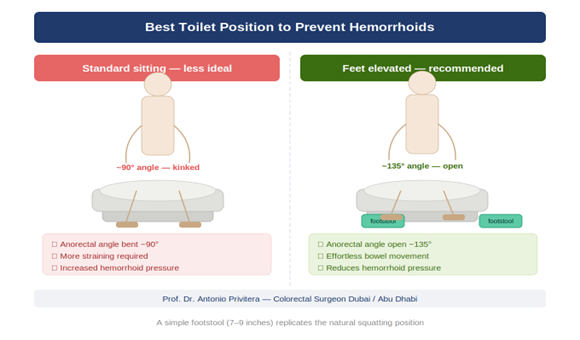
- Proper position: Feet flat on floor, or use small footstool
(squatting position opens anorectal angle)
Sitting Adjustments:
- Ergonomic chair: Supports proper posture, reduces pressure
- Take micro-breaks: Stand for 30 seconds every 20-30 minutes
- Don’t sit during phone calls: Walk around office or use standing desk
- Lunch away from desk: Even 15 minutes not sitting helps
When Prevention Isn’t Enough: Treatment Options for Bus Professionals
Sometimes despite best efforts, hemorrhoids develop. Here’s how we
treat them while minimizing work disruption:
For Grade I-II (Early Hemorrhoids):
Rubber Band Ligation:
- Done in office, 10 minutes
- Back to work next day (desk job) or 2-3 days (physical work)
- Minimal disruption to work schedule
- See our treatment comparison guide
For Grade III (More Advanced):
Laser or THD:
- Day procedure, 5-10 days off work
- Plan around project deadlines
- Can work from home during recovery if desk job
- See laser reality check
For Grade IV (Severe):
Hemorrhoidectomy:
- 2-4 weeks off work (depending on job type)
- Most definitive treatment, lowest recurrence
- Plan during slower work period
- See Grade IV surgery guide
Work-Friendly Scheduling:
- Thursday procedures (weekend + few days = back to work)
- Annual leave planning (schedule treatment during vacation period)
- Medical certificates provided for employer
Managing Symptoms While Still Working
If you have hemorrhoid symptoms but can’t take time off work immediately:
Immediate Relief Strategies:
At Your Desk:
- Use donut cushion (relieves pressure)
- Take breaks to stand/walk every 30-60 minutes
- Continue stool softeners and fiber supplements
Before Work:
- Time bowel movements for home (ideally morning)
- Take stool softener night before
- Use sitz bath before leaving for work
At Work:
- Keep stool softeners in desk drawer
- Know where clean, private bathrooms are
- Bring extra underwear and wipes (just in case of bleeding/discharge)
After Work:
- Sitz bath when you get home
- Elevate legs to reduce pelvic pressure
- Apply topical treatments if needed
But: This is temporary management. If symptoms persist, you need proper treatment—delaying often makes things worse.
Red Flags: When to Stop Working and Seek Immediate Care
Contact surgeon urgently if:
- Heavy bleeding (soaking through toilet paper repeatedly)
- Severe pain (can’t sit at all, can’t focus on work)
- Prolapsed hemorrhoid that won’t reduce (Grade IV, needs evaluation)
- Fever with anal pain (possible infection or abscess)
These aren’t “work through it” situations—seek medical care.
The Long-Term View: Protecting Your Health in a Desk Job
Here’s the reality:
- Office work isn’t going away
- Long sitting hours are part of many Dubai careers
- You can’t change your job, but you CAN change your habits
Investment in prevention now:
- Saves you from painful treatment later
- Prevents time off work for procedures
- Improves overall health (fiber, hydration, movement benefit whole body)
- Costs almost nothing (literally: water, vegetables, walking)
Many of my patients tell me: “I wish someone had told me about
prevention years ago. I thought hemorrhoids were just bad luck, no preventable.”
Now you know.
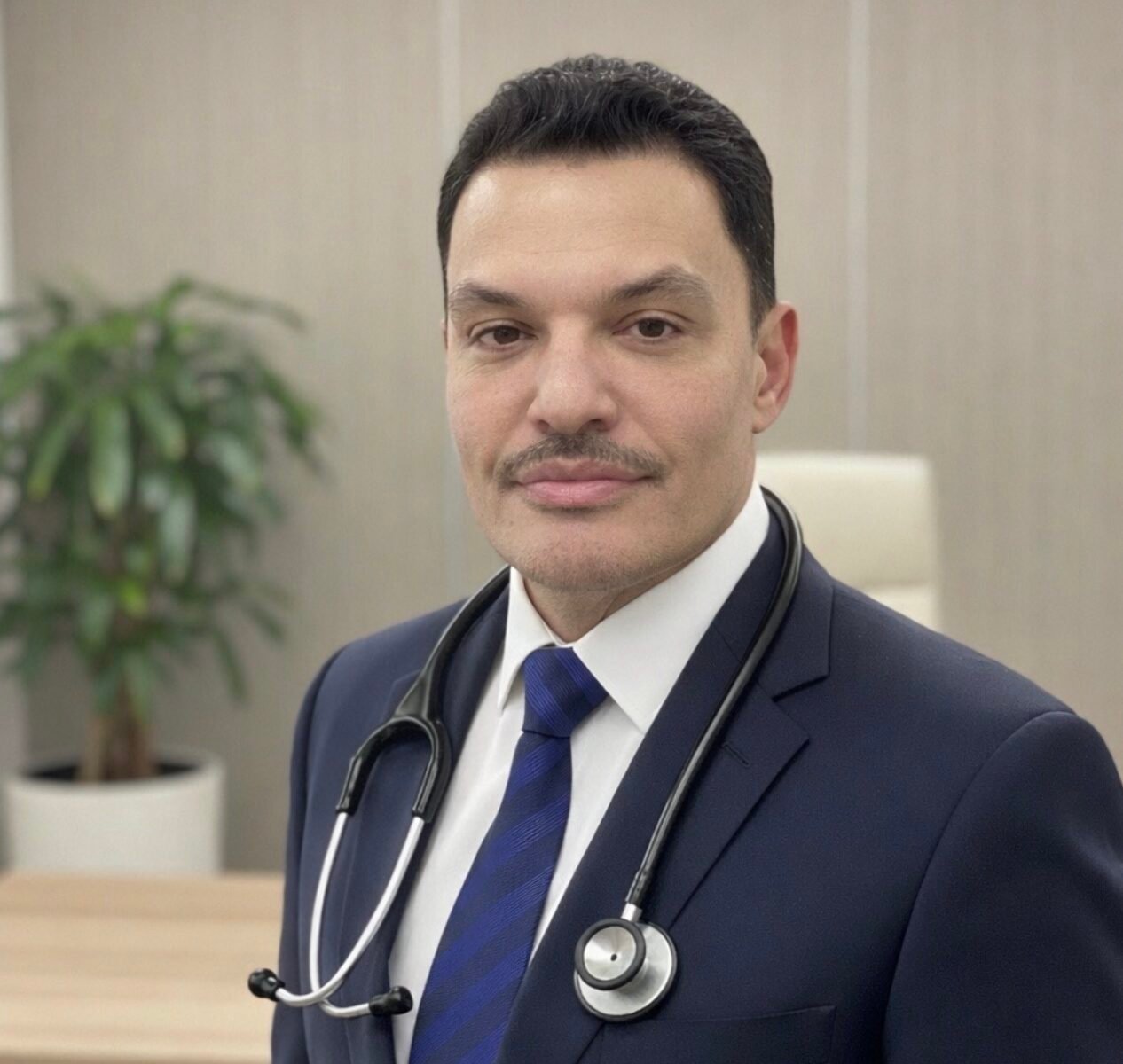
This article is written and reviewed by Prof. Dr Antonio Privitera, consultant colorectal surgeon with fellowship training at Mayo Clinic (USA) and the Royal College of Surgeons (UK), specializing in hemorrhoid diagnosis and minimally invasive treatment.
Frequently Asked Questions
1. Can I develop hemorrhoids even with a standing desk?
Standing desks help, but standing all day without movement can also cause issues. Best approach: alternate sitting/standing, take movement breaks.
2. Is there a specific type of chair that prevents hemorrhoids?
Ergonomic chairs with good lumbar support help posture and reduce pressure. No chair “prevents” hemorrhoids, but proper sitting posture helps.
3. I drink lots of tea/coffee. Does that count toward hydration?
Partially, but caffeine is mildly dehydrating. For every cup of coffee/tea, drink a glass of water. Don’t count caffeinated drinks toward your 2.5L water goal.
4. Can I prevent hemorrhoids if I have IBS or chronic diarrhea?
Chronic diarrhea also increases hemorrhoid risk. Work with gastroenterologist to manage IBS, avoid straining even with diarrhea, maintain good hygiene.
5. Should I take fiber supplements if I’m eating enough fiber?
If you’re genuinely eating 25-35g fiber daily from food, supplements aren’t necessary. But most people overestimate their fiber intake. Track for a few days to know for sure.
6. Can exercise prevent hemorrhoids?
Yes! Regular exercise improves circulation, promotes regular bowel movements, prevents constipation. Even 30 minutes daily walking makes a difference.
7. My job requires sitting in client meetings all day. How can I
prevent hemorrhoids?
Difficult, but: arrive early and stand while waiting, excuse yourself for bathroom/water breaks, do isometric exercises (contract/relax muscles) while sitting, prioritize other prevention strategies (hydration, fiber).
8. Is it genetic? My father had hemorrhoids and worked a desk job.
Genetic predisposition exists, but lifestyle is huge factor. You might be more prone genetically, making prevention even MORE important.
9. Can stress cause hemorrhoids?
Indirectly. Stress affects digestion (can cause constipation or diarrhea), may lead to poor eating habits, increases muscle tension. Manage stress through exercise, breaks, proper sleep.
10. I travel frequently for work. How do I maintain prevention
habits?
Pack fiber supplements
Request water bottle on flights
Choose high-fiber meals when possible
Walk around airport/plane during travel
Don’t delay bathroom breaks due to meetings/flights
References and Medical Sources
This article is based on lifestyle risk factor evidence:
1. Sedentary Lifestyle and Hemorrhoid Risk – Epidemiological study.
Johanson JF, Sonnenberg A. The prevalence of hemorrhoids and chronic constipation: an epidemiologic study. Gastroenterology. 1990;98(2):380-6. PubMed
2. Dietary Fiber and Hemorrhoid Prevention – Clinical evidence.
Alonso-Coello P, Mills E, Heels-Ansdell D, et al. Fiber for the treatment of hemorrhoids complications: a systematic review and meta-analysis. Am J Gastroenterol. 2006;101(1):181-8. PubMed
3. American Society of Colon and Rectal Surgeons Guidelines –
Prevention recommendations. Davis BR, Lee-Kong SA, Migaly J, Feingold DL, Steele SR. The American Society of Colon and Rectal Surgeons Clinical Practice Guidelines for the Management of Hemorrhoids. Dis Colon Rectum. 2018;61(3):284-292. PubMed
Medical Review: This content was written and reviewed by Professor training at the Mayo Clinic and Royal College of Surgeons (UK), and European Board Certification in Colorectal Surgery.
Prevention Assessment and Treatment for Dubai Professionals
Book your consultation around your work schedule—early morning, evening, or weekend appointments available.
📱 WhatsApp: +971 55 318 8469
📞 Phone: +971 55 318 8469
🌐 Book Online:
Dubai Locations:
- Medcare Medical Centre, Discovery Gardens
- Medcare Women and Children Hospital
- Medcare Royal Specialty Hospital
- Clemenceau Medical Centre
- Aster Hospital, Qusais
We understand busy professional schedules—flexible appointments and minimal work disruption.
Professor Dr. Antonio Privitera
Fellowship Training: Mayo Clinic | Royal College of Surgeons (UK) European Board Certified in Colorectal Surgery
About the Author