

Consultant Colorectal Surgeon · Dubai and Abu Dhabi · DHA and DoH licensed · Associate Professor, UAE University
About · Google Scholar · LinkedIn
- Treatment that fails for months usually means the mechanism was never identified, not that the treatment was too weak.
- The most common reason is an outlet problem being treated as if it were slow transit.
- Medication review, thyroid and calcium checks, and a careful pelvic floor examination resolve a large share of these cases.
- Anorectal manometry and the balloon expulsion test give an answer within one appointment.
By the time patients reach my clinic with constipation that has lasted years, most have already tried fiber supplements, several laxatives, probiotics and a long list of dietary changes. The useful move at that point is not another product. It is to go back and ask whether the diagnosis was ever made.
1. Was the mechanism ever identified?
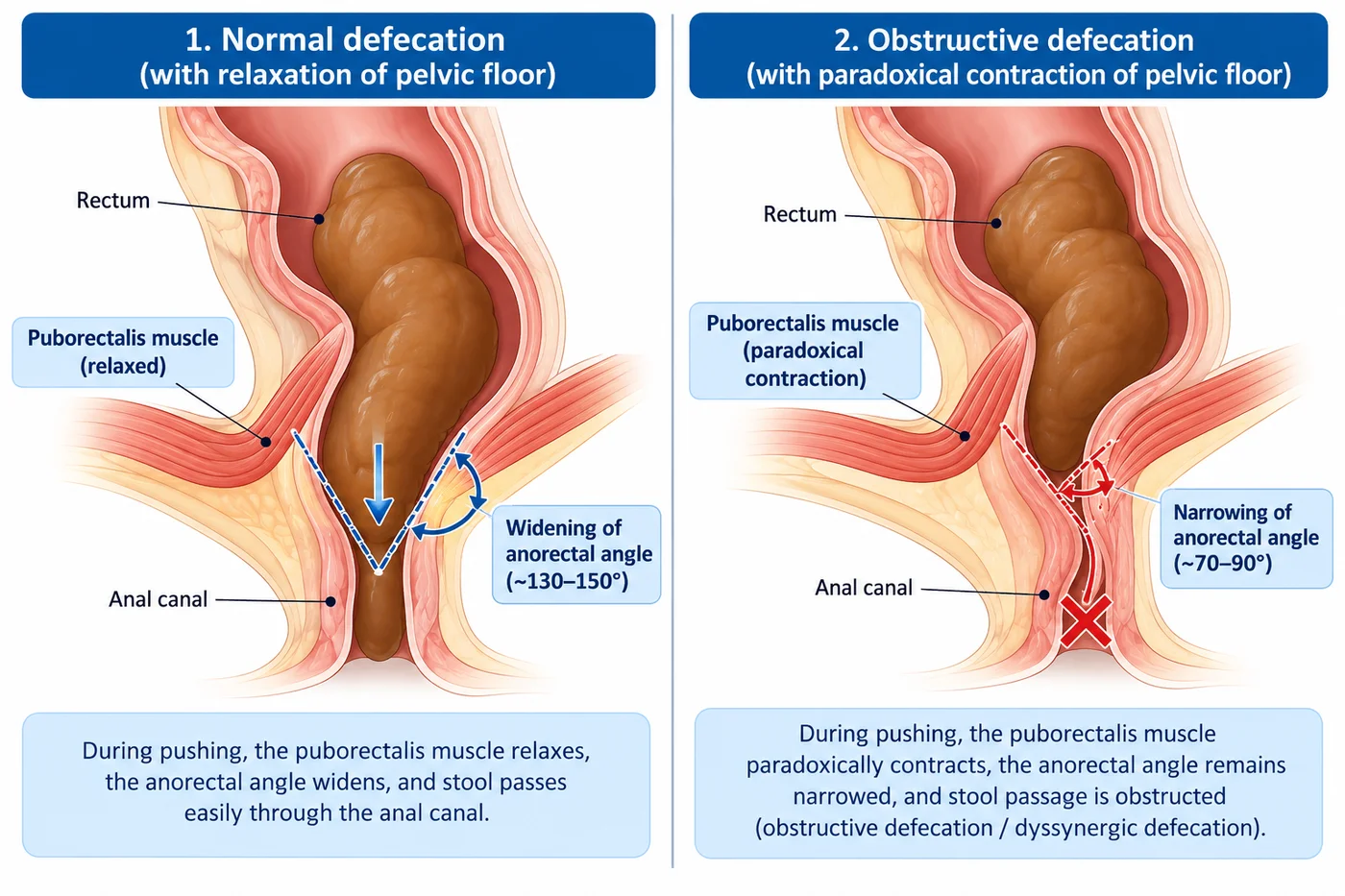
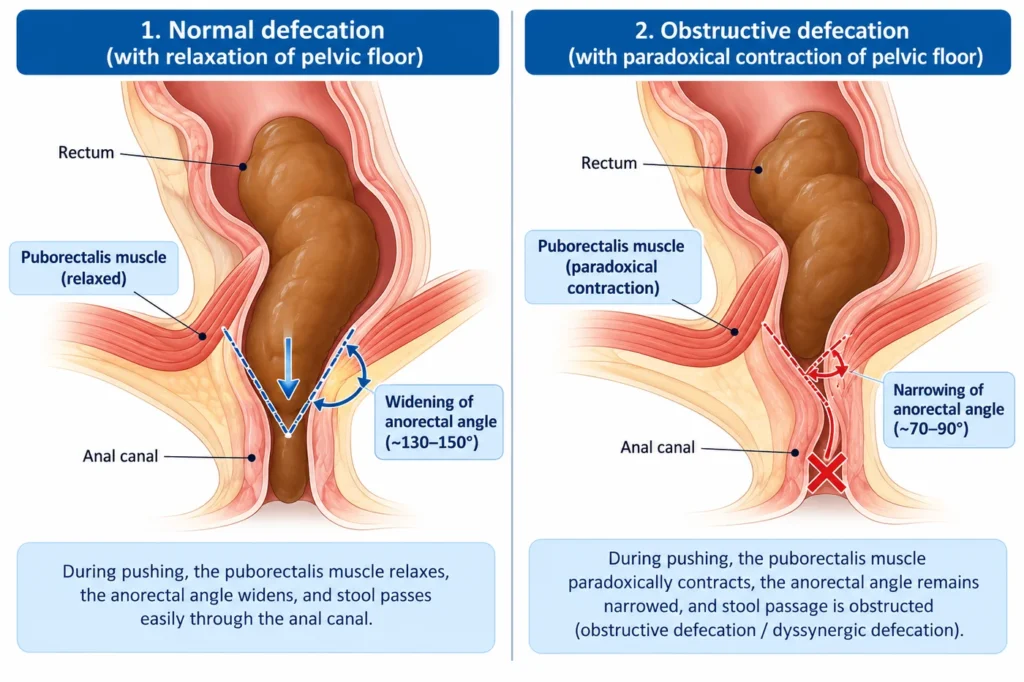
This is the single biggest reason treatment fails. Constipation from a slow colon and constipation from a pelvic floor that will not relax look the same from the outside and respond to completely different treatment. If nobody has examined your pelvic floor or asked how you evacuate, the diagnosis is incomplete. The two mechanisms are explained here.
2. Is a medication driving it?
I go through the full list, including what people do not think of as medication. Opioid painkillers after surgery or for back pain, iron tablets, certain antidepressants and antihistamines, calcium channel blockers for blood pressure, and some antacids all slow the bowel. Where the drug cannot be stopped, the treatment plan has to account for it rather than ignore it.
3. Has a metabolic cause been excluded?
An underactive thyroid, poorly controlled diabetes and raised blood calcium all cause constipation and all are easy to test. These are simple blood tests that should be done once rather than repeatedly.
4. Is the fiber working against you?
Fiber helps when the colon is slow. When stool is reaching the rectum and cannot get out, more bulk makes the pressure, bloating and straining worse. Patients often describe feeling better on less fiber, which is a strong clue to an outlet problem. The practical detail is in how much fiber actually helps.
5. Is the toilet routine itself part of the problem?
Prolonged sitting, phone use on the toilet, straining, and routinely postponing the urge all blunt the reflex over time. Ten minutes maximum, feet raised on a small step, no phone, and going when the urge arrives are not trivial instructions; in some patients they are the treatment.
6. Has anything been excluded structurally?
If there is bleeding, weight loss, anemia, a family history, or a genuine change in bowel habit after 40, the colon needs to be looked at before anyone commits to long-term treatment. Screening colonoscopy from 40 applies regardless, earlier with a family history.
What testing adds at this stage
When these six questions do not settle it, the tests are quick and change the plan:
- Anorectal manometry measures resting pressure, squeeze and whether the muscles coordinate during an attempted bowel movement.
- The balloon expulsion test is a direct, two-minute answer to whether you can evacuate.
- A colonic transit study shows whether the colon itself is slow.
- Defecography shows a rectocele, an internal rectal prolapse or an enterocele when surgery is being considered.
What changes after the diagnosis
With slow transit confirmed, treatment is dietary, osmotic laxatives at an adequate dose, and prokinetic options in resistant cases. With an outlet problem confirmed, the first-line treatment is biofeedback retraining, which has good results and no surgical risk, with surgery reserved for a structural problem that retraining cannot overcome. The treatment ladder is set out here.
Frequently asked questions
How long should I give a treatment before deciding it has failed?
Six to eight weeks of a properly taken treatment is a fair trial. Longer than that without benefit is a reason to reassess the diagnosis, not to escalate the dose.
Could this be irritable bowel syndrome?
IBS with constipation overlaps considerably, and abdominal pain that improves after opening the bowels is the distinguishing feature. The pelvic floor still needs assessing, because the two coexist often.
Will I need surgery?
Most patients will not. Surgery is for a defined structural problem in a patient whose pelvic floor function has already been assessed and addressed.
About the Author