
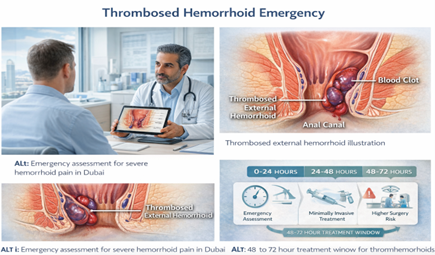
A thrombosed hemorrhoid in Dubai is usually a painful emergency that is best assessed within 48–72 hours. Early specialist treatment can significantly reduce pain and improve recovery. For a complete overview of hemorrhoid types and treatments, our hemorrhoid treatment in Dubai covers the full clinical pathway. under the skin around the anus, outside the anal canal.
What happens:
- Blood pools in the hemorrhoidal veins
- A clot forms suddenly (often after straining, lifting, prolongedsitting, or sometimes for no clear reason)
- The clot stretches the overlying skin, causing severe pain
- The area swells, becomes firm, and turns blue or purple
Why it’s so painful:
Unlike internal hemorrhoids (which have no pain receptors), external hemorrhoids are under the skin, which has abundant pain nerve endings. When a clot suddenly stretches this skin, it causes significant pain—often described as throbbing, constant, or sharp, especially
when sitting or during bowel movements.
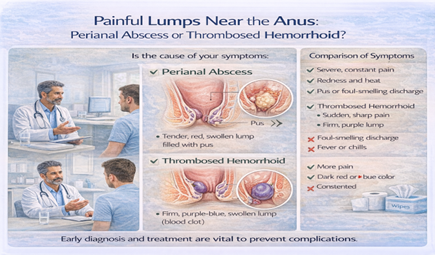
Symptoms: How to Know If You Have a Thrombosed Hemorrhoid
Classic Presentation:
- Sudden severe pain near the anus that started within the last few hours to few days
- A firm, tender lump you can feel near the anal opening (usually marble-sized, but can be larger)
- Blue, purple, or dark red discoloration of the lump
- Swelling around the area
- Pain is constant, not just during bowel movements (though bowel movements make it much worse)
What triggered it (common scenarios):
- Straining during constipation or diarrhea
- Heavy lifting (gym, moving furniture, carrying luggage)
- Prolonged sitting (long flight, road trip, sitting at desk all day)
- Pregnancy or childbirth
- Sometimes no clear trigger—it just happens
What it’s NOT:
- It’s not a skin tag (those aren’t painful)
- It’s not an abscess (no fever, no pus, no red spreading skin infection)
- It’s not internal hemorrhoid prolapse (internal hemorrhoids coming out are usually painless and softer)
If you have fever, spreading redness, pus, or severe bleeding, see emergency care immediately—this may be an abscess or infectio requiring urgent treatment.
The Critical 48-72 Hour Window: Why Timing Matters
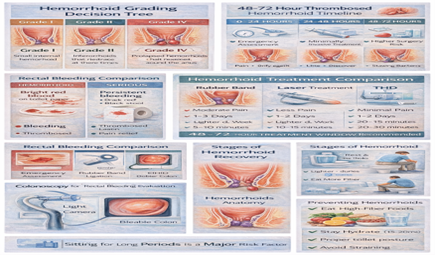
The key to managing a thrombosed external hemorrhoid is understanding the timeline:
0-24 Hours: Peak Pain
- Pain is at its worst
- The clot is fresh
- This is the BEST time for excision (removal under local anesthesia)
- Excision provides immediate, dramatic relief
24-48 Hours: Still Severe Pain
- Pain remains intense
- Excision still very beneficial
- Most patients get significant relief
48-72 Hours: Decision Point
- Pain often starts to improve naturally as the clot begins breaking down
- Excision can still help, but the benefit is less clear
- We assess: Is pain still severe enough to warrant a procedure, or is it improving on its own?
After 72 Hours: Conservative Management Usually Better
- Pain is typically subsiding
- The clot is dissolving or organizing (hardening)
- Excision at this point may cause more discomfort than just waiting
- Conservative treatment (pain relief, sitz baths, stool softeners) is usually the best approach
Why the window matters:
Early excision (within 48-72 hours) is straightforward, takes 10-15 minutes under local anesthesia, and provides immediate relief. After 72 hours, the tissue changes make excision more complicated, and since pain is naturally improving, the risk-benefit balance shifts toward conservative care.
What happens if you don’t treat it:
The clot will eventually dissolve on its own over 2-4 weeks. Pain peaks in the first 48-72 hours, then gradually improves. However, you may be left with a skin tag (excess skin) where the thrombosed hemorrhoid was.
Some patients find these skin tags annoying and request removal later.
Treatment Options: What We Can Do
Option 1: Excision Under Local Anesthesia (Within 48-72 Hours)
How it works:
I numb the area with local anesthetic, make a small incision over the clot, and remove the clot and the affected hemorrhoidal tissue. The small wound is usually left open to heal (closes within 1-2 weeks).
Benefits:
- Immediate pain relief (most patients feel dramatically better within hours)
- Faster overall recovery than waiting for the clot to dissolve
- Lower chance of skin tag formation
- Definitive solution—clot is removed completely
What to expect:
- Done in the office or clinic (you go home immediately after)
- Local anesthesia (you’re awake, but the area is completely numb)
- Procedure takes 10-15 minutes
- You’ll have some soreness for 3-7 days as it heals, but much less than the original thrombosed hemorrhoid pain
- Pain medication, stool softeners, and sitz baths help healing
- Most people return to work within 2-3 days
Who is a good candidate:
- Anyone within the 48-72 hour window with significant pain
- Pain interfering with work, sleep, or daily activities
- No medical conditions that prevent minor procedures
Option 2: Conservative Management
When we choose this:
- If you’re beyond 72 hours and pain is already improving
- If you prefer to avoid a procedure
- If there are medical reasons to avoid excision
What we do:
1. Pain management: Oral pain medication (paracetamol, NSAIDs if tolerated)
2. Ice packs: Apply ice wrapped in cloth for 10-15 minutes several times daily (first 48 hours)
3. Sitz baths: Warm (not hot) water baths for 10-15 minutes, 3-4 times daily
4. Stool softeners: To prevent straining (docusate, lactulose, or fiber supplements)
5. Topical treatments: Lidocaine gel or cream for pain relief; witch hazel pads to reduce swelling
6. Rest: Avoid prolonged sitting; take breaks to stand/walk
Timeline with conservative care:
- Pain peaks at 48-72 hours, then gradually improves
- Most patients feel significantly better by day 5-7
- Complete resolution takes 2-4 weeks
- A skin tag may remain (can be removed later if bothersome)
Experiencing symptoms like these? A discreet same-day specialist assessment is available across Dubai and Abu Dhabi.
WhatsApp: +971 55 318 8469 | Phone: +971 55 318 8469
Medcare Discovery Gardens (Dubai) • Burjeel Day Surgery Reem Island (Abu Dhabi)
What You Can Do Right Now (Before Seeing a Doctor)
If you suspect you have a thrombosed hemorrhoid and you’re trying to get an appointment:
Pain Relief:
- Take over-the-counter pain medication (paracetamol 1000mg every hours, ibuprofen 400mg every 8 hours if no contraindications)
- Apply ice wrapped in a cloth for 10-15 minutes every few hours (first 24-48 hours only)
- After 48 hours, switch to warm sitz baths (10-15 minutes, 3-4 times daily)
Reduce Straining:
- Take a stool softener (available at any pharmacy in Dubai)
- Drink plenty of water (2-3 liters daily)
- Eat high-fiber foods (fruits, vegetables, whole grains)
- Don’t delay when you feel the urge to go
- Don’t sit on the toilet longer than 5 minutes
Positioning:
- Avoid prolonged sitting if possible
- Lie on your side with a pillow between your knees
- Use a cushion when sitting (donut cushions can help)
What NOT to do:
- Don’t try to “pop” or drain it yourself—this can cause infection
- Don’t apply heat in the first 48 hours (ice is better initially)
- Don’t take hot baths (warm is fine, hot can worsen swelling)
- Don’t strain or push during bowel movements
If symptoms persist or are not improving, a specialist assessment in Dubai can help determine the most appropriate treatment.
When to Seek Immediate Emergency Care
Most thrombosed hemorrhoids are not emergencies, but seek urgent care
(emergency room) if:
- Fever (38°C or higher) with anal pain (possible abscess)
- Spreading redness around the area (possible infection)
- Heavy bleeding that won’t stop
- Severe pain with inability to urinate or defecate
- Pus or discharge from the lump
- Dizziness or fainting
These symptoms suggest complications that need immediate attention.
Same-Day Assessment in Dubai and Abu Dhabi
If you’re within the 48-72 hour window and experiencing significant pain, contact us for same-day or next-day assessment. I can evaluate whether excision will benefit you or if conservative management is better.
My Locations:
Dubai:
- Medcare Medical Centre, Discovery Gardens
- Medcare Women and Children Hospital
- Medcare Royal Specialty Hospital
- Clemenceau Medical Centre
- Aster Hospital, Qusais
Abu Dhabi:
- Burjeel Medical Centre, Shahama
- Burjeel Medical City (BMC)
What to expect at your visit:
1. Brief history and examination
2. I’ll confirm it’s a thrombosed hemorrhoid (not abscess or other condition)
3. We’ll discuss timing: Are you within the optimal window for excision?
4. If excision is appropriate and you choose it, we can often do it the same day
5. If conservative management is better, I’ll prescribe pain relief and give you clear instructions
My Approach: Experience Across Multiple Countries
In my years of training and practice across the United States, United Kingdom, and now the UAE, I’ve seen hundreds of thrombosed hemorrhoids.
Here’s what I’ve learned:
Timing changes everything. A patient who comes in on day 1 with severe pain gets immediate, dramatic relief from excision. A patient who comes in on day 5, when pain is already improving, often does just as well with conservative care and avoids a procedure.
Don’t suffer unnecessarily. Many patients in Dubai delay seeking care because of embarrassment or fear of “surgery.” Excision for a thrombosed hemorrhoid is not surgery—it’s a quick office procedure under local anesthesia. If you’re in severe pain in the first 48-72 hours, there’s no reason to suffer through it.
Skin tags are common. Even with treatment, some patients develop a small skin tag where the thrombosed hemorrhoid was. This isn’t dangerous, but if it bothers you (irritation, difficulty cleaning), we can remove it later as an elective procedure.
What I look for during examination is not just the thrombosed hemorrhoid, but whether there are other hemorrhoids (internal or external) that might need treatment once the acute episode resolves.
Sometimes a thrombosed hemorrhoid is your body’s way of saying, “Let’s address the underlying hemorrhoid problem.”
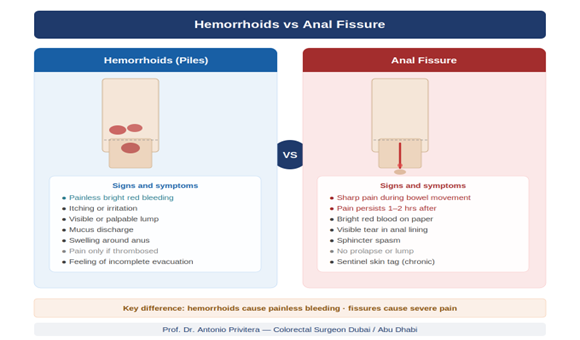
This article is written and reviewed by Prof. Dr Antonio Privitera, consultant colorectal surgeon with fellowship training at Mayo Clinic (USA) and the Royal College of Surgeons (UK), specializing in hemorrhoid diagnosis and minimally invasive treatment.
Frequently Asked Questions
1. Will a thrombosed hemorrhoid go away on its own?
Yes. The clot will eventually dissolve over 2-4 weeks, and pain typically peaks within 48-72 hours then gradually improves. However, waiting means enduring significant pain for several days, and you may be left with a skin tag. Early excision provides immediate relief.
2. Can I drain a thrombosed hemorrhoid myself?
No. Do not attempt this. You risk infection, severe bleeding, and making the problem worse. If you’re within 48-72 hours of symptom onset, see a doctor for proper excision under sterile conditions.
3. Is excision considered surgery?
Not really. It’s a minor office procedure done under local anesthesia. You’re awake, the area is numb, and you go home immediately after. It’s much simpler than formal hemorrhoid surgery.
4. How painful is the excision procedure?
The local anesthetic injection stings briefly (like a dental injection). Once numb, you won’t feel pain during the procedure—just pressure tugging. Afterward, you’ll have soreness for a few days, but it’s much less than the original thrombosed hemorrhoid pain.
5. What if I’m already past 72 hours?
If your pain is improving, conservative management (pain relief, sitz baths, stool softeners) is usually the best approach. The clot will resolve on its own. If pain is still severe beyond 72 hours, I’ll assess whether excision is still beneficial.
6. Will it come back?
The specific thrombosed hemorrhoid won’t return, but if you have underlying hemorrhoids, you could develop another thrombosed hemorrhoid in the future. Addressing the underlying hemorrhoids (if present) and preventing constipation reduces this risk.
7. Can I fly with a thrombosed hemorrhoid?
If you’re in severe pain, flying will be very uncomfortable. If you’ve had excision, wait at least 3-5 days before flying. If you must fly, take pain medication, use a cushion, and walk around the cabin frequently.
8. How long until I can return to work?
After excision: Most people return to desk work within 2-3 days.
Physical labor may require 5-7 days.
With conservative management: You may need 3-5 days off if pai is severe, or you may be able to work with pain medication.
9. Will I need antibiotics?
Usually not. Thrombosed hemorrhoids are not infections. I only prescribe antibiotics if there are signs of infection (rare).
10. Can exercise cause a thrombosed hemorrhoid?
Heavy lifting or straining can trigger one. If you’ve had a thrombosed hemorrhoid, avoid heavy squats, deadlifts, or straining exercises for atleast 2 weeks after resolution.
Prevention: Reducing Your Risk
Once you’ve experienced a thrombosed hemorrhoid, you’ll want to avoid
it happening again:
- Prevent constipation: High-fiber diet (25-35g daily), adequate hydration (2.5-3 liters daily in Dubai’s climate), fiber supplements if needed
- Don’t strain: Don’t push or hold your breath during bowel movements
- Don’t sit too long on the toilet: No phone scrolling—5 minutes maximum
- Exercise regularly: Walking, swimming, yoga improve circulation and prevent constipation
- Avoid heavy lifting: Or use proper technique (breathe, engage core, don’t strain)
- Take breaks from sitting: Stand and walk every hour if you have a desk job
- Address underlying hemorrhoids: If you have symptomatic hemorrhoids, treating them reduces the risk of future thrombose hemorrhoids
References and Medical Sources
This article is based on current medical evidence and clinical guidelines:
1. Thrombosed External Hemorrhoid Management – Evidence for timing of intervention. Greenspon J, Williams SB, Young HA, Orkin BA. Thrombosed external hemorrhoids: outcome after conservative or surgical management. Dis Colon Rectum. 2004;47(9):1493-8. PubMed
2. American Society of Colon and Rectal Surgeons Guidelines – Management of hemorrhoidal disease including acute thrombosis. Davis BR, Lee-Kong SA, Migaly J, Feingold DL, Steele SR. The American Society of Colon and Rectal Surgeons Clinical Practice Guidelines for the Management of Hemorrhoids. Dis Colon Rectum. 2018;61(3):284-292. PubMed
3. Timing of Excision for Thrombosed External Hemorrhoids – Clinical outcomes based on timing. Jongen J, Bach S, Stübinger SH, Bock JU. Excision of thrombosed external hemorrhoids under local anesthesia: a retrospective evaluation of 340 patients. Dis Colon Rectum. 2003;46(9):1226-31. PubMed
Medical Review: This content was written and reviewed by Professor training at the Mayo Clinic and Royal College of Surgeons (UK), and European Board Certification in Colorectal Surgery.
Same-Day Emergency Assessment Available
Don’t suffer through days of severe pain if you’re within the 48-72 hour window.
Experiencing symptoms like these? A discreet same-day specialist assessment is available across Dubai and Abu Dhabi.
WhatsApp: +971 55 318 8469 | Phone: +971 55 318 8469
Medcare Discovery Gardens (Dubai) • Burjeel Day Surgery Reem Island (Abu Dhabi)
🌐 Book Online:
Dubai Locations:
- Medcare Medical Centre, Discovery Gardens
- Medcare Women and Children Hospital
- Medcare Royal Specialty Hospital
- Clemenceau Medical Centre
- Aster Hospital, Qusais
Abu Dhabi Locations:
- Burjeel Medical Centre, Shahama
- Burjeel Medical City (BMC)
Same-day and emergency appointments available. All consultations are private and confidential.
Professor Dr. Antonio Privitera
Fellowship Training: Mayo Clinic | Royal College of Surgeons (UK)
European Board Certified in Colorectal Surgery
About the Author