

Having trouble sitting or wearing clothes? Or do you have a pimple-like structure on the base of your tailbone that causes swelling, redness, and itching? This means you may be suffering from a pilonidal sinus. So, you need to look for pilonidal sinus treatment without surgery or with surgery.

Pilonidal Sinus
A pilonidal sinus is a small hollow or tunnel that develops in the skin near the tailbone, an abscess may be formed around a pilonidal sinus. Pilonidal sinus usually contains hair, dirt, and debris. They may be painful, become infected, ooze pus or blood. They may also emit a foul smell. So, Let’s take a look at some of the pilonidal sinus treatment without surgery.
Non-surgical approaches to pilonidal sinus
- Antibiotics: If the pilonidal sinus is infected, your doctor may prescribe antibiotics to help clear the infection.
- Warm compression techniques: You can relieve pain and itching by applying a warm compress several times a day to the sinus.
- Drainage: Your doctor may use a small needle or scalpel to drain the pus and debris from the sinus. This can provide relief from pain and swelling and help prevent infection.
- Pilonidal Sinus Treatment with Ayurveda: Ayurveda uses a technique called Kshar Sutra. In Kshar Sutra, ayurvedic herbs are used to alleviate the symptoms.
- Topical creams and ointments: Your doctor may recommend using creams or ointments containing ingredients like tea tree oil, which has antimicrobial properties, to help reduce inflammation and kill bacteria.
- Laser treatment: Some doctors may use a laser to remove the hair and debris from the sinus. Laser treatment is less invasive than surgery and may have a quicker recovery time.


Creams for pilonidal sinus
There are no creams specifically designed to treat pilonidal sinus. However, your doctor may recommend using prescription cream to help reduce inflammation and promote healing of the affected area. It’s important to follow your doctor’s instructions and not use any cream without medical supervision, as some creams may not be suitable for use on the skin near the tailbone.
Pilonidal Sinus Treatment Antibiotics
- Metronidazole.
- Erythromycin.
- Clindamycin.
- Cefixime.


What determines the cost of pilonidal sinus treatment in Dubai
The cost of pilonidal sinus treatment in Dubai depends on the treatment required, whether it is performed as an office procedure or in a day-surgery setting, the facility, anesthesia where required, and the patient’s insurance coverage. Once a treatment plan has been recommended, the relevant facility can explain the applicable insurance authorization and financial arrangements.
Pilonidal sinus surgery recovery time
Your recovery time varies depending on how your surgery was performed. If your incision was closed with stitches, it will probably take approximately 4 weeks to heal. If the incision was left open, it could take several months.

What pilonidal sinus looks like


Common questions about pilonidal sinus
Can pilonidal sinus be cured without surgery?
Yes, pilonidal sinus can be cured without surgery. And there are several other treatment options available besides surgery to remove your pilonidal sinus, depending on the severity of your symptoms.
What is the fastest way to heal a pilonidal sinus wound?
Surgical treatment for pilonidal sinus is the fastest and generally very safe with few risks.
Which treatment is best for pilonidal sinus?
In most cases, a pilonidal sinus abscess will need antibiotic treatment and its pus will also need to be drained.
Should I worry about pilonidal sinus?
Pilonidal sinus is not dangerous, but if it become infected, it can create an abscess, which drains pus into the sinuses. This causes pain, and a foul odor.
What is the permanent solution for pilonidal sinus?
The permanent solution to get rid of a pilonidal sinus is through a minor surgical procedure.
Which food is good for pilonidal sinus?
You need to eat many fruits and vegetables containing fiber, such as bananas, beetroots, carrots, oats, apples, sweet potatoes, and pears.
Non-surgical treatments have the potential to prevent recurrence, they may not be suitable for everyone or be as effective as surgical treatments. In order to determine the best treatment for your specific condition, you should consult a healthcare professional.
What a pilonidal sinus actually is
A pilonidal sinus is a small tunnel in the skin of the natal cleft, the groove between the buttocks just above the tailbone. It forms when loose hairs are driven point-first into the skin by the repeated friction and movement of the area. The body treats the buried hair as a foreign body, inflammation follows, and a cavity lined by inflammatory tissue develops, with one or more small openings, called pits, visible in the midline.
Two details explain most of what patients find puzzling about it. First, the hair involved is usually not growing there; it is shed hair, often from the head or back, that has worked its way in. Second, the pits are the entrance, not the problem. The cavity sits beneath them, which is why squeezing, picking or treating the surface achieves nothing.
Does everyone have a pilonidal sinus?
No. This question comes up because many people have a shallow dimple at the top of the natal cleft and assume it is the same thing. A simple sacral dimple is a normal anatomical variation present from birth, dry, painless, and not connected to any cavity. A pilonidal sinus is acquired, usually in the teens or twenties, and declares itself through swelling, discharge, pain or a visible pit with hair protruding.
If the area has never been painful, never discharged and never swollen, a dimple is almost certainly just a dimple.
Who develops one, and why the climate here matters
Pilonidal disease is most common between the late teens and the mid-thirties, and considerably more common in men. The recognized contributors are a deep natal cleft, coarse or abundant body hair, prolonged sitting, friction from clothing, obesity, and sweating.
That last factor deserves particular attention in the Emirates. Heat and humidity for much of the year, long commutes by car, desk-based work and an active gym culture combine to produce exactly the environment pilonidal disease favours: a warm, moist, frictional cleft. Patients are frequently told to lose weight and remove hair without anyone explaining that keeping the area dry is an equally important and more immediately achievable intervention.
What it looks and feels like
Presentation falls into three broad patterns, and they are managed quite differently.
- Asymptomatic pits. One or more small midline openings, sometimes with a visible tuft of hair, found incidentally and causing no trouble. These do not necessarily need treatment.
- Chronic discharging sinus. Intermittent or constant discharge of fluid, pus or blood, staining underwear, often with a persistent dull ache and tenderness on sitting. Episodes settle and return.
- Acute pilonidal abscess. Rapidly increasing pain over a day or two, with a hot, red, tense and exquisitely tender swelling, frequently just off the midline, sometimes with fever. Sitting becomes impossible.
An acute abscess is the one that needs attention quickly, because it needs drainage rather than tablets. Searching for photographs is a poor substitute for examination: a pilonidal abscess, an infected sebaceous cyst, hidradenitis suppurativa and a high anal fistula can look similar in an image and require completely different treatment. The distinction from anal fistula is the one that matters most, and it is set out in the guide to anal fistula causes and symptoms; the position relative to the anus is the practical clue.
Can a pilonidal sinus be treated without surgery?
This deserves a precise answer rather than an encouraging one, because the honest answer depends on which of the three patterns above applies.
Asymptomatic pits can reasonably be left alone and managed conservatively. Keeping the cleft clean, dry and free of loose hair may be all that is ever needed, and a proportion of people never progress beyond this.
A chronic discharging sinus will not close permanently with conservative measures alone, because the cavity and its hair-laden lining remain. Conservative care can reduce flare-ups substantially and is worth doing, but describing it as a cure would be misleading.
An abscess requires drainage. No cream, antibiotic or dressing substitutes for releasing pus under pressure.
What has genuinely changed in recent years is the middle ground. The choice is no longer between doing nothing and a large excision. Minimally invasive options now sit between the two, and for many patients they are the right first operation.
Hair control
Removing hair from the natal cleft reduces the supply of the material that causes the disease, and it is the single most evidence-supported conservative measure. Laser hair reduction is generally preferable to shaving, which produces short, sharp, easily implanted stubble and can make matters worse. This applies both as a preventive measure and, importantly, after any operation, where it meaningfully lowers the chance of recurrence.
Keeping the area dry and clean
Wash with plain water and dry thoroughly, including after exercise and after any period in the heat. Breathable cotton underwear, avoiding tight waistbands that sit directly over the cleft, and changing out of damp gym clothing promptly all help. Antiseptics and harsh scrubbing are not helpful and irritate the skin.
Reducing sitting and friction
Prolonged, uninterrupted sitting, particularly driving, loads the cleft. Breaking up long periods of sitting is a practical measure that costs nothing.
Where antibiotics genuinely fit
Antibiotics have a defined and limited role in pilonidal disease. They are appropriate where there is spreading infection of the surrounding skin, where a patient is systemically unwell, or as a short perioperative course in selected cases. Agents active against the mixed skin and anaerobic organisms typically involved are the ones chosen, which is why metronidazole is often combined with another agent.
What antibiotics do not do is close a sinus tract or drain an abscess. A collection of pus under pressure will not resolve on tablets, and repeated courses of antibiotics for recurrent pilonidal flares are a common pattern that delays definitive treatment while doing nothing for the underlying cavity. Antibiotic choice is a prescribing decision for the treating doctor based on the clinical picture, not something to select from a list.
Minimally invasive and surgical options
Treatment is chosen according to the extent of disease, whether it is a first presentation or a recurrence, and how much time the patient can give to wound healing.
- Incision and drainage. For an acute abscess. It relieves the pain and the infection; it is not definitive, and a proportion of patients will need further treatment for the underlying sinus later.
- Pit picking and sinusectomy. The pits are excised with very small incisions and the cavity cleared through them. Small wounds, quick recovery, and a reasonable first option in suitable disease, accepting a higher recurrence rate than major excision.
- Endoscopic treatment of the sinus. The cavity is visualized directly through a small scope, hair and inflammatory tissue removed under vision, and the cavity ablated. It combines a thorough clearance with very small wounds.
- Laser ablation of the tract. Energy delivered along the tract destroys its lining and causes it to close, with minimal wounds. Suited to selected anatomy rather than all.
- Excision with flap repair. Techniques such as the Karydakis, Bascom cleft-lift or Limberg flap excise the disease and, crucially, flatten the cleft and move the scar off the midline, which is the feature most associated with durable results. Reserved for extensive or recurrent disease, with a longer recovery.
- Wide excision left open to heal. Historically common and still occasionally necessary, but it leaves a large midline wound requiring prolonged dressing, and midline healing is precisely what tends to fail. It is no longer the default choice for straightforward disease.
The pattern worth recognizing is that modern practice favours the smallest intervention that will clear the disease, with escalation reserved for recurrence. Options available locally are set out on the pilonidal sinus and pilonidal cyst page.
Recovery and wound care
Recovery depends entirely on which procedure was performed, and it is worth being specific before committing to one.
After small-wound procedures, most people return to desk work quickly and manage with simple analgesia, with wound care amounting to keeping the area clean and dry. After a flap repair, the wound is closed and recovery is more structured, with restrictions on sitting and on strenuous activity for a defined period, and sometimes a drain for a few days. After a wide open excision, dressing changes continue for a considerable period and are the main burden of the treatment.
Across all of them, the factors that most influence healing are the same: keep the area dry, keep hair away from the wound, avoid prolonged direct pressure on it, and attend review so that a wound that is closing at the surface before the depth has filled is picked up early.
Preventing recurrence
Pilonidal disease recurs more often than patients are led to expect, and recurrence is not usually a sign that the operation was done badly. It reflects the fact that the conditions which produced the disease persist after the cavity has been removed.
- Maintain hair reduction in the area, with laser being the more durable approach.
- Keep the cleft dry, with particular attention through the summer and after exercise.
- Break up prolonged sitting and driving.
- Where weight is a contributing factor, reducing it deepens the odds in your favour by literally reducing the depth of the cleft.
- Have any new swelling, discharge or tenderness looked at early rather than waiting for it to become an abscess.
Frequently asked questions
Is a pilonidal sinus dangerous?
It is a benign condition and not dangerous in the ordinary sense. Left untreated for many years it causes repeated abscesses, progressive scarring and a larger eventual operation. Very long-standing, chronically discharging disease is rarely associated with more serious change, which is one reason indefinite neglect is not a good plan.
Will it come back after surgery?
It can. Recurrence rates vary with the procedure performed and with what happens afterwards. Techniques that move the scar away from the midline have lower recurrence rates, and consistent hair control after surgery makes a measurable difference.
Does diet affect pilonidal sinus?
There is no diet that treats or prevents pilonidal disease directly. The indirect relationship is through weight, which affects cleft depth and friction. Advice about specific foods healing a sinus is not supported.
Can I exercise or go to the gym with one?
Generally yes between flares, with the caveat that sweat and friction are the aggravating factors. Showering and drying thoroughly afterwards matters more than avoiding exercise. During an acute abscess, or immediately after surgery, activity restrictions apply and should come from the treating surgeon.
Which specialist treats pilonidal sinus in the UAE?
A general or colorectal surgeon. Because the condition sits close to the anus and is frequently confused with anal fistula, assessment by someone who treats both is an advantage. See proctology services, and for practical points about coverage, the guide to consultation and insurance in the UAE.
Related reading
- Pilonidal cyst and pilonidal sinus: the difference, for the terminology that causes most of the confusion.
- Pilonidal sinus treatment in Dubai and Abu Dhabi, covering the surgical pathways in more detail.
- Wound care after pilonidal surgery, which is where most of the work of a good recovery actually happens.
- Anal fistula, the condition most often mistaken for pilonidal disease.
About the Author
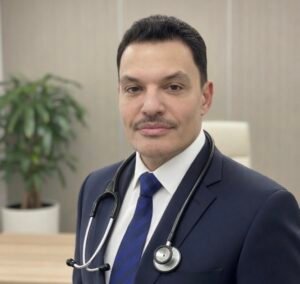
Dr Antonio Privitera completed colorectal surgery fellowships at the Mayo Clinic in Rochester, USA. He then trained on the combined colorectal surgery programme at Guy’s and St Thomas’ and University College London Hospitals (UCLH). He was the first fellow appointed to that programme. He also completed a fellowship in advanced laparoscopic and robotic surgery in Seoul, South Korea.
He previously served as Lead Colorectal Surgeon at Tawam Hospital–Johns Hopkins Abu Dhabi. He is an Associate Professor at UAE University.
He is a Fellow of the American Society of Colon and Rectal Surgery (FASCRS), Fellow of the Royal College of Surgeons of England (FRCS), and author of over 70 peer-reviewed publications. He also served as General Secretary of the Emirates Society of Colon and Rectal Surgery (2021–2024).
He practices across Dubai and Abu Dhabi.
